

Multiple Myeloma
Latest News

Advertisement
Latest Videos
























































Advertisement
More News
BCMA/CD19 dual-targeting FasTCAR-T Cells resulted in an overall response rate of 100% among patients with multiple myeloma, with all evaluable patients showing MRD negativity to 12 months.

Updated findings from the phase 2 CARTITUDE-2 trial highlighted the promising efficacy of ciltacabtagene autoleucel in patients with relapsed or refractory multiple myeloma following early relapse.
The final analysis from the phase 2 DREAMM-2 study found continued efficacy in patients who had relapsed/refractory multiple myeloma.
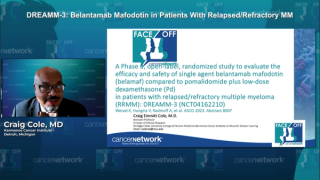
A triple-class exposed population of patients diagnosed with relapsed or refractory multiple myeloma experienced progression-free survival benefit following treatment with belantamab mafodotin with pomalidomide and dexamethasone.
A quadruplet regimen with daratumumab as its base was found to improve health related quality of life in patients with transplant-eligible, newly diagnosed multiple myeloma.
Efficacy and safety findings were positive in the phase 1/2 CC-92480-MM-001 trial when mezigdomide was added to dexamethasone in patients with heavily pretreated multiple myeloma.
The findings, according to the lead study author, demonstrate that treatment with forimtamig delivered intravenously or subcutaneously may elicit long-term responses in patients with relapsed or refractory multiple myeloma.
Patients with penta-or triple-class refractory multiple myeloma who have not received prior B-cell maturation antigen therapy saw an improved objective response rate when elranatamab was given.

Findings from the phase 1b MajesTEC-2 trial indicated that teclistamab in combination with daratumumab and lenalidomide demonstrated potential for deep and durable responses in relapsed or refractory multiple myeloma.
The use of two separate recommended phase 2 doses of talquetamab was associated with high response rates in patients with heavily pre-treated relapsed/refractory multiple myeloma, according to updated trial findings presented at 2022 American Society of Hematology Annual Meeting.
Dr Tuchman highlights exciting bispecific agents in investigation for the treatment of relapsed/refractory multiple myeloma.
Shared insight on key factors that determine the best selection of therapy in patients with relapsed/refractory multiple myeloma, with a focus on bispecific antibodies and CAR T-cell therapy.
After reviewing their third patient case, expert hematologist-oncologists highlight the treatment armamentarium for relapsed/refractory multiple myeloma.
Peter Voorhees, MD, starts a conversation on the best treatment options for patients with multiple myeloma after relapse.

A panel of experts discusses the treatment approaches to three clinical cases of multiple myeloma in the context of data presented at recent meetings and reviews how it can be applied to daily clinical practice.
Sascha Tuchman, MD, discusses how frail patients with multiple myeloma are defined in his clinical practice, and what assessment models he utilizes.
Dr Sascha Tuchman explains how he measures an adequate or successful frontline treatment response in patients with transplant-ineligible NDMM.
Before closing out their module on transplant-ineligible newly diagnosed multiple myeloma, panelists reflect on best treatment practices in the setting of high-risk disease.
Practical perspectives on the optimal selection of therapy for transplant-ineligible NDMM, followed by considerations for duration of therapy and dosing.
Among patients with extramedullary multiple myeloma, a regimen consisting of daratumumab plus dexamethasone, cyclophosphamide, etoposide, and cisplatin yielded a complete remission rate of 35.5% and an overall response rate of 67.7%.
Data from the phase 2 CARTIFAN-1 study highlighted a favorable risk-benefit profile for a single infusion of ciltacabtagene autoleucel among patients with relapsed/refractory multiple myeloma.

The panel closes their discussions by highlighting current unmet needs in multiple myeloma treatment and what excites them on the horizon.
Dr Patel continues the conversation of novel treatments with an examination of CAR T-cell therapies in multiple myeloma.
Dr Christina Gasparetto compares the results of the MAIA and SWOG0777 trials and discusses how the data has been practice-changing.
Closing out their module on transplant-ineligible NDMM management, expert panelists consider best practices regarding duration of therapy and adjustments to drug regimens.
Advertisement
Advertisement
Trending on CancerNetwork
1
Meaning-Centered Therapy, Psychiatry Referrals, and Humanistic Cancer Care
2
How Psycho-Oncology Addresses Existential Distress, Body Image, and Intimacy
3
How to Work With a Patient Who Declines Cancer Treatment
4
Screening for Depression and Starting Antidepressants in Oncology Care
5