






Radiation Oncology
Latest News
Advertisement
Latest Videos

































































Advertisement
More News

Long-term data from the STARS trial affirm stereotactic radiation as a strong alternative to surgery for patients with operable stage I NSCLC.
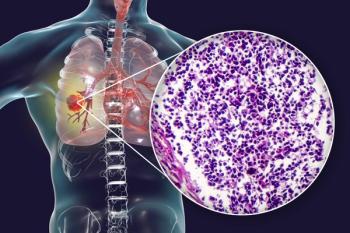
The efficacy of TTFields was greater among patients who received immune checkpoint inhibition for the treatment of brain metastatic NSCLC.
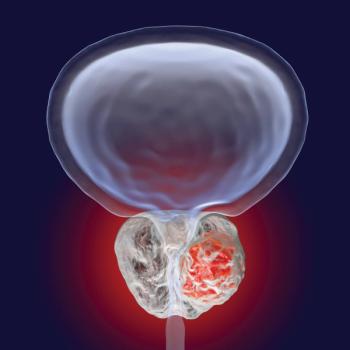
The addition of 177Lu-PNT2002 did not significantly increase toxicity in patients with oligorecurrent prostate cancer who received SBRT.

No toxicity-related discontinuations were seen with adjuvant radiotherapy among patients with muscle-invasive bladder cancer.
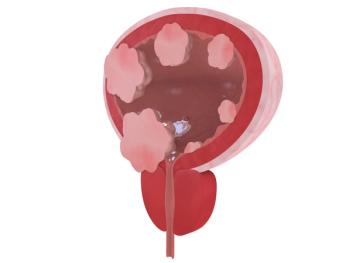
Apalutamide plus stereotactic radiotherapy may be effective for certain patients with recurrent prostate cancer following radical prostatectomy.

ACR-accredited radiation oncology practices will now be eligible to apply for an advanced quality recognition program developed by ACRO and RSS.
As noted in the letters, "ACRO’s comments seek to ensure ongoing access to high-quality, state-of-the-art radiation oncology services."
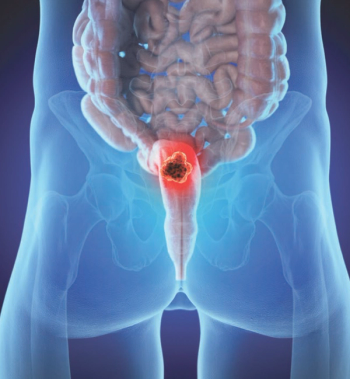
In patients with rectal cancer, the median OS was 12 years in the chemotherapy and radiation therapy group vs 24 years in the chemotherapy alone group.

Results from a phase 2 trial showed a 1-year local control rate of 93.1% with SABR in patients with solid tumors who have uncomplicated bone metastases.

The cumulative chronic grade 3 or higher toxicity rate was 3% in patients treated with de-escalated adjuvant radiotherapy vs 11% with standard of care therapy.

Although radiotherapy was safe and well tolerated in patients with esophageal squamous cell carcinoma, more research is needed to confirm these results.

The retrospective study is the largest to evaluate the relationship between dose-averaged LET profiles and local control after CIRT for pancreatic cancer.

No treatment-related deaths were observed with radiotherapy for extensive-stage small cell lung cancer, and most adverse effects were grade 1 or 2.

The new formulation should increase the batch size by approximately 50% and will offer the potential to expand access to patients in new geographic locations.
ACRO's Accreditation Program has completed and passed its annual surveillance by the International Standards Organization.

Phase 3 data affirm the use of partial-breast intensity-modulated radiotherapy as a standard of care in patients with low-risk early-stage breast cancer.

Updated guidelines from ASTRO recommend various radiation therapy techniques for patients with WHO grade 4 adult-type diffuse glioma.
![No tracer-related adverse effects were observed in the study, with [18F]AIF-NOTA-PCP2 showing acceptable dosimetry in patients with head and neck cancers.](https://cdn.sanity.io/images/0vv8moc6/cancernetwork/566910aff802a39d5d1afef401d33f429392d845-1200x886.jpg?w=350&fit=crop&auto=format)
No tracer-related adverse effects were observed in the study, with [18F]AIF-NOTA-PCP2 showing acceptable dosimetry in patients with head and neck cancers.

Data support incorporating volumetric PET biomarkers into toxicity risk prediction for patients receiving CAR T-cell therapy for LBCL.

Compared with 18F-FDG, the use of 68Ga-NODAGA-LM3 appears to favor bone and brain lesion detection among patients with small cell lung cancer.

Stereotactic online adaptive magnetic resonance–guided radiation therapy was well tolerated and maintained stable QOL in patients with PDAC for up to 1 year.

Retrospective analysis at SNMMI 2025 revealed α-FRT with 225AC-3BP-3940 was well tolerated and elicited responses in pretreated metastatic breast cancer.

Use of PET-guided radiotherapy may enable the opportunity to incorporate biological information into the planning and delivery of radiation.

The use of 68Ga pentixafor complements fluorodeoxyglucose and had no correlation with CXCR4 immunohistochemistry.
![A retrospective study shows that [177Lu]Lu-PSMA-617 retreatment led to a median OS of 14.5 months in castration-resistant prostate cancer.](https://cdn.sanity.io/images/0vv8moc6/cancernetwork/f5ef402e3456a83ca4765506f26761d323734d14-446x339.jpg?w=350&fit=crop&auto=format)
Results from a retrospective study show that 177Lu-PSMA-617 retreatment led to a median OS of 14.5 months in castration-resistant prostate cancer.
Advertisement
Advertisement
Trending on CancerNetwork
1
Subcutaneous Pembrolizumab Approved in Japan for All Tumor Indications
2
Acting on a HER2 Result and Navigating Access to Therapy
3
The Case for Frontline Zongertinib in HER2-Mutant NSCLC
4
Emerging Endocrine Doublets and Serial ESR1 Testing in HR+/HER2− mBC
5