

All News
Advertisement

Based on the clinical efficacy, ODAC members collectively voted to support the sNDA for capivasertib in this PTEN-deficient HSPC population.
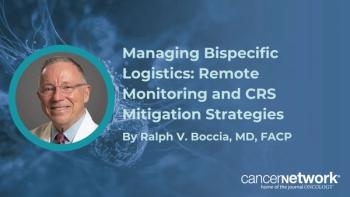
Ralph V. Boccia, MD, FACP, explained how his team utilizes patient monitoring kits to manage CRS and keep patients out of the hospital.
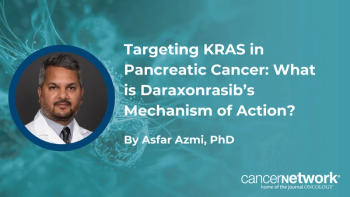
Asfar Azmi, PhD, discusses the tricomplex mechanism of daraxonrasib and its impact on overall survival for patients with pancreatic cancer.

The simlukafusp alfa–containing triplet displayed a profile comparable to the safety of each individual drug in this RCC population.
Advertisement

The ODAC has noted there was no clinical benefit of camizestrant for patients with HR+/HER2– advanced or metastatic breast cancer with ESR1 mutation and radiographic progression.

The FDA granted priority review to tislelizumab plus zanidatamab and chemotherapy for the first-line treatment of advanced HER2-positive gastric cancers.

Tovecimig plus paclitaxel yielded a median OS of 8.9 months vs 9.4 months with control in second-line biliary tract cancer in the phase 2/3 COMPANION-002 trial.

The MagnetisMM-5 study remains ongoing to assess the key secondary end point of overall survival among those with relapsed/refractory multiple myeloma.
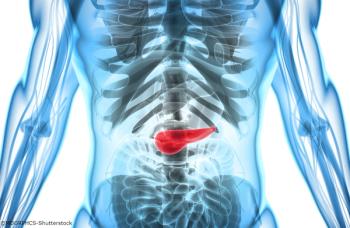
According to Asfar Azmi, PhD, results from the study showed that the PCNA inhibitor AOH1996 was synergistic with KRAS inhibitors of all classes.

Experts outline technological advances, treatment de-escalation strategies, and lifestyle factors that may affect treatment for head and neck cancers.

Isaac Allen, PhD, analyzed how postdiagnostic lifestyle behaviors may affect oncological outcomes, including patient health-seeking behavior influences.

Asfar Azmi, PhD, discussed a poster from the AACR Annual Meeting that investigated the NAMPT inhibitor RPT-E-037 and the pan-RAS inhibitor daraxonrasib in pancreatic cancer.

A data monitoring committee recommended the halt for futility of the phase 3 FLASH2 trial evaluating synthetic hypericin in cutaneous T-cell lymphoma.

Previous data presented at the 2026 AACR Annual Meeting demonstrate the efficacy of taletrectinib in ROS1-positive NSCLC harboring brain metastases.
iSCIB1+ continues to be studied in the SCOPE trial for patients with advanced melanoma.

A young father faces a potential lymphoma diagnosis, revealing how medical language, restraint, and rapid coordination reshape care and ease uncertainty.

A total of 48.0% of patients treated with duvelisib experienced a response, 33.3% of whom experienced a complete response.

CancerNetwork, AJMC, and Pharmacy Times are producing The Bispecifics Network, where Ralph V. Boccia, MD, FACP, breaks down the importance of this initiative.

The new guidelines address 11 key clinical questions for optimizing communication between clinicians and patients with cancer.

Data from the phase 1/2 CARDINAL trial support the breakthrough therapy designation for TERN-701 in this chronic myeloid leukemia population.

The affordability of health care will be the top issue in the upcoming midterm elections.
Experts discussed a case study involving a patient with multiple myeloma who developed CAR T-cell–related lymphomagenesis in the gastrointestinal tract.

In vivo CAR T-cell engineering represents a fundamental rethinking of how cellular therapies are produced and delivered.

Read this to learn 3 things you should know about the first-line treatment of mTNBC with TROP2-directed ADCs.
Advertisement
Advertisement
Trending on CancerNetwork
1
FDA Grants Priority Review to Giredestrant in ER+/HER2– Early Breast Cancer
2
Durvalumab Shows Similar Outcomes Across NSCLC PD-L1 Expression Groups
3
GLP-1 Receptor Agonists Show Modest Reduction in HR+ Breast Cancer Incidence
4
Radiation Oncology Trials You May Have Missed at ASCO 2026
5