

Patients with resectable gastric and gastroesophageal junction adenocarcinoma experienced good pathologic complete response with standard of care chemotherapy and perioperative/adjuvant pembrolizumab.
Patients with resectable gastric and gastroesophageal junction adenocarcinoma experienced good pathologic complete response with standard of care chemotherapy and perioperative/adjuvant pembrolizumab.

Those with inflamed T cell or YAP1–positive extensive-stage small cell lung cancer were likely to gain an improvement in overall survival following treatment with durvalumab and chemotherapy vs those with other overexpressed biomarkers.

Genetic determinants of PSA proved to robustly predict prostate cancer diagnoses and improve the detection of aggressive disease; however, larger and more diverse studies are still required.

Results of CheckMate 649 trial show consistently improved outcomes across advanced gastric cancer, gastroesophageal junction cancer, and esophageal adenocarcinoma when nivolumab is administered in combination with chemotherapy.

The CAR T-cell product BNT211 when used with or without a CAR T cell–amplifying RNA vaccine produced considerable responses and safety in patients with CLDN6-positive advanced solid tumors.

Acceptable efficacy and safety were elicited in patients with advanced solid tumors and high tumor mutational burden detectable in both blood and tissue samples with nivolumab/ipilimumab therapy.

Patients with advanced or metastatic endometrial cancer experienced a significant non-progression rate following treatment with olaparib, metronomic cyclophosphamide, and metformin.

A significant proportion of patients with nonclonal ductal carcinoma in situ were found to have recurrence that was not genetically linked to the primary tumor.

Children and young adults with H3K27M-positive diffuse intrinsic pontine gliomas and spinal diffuse midline gliomas saw a clinical benefit when treated with GD2-directed chimeric antigen receptor T cell therapy.

Updated data from the phase 1/2 CodeBreaK 100 trial of sotorasib provide the longest follow-up of a KRAS G12C inhibitor in non–small cell lung cancer.
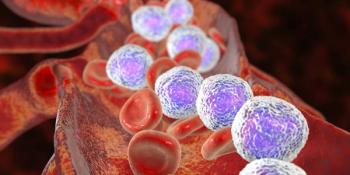
The European Commission approved lisocabtagene maraleucel for the treatment of certain patients with relapsed/refractory large B-cell lymphoma.

Data regarding different dosing strategies of elimusertib for advanced solid tumors with ATM alterations and other DNA damage repair gene defects display early efficacy of the therapy.

Biomarker analysis and studies of pharmacokinetics, pharmacodynamics, and T-cell composition show certain T-cell characteristics are linked with outcomes and toxicity with axicabtagene ciloleucel in large B-cell lymphoma.
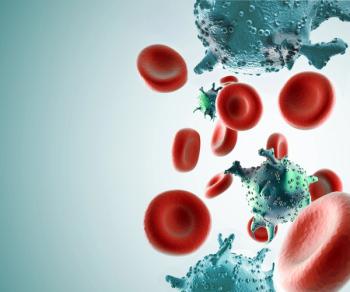
Investigators of a phase 1/2 trial observed positive response outcomes with expanded natural killer cells plus AMF13 in patients with heavily pretreated lymphoma.

Data presented from the 4-year follow-up to the phase 3 KEYNOTE-042 trial display continuous survival benefit of pembrolizumab vs chemotherapy in Chinese patients with untreated non–small cell lung cancer.

Early findings from the phase 1/2a TEM-GBM study presented at the 2022 AACR Annual Meeting displayed potential of temferon to affect the tumor microenvironment of glioblastoma.

Serplulimab, which has been granted orphan drug designation by the FDA, is being considered as a treatment for patients with small cell lung cancer.

Although patients with endometrial cancer who had histologically confirmed endometriosis/adenomyosis achieved better overall survival than those without, the benefit was linked to stage, grade, age, and histological subtype.

Based on results from the EPIK-P1 trial, the FDA has granted accelerated approval to alpelisib for PIK3CA-related overgrowth spectrum.

Frederick Lock, MD, spoke about the approval of axicabtagene ciloleucel and how it’s beneficial for patients with large B-cell lymphoma who were treated with frontline chemoimmunotherapy.

Data from a phase 1/2 trial examining nivolumab plus a PD-L1/IDO peptide vaccine indicates early activity in patients with metastatic melanoma, according to results from the 2022 AACR Annual Meeting.

Black patients were reported to be significantly less likely to receive standard of care surgical treatment for cancer of the gastrointestinal tract compared with White patients.
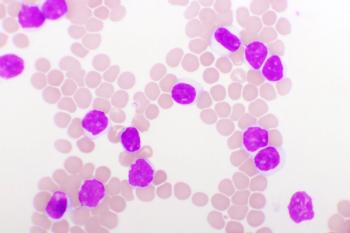
Longer and more durable remissions were identified with the addition of CART-19 to ibrutinib for patients with chronic lymphocytic leukemia.
In an interview with ONCOLOGY®, Elizabeth Travers, PharmD, BCOP, offers a comprehensive review of real-world treatment considerations of asciminib as therapy for patients with chronic myeloid leukemia.

John Kirkwood, MD, PhD, discussed considerations for treating patients with melanoma using immunotherapy and how to properly monitor responses.
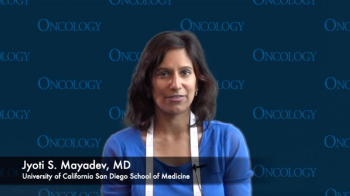
At SGO 2022, Jyoti S. Mayadev, MD presented results of the NRG-GY017 trial of atezolizumab as either an immune primer or with chemoradiation for certain patients with locally advanced cervical cancer.

Patients with HER2-positive apocrine carcinoma of the breast are less likely to have an aggressive phenotype and are more likely to have favorable outcomes, even though the group has a lower rate of estrogen and progesterone receptor positivity.

Updated data from a pivotal trial that led to the approval of zanubrutinib for the treatment of patients with relapsed or refractory mantle cell lymphoma appears to highlight persistent benefit.
At the 15th Annual Interdisciplinary Prostate Cancer Congress® and Other Genitourinary Malignancies, Peter Humphrey, MD, PhD, spoke about how the conference catered to the multidisciplinary audience, and what he learned from that.
Anjali Y. Hari, MD, speaks to the rationale for examining hyperthermic intraperitoneal chemotherapy in a population of frail and non-frail patients with ovarian cancer.