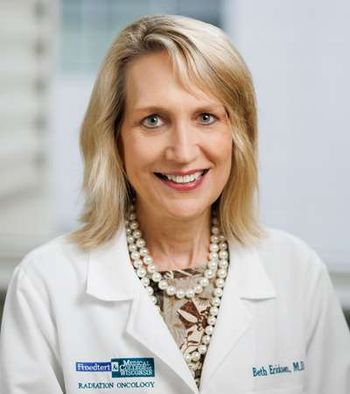
Beth Erickson, MD, FACR, FASTRO, FABS, discussed pioneering MRI-guided brachytherapy at MCW and her priorities as incoming ASTRO president-elect.
Theranostics is an escalating field within radiation oncology and clinicians should be utilizing it every day, according to Brandon Mancini, MD, MBA, FACRO.
At the
Theranostics, by definition, is a personalized medical approach that combines targeted therapy with diagnostic molecular imaging. Mancini, the medical director for BAMF Health, as well as the editor at large for the RadOnc Review and host of the RadOnc on the Run podcast, stated that it is currently advancing in radiation oncology, and that the platform of ACRO provides a voice to help expand it even further.
On top of focusing on what theranostics is, the discussion touched upon the data that has led to many FDA approvals across many disease states, including the important role radiation oncology has to play with regards to theranostics. He ended by stating that, hopefully, the talk would serve as a call to action to motivate more radiation oncologists to use theranostics daily in their own practice.
Transcript:
Theranostics in general is this escalating field within radiation oncology, nuclear medicine, and oncology and beyond. This is a neat opportunity, with ACRO being one of the salient meetings in radiation oncology to continue the conversation, get more in depth to theranostics, and to excite or motivate people to consider this as part of their practice each and every day.
It’s going to be reviewing exactly what theranostics is, for those who may not be aware, reviewing the data that has led to the FDA approval of the agents we use each and every day, reviewing why radiation oncology plays an important role within this space, and a call to action to motivate people to be interested, involved, and consider incorporating this into their cancer care every day.