William A. Hall, MD, reviews resection rates, surgical complications, and SBRT target volumes from the SOFT Preop study in pancreatic cancer.
The PRECEDE Consortium is a multidisciplinary effort to drive the earlier detection of pancreatic cancer and raise the survival rate to 50%.
The American Cancer Society recently published an article detailing the intricacies of cancer incidence, and despite advancements in the understanding of tumor biology, the 5-year survival rate for pancreatic cancer remains at 13%, significantly lagging behind the 70% survival rate observed across all combined cancer types.1 The PRECEDE Consortium aims to transform the clinical trajectory for patients with pancreatic cancer by establishing a global infrastructure for early detection and data sharing, according to Diane Simeone, MD.
In a conversation with CancerNetwork, Simeone, the director of the Moores Cancer Center at the University of California San Diego Health, discussed this effort and what can be done to improve the outcomes associated with pancreatic cancer. She outlined the biological barriers to early diagnosis, the shift toward standardized screening for high-risk cohorts, and the roadmap to achieving a 50% five-year survival rate by 2035.
Transcript:
Simeone: That is something we think about all the time. When I started working in pancreatic cancer in 1992 as a trainee, and then in my first year on faculty in 1995, the survival rate was approximately 5%. There have been many positive developments for pancreatic cancer, including a much deeper understanding of the biology of the disease and new therapies. However, at this point, a landscape analysis of where investment is needed suggests that a large push for early detection will provide the greatest payoff. We still do not have a curative approach for advanced pancreatic cancer, and 50% of patients have advanced disease at the time of their first physician visit. Even for patients with resectable disease, many are stage III with positive lymph nodes. A concerted effort on early detection is vital because we know that finding a stage IA pancreatic cancer results in a survival rate of 83%, according to five-year-old SEER data. A stage shift in the identification of pancreatic cancer can go a very long way.
We have seen advancements in new precision oncology therapies that have improved survival in advanced cases for some cancers, such as lung cancer and melanoma. However, much of the improvement in survival for colon, breast, and prostate cancers is due to early detection. The groundwork is already in place to show that this approach makes sense. The challenge with the pancreas is that it has been perceived as an uncommon disease. It is also more difficult to create algorithms for early detection because the organ is not easily accessible via a scope, and imaging still needs to be optimized. We do not yet have an early detection blood test.
Additionally, a significant problem has been a fragmented approach. Approximately 3000 to 4000 papers are published annually on the early detection of pancreatic cancer, but these often involve small groups working in silos without developing a large enough data set to address the problem effectively. Historically, huge advances in HIV/AIDS or the development of COVID-19 vaccines required large investments and a "Manhattan Project" style approach. We have been proponents of rethinking the strategy to drive early detection. Currently, investment in early detection and prevention in the US is only about 6% to 8% of all cancer research funding. There is a misalignment between what patients and doctors want and where our investments are directed. We need a course correction on this matter.
Pancreatic cancer is biologically aggressive and tends to spread earlier than other cancers. While we do not know exactly why, one contributory factor is likely that the pancreas contains millions of small bags of digestive enzymes. This creates an environment of enhanced inherent inflammation, which may provide fertile soil for a cell that accumulates a mutation where it could wither away. It might also be a position where it’s more likely to flourish. We still don’t understand who’s at risk, though we are gradually peeling the onion on that matter.
When I began my work, there was an underappreciation of the genetic contribution. We helped establish guidelines that everyone with pancreatic cancer should receive genetic testing. We find that even without an obvious family history, individuals may carry a mutation in 1 of the 2 copies of a gene that predisposes them to pancreatic cancer, such as BRCA mutations. We also see higher rates of pancreatic cancer in developed countries. Why is that? Is this related to diet? Is there microbiome risk? We are trying to put our heads together on the causative issues. Modifiable risk factors—including diabetes, obesity, smoking, and a history of pancreatitis—increase the risk of pancreatic cancer by up to 2-fold compared with the general population, but they do not fully account for the risk. It is likely a combination of genetic disposition and environmental or modifiable risk factor exposure. The only way to determine this is to follow a very large cohort of patients at risk and collect comprehensive longitudinal data.
We established the PRECEDE Consortium because previous strategies for early detection and improving survival were not working. The survival rate remains stagnant at 13%; it was 13% last year, and it was 12% the year before that. Our grounding principle is that centers must be willing to share data. The truth of the matter is that academia doesn't necessarily favor the sharing of data. It’s a little bit more about individual accomplishment, and we know that there are going to be breakthroughs by individuals working on projects, but for a problem where that approach has failed, we wanted a different strategy.
For PRECEDE, what we said is, let’s get centers that want to work together. We recruited centers that have multidisciplinary clinics for patients who are high-risk. These centers collect data, blood, tissue, and imaging in a standardized way. We began this in 2019 and enrolled the first patient in May 2020, in the middle of the pandemic. Now we have 65 centers all doing this the same way, participating, with monthly meetings to review data, new diagnostics, and new approaches we anticipate. We initially planned for a 10,000-patient study but have surpassed that and are now aiming for 20,000 patients. We anticipate that at least 1200 patients in our study will develop pancreatic cancer. When someone is in a screening program, it is much more likely we will find the cancer early. Data from high-performing centers like ours show that screening identifies stage I pancreatic cancer more than 9 times out of 10, and the likelihood is we’re going to help save that patient’s life by resecting that very early stage cancer.
But can we take that and then roll it out worldwide, improving processes and standards? We are also helping other countries establish screening programs. For example, Hungary has the highest per capita rate of pancreatic cancer in the world yet lacked standardized genetic testing. Our colleague, Peter Heygi, who’s a terrific gastroenterologist there, is joining PRECEDE so that they can figure out what’s happening in Hungary that makes the rate so high. Pancreatic cancer is predicted to become the second leading cause of cancer death in the US and many other countries. In Japan, there are 40,000 cases a year, half the population of the US, and no one knows why. Even in the US, I was surprised, there are household name medical systems with no high risk clinic for patients with pancreas cancer. PRECEDE is a groundswell of centers working together, with another 40 centers across the US and in other areas of the world in line to join PRECEDE. That’s without a marketing and communication budget because everyone knows that this is the right strategy to solve this problem. Our patients are our biggest advocates, asking why it took so long to tackle this problem at this scale, in a data sharing manner? It’s been so exciting to see the growth and trajectory, and the buy in of leaders around the world. We’re now enrolling about 250 patients a month and believe this study will transform the field.
We wanted to learn as much as possible from patients. If anyone came to the clinic or was in a position to ask their doctor, “I’m worried about my risk for pancreas cancer”, and the biggest group in PRECEDE includes people with multiple family members with pancreatic cancer or those found to carry a mutation that puts them at risk for pancreas cancer with or without a family history. We have different cohorts that include those groups.
Interestingly, we also have a cohort of individuals with only 1 family member with the disease; we may learn that a subgroup of these people, who do not currently receive regular imaging, but now are offered germline testing, could benefit from screening.
By following these cohorts, we are gaining deep knowledge of risk. We can also evaluate the performance of promising blood tests in this population, determining false positive rates and how tests perform individually. Might they perform better together? Is it a blood test? Knowing someone’s germline status, that’s key. By doing this, we’re assembling the world’s largest imaging database for patients at risk and applying AI technologies to identify cancer perhaps a year or 2 before a radiologist can see it. We have set a goal to reach a 50% survival rate for pancreatic cancer by 2035, and we are on our journey to do that.
There are a lot of things floating out there for early detection, but we don’t know if they’re useful, unless we see how they perform. The roadmap involves assessing the performance of tests and strategies in this high-risk population across different tiers of risk. Once we understand these performances, we can determine which strategies can be applied to the general population. The incidence in the general population is not high enough to prove the value of these approaches initially, so we must start by deeply studying high-risk population and then seeing where the learnings can be applied to the general population.
That is the key. Partnering new drugs with earlier-stage disease is the winning formula. As a surgeon who has performed over 1500 pancreatic surgeries over the course of my career, if I rethink back on how many stage I pancreatic cancers I have resected, I could count them on one hand. After putting the PRECEDE platform in place—and now I’m at UCSD, but at my last institution in the last year I was there, I resected 6 stage I pancreatic cancers in a single year. For all those patients, it changed the trajectory of their lives. In fact, the last case I respected was an 8 mm cancer in a BRCA2 carrier with no family history; that was a ticking time bomb that would not have been discovered without PRECEDE. We are even finding high-grade dysplasia and resecting it before it becomes invasive cancer. If we amplify that experience across 100 centers, we will reach that 50% survival rate.
While there has been an increase in funding for pancreatic cancer research, it is often "sprinkled" around rather than invested in organized, large-scale efforts. There is a tendency to invest not in infrastructure but in individual projects. Of course, we still feel very strongly to support that, but I do think that a funding investment for a large-scale project like this will pay off. Aligning funding with a strategy that is likely to work is critical to this mission.
It will be a completely different story. Every single time we see a new patient in clinic, we’re going to be able to give them hope. We’re going to be able to give their families hope. When someone hears the words, “You have pancreas cancer”, they’re not going to think “I’m going to die of this disease”, but “I have a real chance”. Because these scientists and clinicians have made such advances that we’re going to make this something that we take care of. Then it is in the rear-view mirror. People were dying left and right from AIDS. That’s not the story anymore. We had so many people dying of COVID-19 worldwide. That’s not the story anymore. This is a solvable problem, and we are working to solve it together.
The technologies are here. I always say, if we can land on Mars, we can detect a 1cm pancreatic cancer. We just haven’t brought the right people together. We haven’t made the right investment with PRECEDE. What we’re seeing now is people who never worked on pancreatic cancer in different fields are now coming to the table. With PRECEDE, experts in AI and imaging who developed sophisticated algorithms around picking up early breast and lung cancer are now joining us. For example, a very talented colleague of mine, Adam Yala at UCSF, who developed sophisticated algorithms for other cancers said, “I’ve always wanted to tackle pancreas cancer, but I didn’t have a way to do it. With PRECEDE, I now have a way to do it.” That’s exciting to bring different talents to the table to tackle a problem, and that's always how we're going to be more successful.
I want to thank the hundreds of researchers, clinicians, and thousands of patients working together. Patients put their trust in us and expect us to change the trajectory of this disease. It takes all of us working together to get where we want to go. I’m speaking today on behalf of all these incredibly talented individuals, the patients, and their families that have dealt with these deficiencies, to create a different story.
Siegel RL, Kratzer TB, Wagle NS, Sung H, Jemal A. Cancer statistics, 2026. CA Cancer J Clin. 2026;76(1):e70043. doi:10.3322/caac.70043
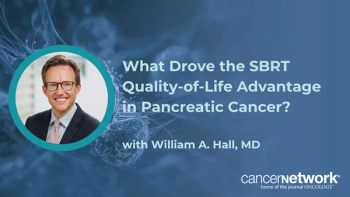
![“We want to make sure we are not producing a financial burden for patients in exchange for that convenience [with subcutaneous therapies],” said Thaddeus Beck, MD, FACP.](https://cdn.sanity.io/images/0vv8moc6/cancernetwork/cbb0bc385f194a5dd84702ed02a21020e3a6977b-1200x1800.jpg?w=350&fit=crop&auto=format)