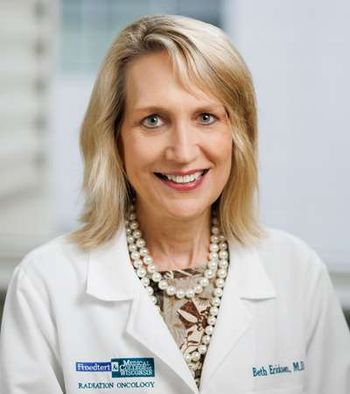
Beth Erickson, MD, FACR, FASTRO, FABS, discussed pioneering MRI-guided brachytherapy at MCW and her priorities as incoming ASTRO president-elect.
The complicated nature of gastroesophageal cancer underscores the importance of collaboration between teams to safely treat patients with the disease.
Collaboration, across the full spectrum of multidisciplinary care, is essential to treat patients with gastroesophageal cancer, according to Daniela Molena, MD.
In an interview with CancerNetwork® at the
She began by highlighting the importance of such a collaboration, likening multidisciplinary care to a “village,” which is required to best optimize results for these patients. Additionally, she explained that inter-department communication, particularly between medical oncology and surgery, is necessary to coordinate treatment selection and sequencing, as well as considerations for the safe delivery of surgery. Molena concluded that in addition to physicians, other proponents of care, such as nurse practitioners and dietitians, have a role to play in multidisciplinary care, ensuring that patients are strong and healthy enough to initiate treatment and subsequently recover from it as well.
Transcript:
[That collaboration is] key. Today, this disease has become so complicated that we’re not just doing it alone. That’s why the role of the multidisciplinary team, is important. Also, every patient is a little different. By collaborating, by talking to each other, by understanding, what will be best in a specific setting, that’s how we get better results. We’re all in it together. I always say, it takes a village to get one of these patients treated and potentially cured.
We need the help of each other. We need the medical oncologist to work closely with the surgeon to understand what’s the best treatment, but also make sure the patient can go through the surgery safely. We need collaboration with the radiation oncologist, because although radiation is less [frequently] used today, there are instances where we still want to use it. All the physicians, but even other portions [of care], like nurse practitioners and dietitians, physical therapists––it takes a lot of multidisciplinary care for these patients to be strong enough to undergo treatment and also recover safely from these overall long treatment plans the patient go through.