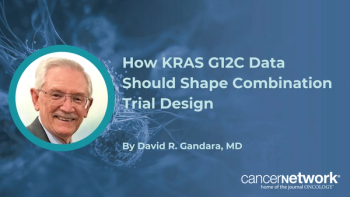
David R. Gandara, MD, discusses how EMPOWER-Lung 1’s findings in KRAS G12C-mutated disease should inform the design of combination trials.
Parul Barry, MD, discusses advances such as ultrahypofractionated radiation and the growing role of AI in streamlining workflows for breast cancer care.
In a discussion at the
Barry: Several presentations have explored shorter radiation schedules to make treatment more accessible as well as optimizing regional nodal irradiation for patients with node-positive or high-risk breast cancer.
The change has been dramatic, especially since the start of the COVID-19 pandemic, as we moved toward using 5-fraction schedules more frequently. We found that patient adherence and the ability to complete treatments within the scheduled time have increased, along with patient satisfaction. Completing treatment in 5 short sessions is a palatable way for patients to achieve a durable cure compared with traditional 5- to 7-week schedules.
These therapies, such as HER2-directed ADCs or sacituzumab govitecan-hziy [Trodelvy], are critical for managing cancer. Integrating them with radiation for patients at high risk for relapse requires excellent communication between radiation oncologists, medical oncologists, and surgeons to ensure seamless transitions between treatments. Currently, we avoid concurrent use of radiation and ADCs due to toxicity concerns. However, there is significant interest in using them together in the future to potentiate effects in resistant, high-risk cancers.
I am interested in trials combining chemotherapy and radiation, such as studies for inflammatory breast cancer. There was also an ETCTN [Experimental Therapeutics Clinical Trials Network] trial [NCT04052555] investigating berzosertib with radiation, and the combination of immunotherapy and radiation is very interesting for the high-risk population. I am focused on combining systemic therapy and radiation for the curative management of advanced and high-risk breast cancers.
At UPMC, we are conducting advanced research in the preoperative space by delivering radiation before surgery to assess cancer response. If we can eliminate the cancer with high-dose radiation before surgery, we can evaluate whether patients can de-escalate or skip systemic therapy, endocrine therapy, or even surgery. This involves a collaborative team focusing on precision radiation, medical, and surgical oncology. We also utilize translational researchers for rapid processing of ctDNA [circulating tumor DNA] or immune function samples. Additionally, we are investigating theranostics and radiopharmaceutical therapy for all subtypes of metastatic breast cancer through multiple clinical trials.
For patients living with metastatic breast cancer as a chronic disease, the cancer can become resistant to systemic therapies over time. Radiopharmaceutical therapy offers a different mechanism that stimulates the immune system and treats the cancer differently. It can target specific proteins, such as fibroblast activation protein, and may sensitize metastatic cancers to future systemic therapies.
Adherence to endocrine therapy is approximately 50% in real-world data because patients often stop due to [adverse] effects like joint pain. Low-dose radiotherapy to the joints can reduce pain and improve mobility, allowing patients to continue their endocrine therapy. This is a way to treat benign disease to improve cancer cure rates. I also want to see more focus on using theranostics to radiosensitize patients who have been heavily pretreated with systemic therapy.
I expect growth in surface guidance and more conformal boluses for postmastectomy radiation, particularly for inflammatory breast cancer. Artificial intelligence will be extremely helpful for contouring and developing targets, which improve access and allow for timely treatment as we move toward 5-fraction regimens. We may also see the use of definitive primary radiation for early-stage breast cancer, like how it is used in lung cancer.
This is an exciting time to be a breast radiation oncologist. We have many new developments on the horizon and can offer diverse options for patients through collaborative work with surgeons, medical oncologists, and survivorship teams.
Testing the addition of an anti-cancer drug, berzosertib, to the usual treatment (radiation therapy) for chemotherapy-resistant triple-negative and estrogen and/or progesterone receptor positive, HER2 negative breast cancer. ClinicalTrials.gov. Updated February 2, 2026. Accessed February 6, 2026. https://tinyurl.com/2huubwt8