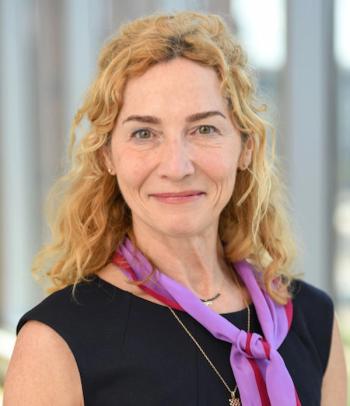
“Those of us who work with NK cells have no doubt that they are incredibly powerful at killing cancer cells,” said Veronika Bachanova, MD, PhD.
The developers plan to initiate the TELLOMAK 3 trial, which will evaluate lacutamab in Sézary syndrome and mycosis fungoides, in the first half of 2026.
The FDA has cleared the confirmatory phase 3 TELLOMAK 3 trial protocol, which is evaluating lacutamab, a first-in-class anti-KIR3DL2 antibody, in patients with cutaneous T-cell lymphoma (CTCL), according to a press release from the developer, Innate Pharma.1
TELLOMAK 3 is an open-label, randomized trial evaluating lacutamab in patients with Sézary syndrome and mycosis fungoides who experienced progression on at least 1 prior line of systemic therapy. Patients will be enrolled in 2 independent cohorts. The first cohort will randomly assign patients with Sézary syndrome who received prior mogamulizumab (Poteligeo) treatment in a 1:1 ratio to receive either lacutamab or romidepsin (Istodax). In the second cohort, patients with mycosis fungoides will be randomly assigned in a 1:1 ratio to receive either lacutamab or mogamulizumab.
The developer aims to officially launch the trial in the first half of 2026.
Previously, data from the phase 2 TELLOMAK trial (NCT03902184) showed that lacutamab achieved durable activity, a favorable safety profile, and improvements in patients’ quality of life in those with CTCL.
Notably,
“This important regulatory milestone with the FDA marks a key step forward for the lacutamab program,” stated Jonathan Dickinson, MBA, CEO of Innate Pharma, in the press release.1 “Building on robust phase 2 data from TELLOMAK, this milestone brings us one step closer to our next goal, submitting for accelerated approval in Sézary syndrome once the phase 3 trial is underway. We remain deeply committed to advancing this differentiated therapy for patients with CTCL while creating meaningful value for our shareholders.”
Two posters shared at the
In those with relapsed and refractory Sézary syndrome who received at least 2 prior systemic therapies (n = 63), with a median follow-up of 25.1 months (95% CI, 21.0-29.4), the overall response rate (ORR) was 42.9% (95% CI, 31.4%-55.1%) in all patients, with a median duration of response of 25.6 months (95% CI, 11.0-not evaluable) and a median progression-free survival (PFS) of 8.3 months (95% CI, 5.1-18.7).
Regarding safety, any-grade treatment-emergent AEs (TEAEs) occurred in 96.8% of patients, with any-grade treatment-related TEAEs occurring in 57.1% and grade 3 or higher TEAEs occurring in 20.6%. Serious and serious treatment-related TEAEs occurred in 33.3% and 9.5%, respectively. Treatment-related TEAEs led to discontinuation in 6.3% and death in 1.6%; non–treatment-related AEs led to death in 5 patients (7.9%).
The most common TEAEs were fatigue (19.0%), asthenia (9.5%), diarrhea (7.9%), and arthralgia (6.3%).
In patients with relapsed/refractory mycosis fungoides who received at least 2 prior systemic therapies (n = 107), with a median follow-up of 22.1 months (95% CI, 19.4-23.6), the ORR was 19.6% (95% CI, 13.2%-28.1%) in all patients per Olsen 2011 criteria. The median duration of response was 13.8 months (95% CI, 7.4-not evaluable), and the median PFS was 10.2 months (95% CI, 8.0-15.4).
Regarding safety, any-grade and grade 3 or higher TEAEs occurred in 91.6% and 28.0% of patients, with any-grade and grade 3 or higher treatment-related TEAEs occurring in 59.8% and 4.7%, respectively. Serious and serious treatment-related TEAEs occurred in 24.3% and 3.7%, respectively. TEAEs and treatment-related TEAEs led to treatment discontinuation in 5.6% and 2.8%, respectively. AEs led to death in 2.8% of patients.
The most common treatment-related TEAEs were nausea (13.1%), fatigue (12.1%), asthenia (11.2%), and arthralgia (11.2%).
“We are pleased to reach this important milestone for the lacutamab program as we prepare to initiate the confirmatory phase 3 study, TELLOMAK 3,” Sonia Quaratino, chief medical officer of Innate Pharma, said in the press release.1 “The efficacy and safety data from the TELLOMAK phase 2 trial suggest that lacutamab has the potential to be a game changer in the treatment of CTCL, an orphan disease with a high unmet medical need. Our expert clinical team looks forward to collaborating with CTCL investigators and regulators to start the phase 3 trial in due time.”