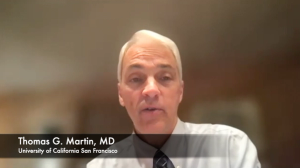
Thomas G. Martin, MD

Articles by Thomas G. Martin, MD

7 experts are featured in this series

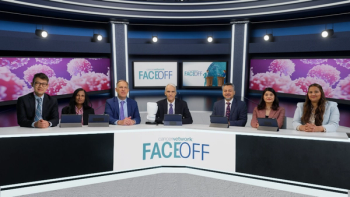
Dr. Saad Usmani reviews key findings from the phase 3 CARTITUDE-4 trial and discusses the growing role of ciltacabtagene autoleucel (cilta-cel) in patients with second-line and earlier-relapse relapsed/refractory multiple myeloma. The discussion highlights the study population, including patients with lenalidomide-refractory disease and high-risk clinical features, as well as the significant progression-free survival benefit observed with BCMA-directed CAR T-cell therapy compared with standard triplet regimens. Dr. Usmani and the panel examine the depth and durability of response, including high rates of complete response and sustained MRD negativity, and discuss the concept of treatment-free remission as a unique advantage of CAR T-cell therapy. Faculty also explore practical considerations such as patient selection, manufacturing timelines, bridging therapy, disease burden control, and quality-of-life outcomes. The conversation further addresses important safety considerations, including cytokine release syndrome, neurotoxicity, Parkinsonism-like events, immune effector cell-associated enterocolitis, access challenges, and the logistical barriers associated with delivering CAR T-cell therapy in real-world multiple myeloma practice.
7 experts are featured in this series

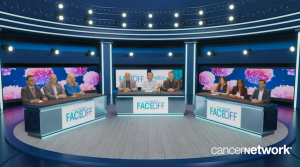
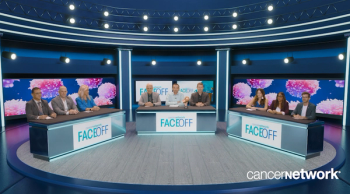
Dr. Thomas Martin opens this Cancer Network FACE-OFF program by introducing a debate-style discussion focused on one of the most rapidly evolving areas in relapsed/refractory multiple myeloma: treatment selection between BCMA-directed CAR T-cell therapy and bispecific antibody-based approaches in second-line and earlier-relapse disease. He outlines the unique format of the program, which combines clinical data review, expert debate, and case-based discussion to explore real-world treatment decision-making. Dr. Martin introduces Team Myeloma Mavericks, led by Dr. Saad Usmani and featuring Dr. Surbhi Sidana and Dr. Gurbakhash Kaur, and Team Myeloma Masters, led by Dr. Peter Voorhees with Dr. Amrita Krishnan and Dr. Hans Lee. The segment concludes with an overview of the pivotal studies that will frame the discussion, including CARTITUDE-4, MajesTEC-3, and MajesTEC-9, highlighting how emerging efficacy, durability, safety, and sequencing data are reshaping treatment strategies for patients with relapsed/refractory multiple myeloma.

9 Experts are featured in this series.

Panelists discuss how community centers can effectively implement bispecific antibody therapy for patients with relapsed/refractory multiple myeloma, addressing challenges such as staff training, patient monitoring, and managing potential adverse events in a non-academic setting.

9 Experts are featured in this series.

Panelists discuss how to approach treatment decisions and management strategies for a 58-year-old woman with relapsed/refractory multiple myeloma who is post-autologous stem cell transplant, MRD-negative, and currently receiving bispecific antibody therapy, considering factors such as prior treatments, response duration, and long-term treatment goals.

9 Experts are featured in this series.

Panelists discuss how optimizing dosing intervals and carefully considering combination strategies for bispecific antibodies in relapsed/refractory multiple myeloma could enhance treatment efficacy while managing toxicities and improving patient quality of life.

9 Experts are featured in this series.

Panelists discuss how the optimal sequencing of bispecific antibodies and CAR T-cell therapies in relapsed/refractory multiple myeloma could maximize treatment efficacy and improve patient outcomes in this challenging disease setting.

9 Experts are featured in this series.

Panelists discuss how the OPTec study, which explores outpatient step-up administration of teclistamab, could impact real-world practice by potentially improving patient convenience and reducing healthcare resource utilization in the treatment of multiple myeloma.

9 Experts are featured in this series.

Panelists discuss how prophylactic use of tocilizumab in the MajesTEC-1 trial may reduce the incidence and severity of cytokine release syndrome (CRS) in patients receiving bispecific antibody therapy for multiple myeloma, potentially improving treatment safety and tolerability.

9 Experts are featured in this series.

Panelists discuss how the follow-up results from the RedirecTT-1 study provide insights into the long-term efficacy and safety of bispecific antibody combinations in treating relapsed/refractory multiple myeloma, potentially shaping future treatment approaches for this challenging disease.

9 Experts are featured in this series.

Panelists discuss how the TRIMM-2 study explores the potential of combining bispecific antibodies to enhance treatment efficacy in patients with relapsed/refractory multiple myeloma, potentially offering a novel therapeutic strategy for this difficult-to-treat condition.

9 Experts are featured in this series.

Panelists discuss how Talquetamab, a novel GPRC5DxCD3 bispecific antibody, shows promising results in treating relapsed/refractory multiple myeloma based on the MonumenTAL-1 trial data, potentially offering a new therapeutic option for this challenging patient population.