




Non-Small Cell Lung Cancer (NSCLC)
Latest News
Advertisement
Latest Videos
































































Advertisement
More News
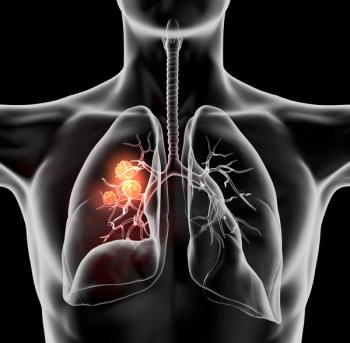
Patients with KRAS G12C–mutant non–small cell lung cancer may benefit from BBP-398 plus sotorasib, which received fast track designation from the FDA.
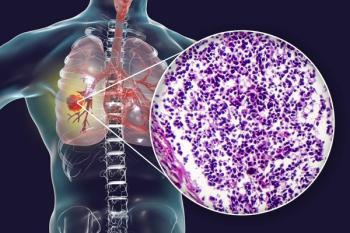
Findings of the phase 2 PERLA trial indicated that dostarlimab combined with chemotherapy achieved promising responses in patients with metastatic non-squamous non-small cell lung cancer.

Patients with locally advanced or metastatic EGFR-mutant nonsquamous non–small cell lung cancer who progressed on an EGFR inhibitor may benefit from treatment with sintilimab plus bevacizumab biosimilar IBI305 and chemotherapy vs chemotherapy alone.
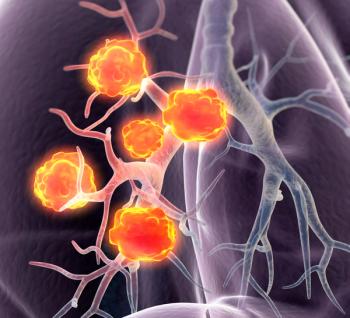
Fast track designation was granted to sapanisertib by the FDA for patients with unresectable or metastatic squamous cell non–small cell lung cancer who have an NRF2 mutation.

Based on results from a phase 3 trial, a bevacizumab biosimilar, bevacizumab-adcd, was approved by the FDA for patients with metastatic or recurrent non-squamous non–small cell lung in addition to 5 other disease types.
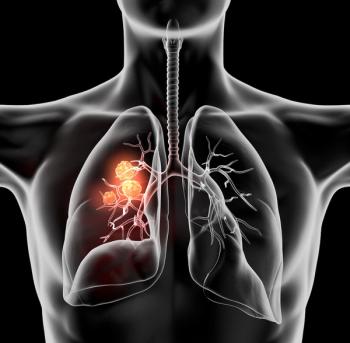
The Oncomine Dx Target Test was granted approval by the FDA as a companion diagnostic for RET fusion–positive thyroid cancer and RET fusion–positive non–small cell lung cancer.
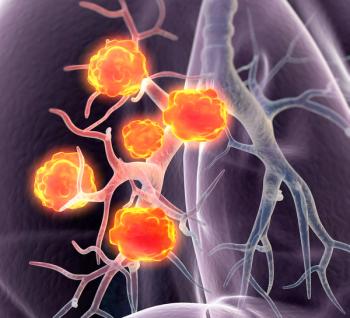
The FDA’s Oncologic Drugs Advisory Committee voted against poziotinib as a treatment for patients with HER2 exon 20 insertion–mutated non–small cell lung cancer.
Catherine A. Shu, MD, spoke about the most important findings from the phase 1 CHRYSALIS-2 trial for patients with previously treated EGFR-mutant non–small cell lung cancer who are administered amivantamab plus lazertinib.

Findings from the phase 3 COSMIC-021 trial, comparing the effect of cabozantinib alone or in combination with atezolizumab vs docetaxel for advanced non–small cell lung cancer previously treated with immunotherapy, though promising, highlighted further need for randomized data to confirm the regimen’s benefit in the second-line setting, according to Joel W. Neal, MD, PhD.
Patients with RET fusion–positive locally advanced/metastatic non–small cell lung cancer can now receive treatment with RET inhibitor selpercatinib, which was approved by the FDA.

Charu Aggarwal, MD, MPH, discussed findings from a study of the replication-deficient adenovirus CAN-2409 in advanced non–small cell lung cancer.
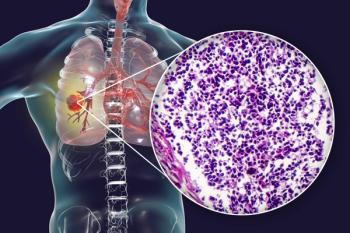
At ASCO 2022, Catherine A. Shu, MD, spoke about the CHRYSALIS-2 trial which investigated the use of amivantamab plus lazertinib in patients with EGFR-mutant non–small cell lung cancer following progression on a prior EGFR inhibitor.
Findings from a pooled analysis indicated that a decrease in circulating tumor DNA was associated with improved clinical benefit in patients with non–small cell lung cancer treated with immune checkpoint inhibitors.

Hossein Borghaei, DO, MS, discussed where investigators may drive future research following the phase 2 Lung-MAP trial examining pembrolizumab and ramucirumab in previously treated advanced non–small cell lung cancer.

Roy S. Herbst, MD, PhD, considers next steps in the management of patients with non–small cell lung cancer harboring genomic drivers.
Alexander I. Spira, MD, PhD, FACP, details the safety profile of single-agent adagrasib in patients with KRAS G12C–mutated advanced or metastatic non–small cell lung cancer, as well as plans for future research following the phase 1/2 KRYSTAL-1 study.

Mary E.R. O’Brien, MBBS, discussed results of an exploratory analysis of the phase 3 PEARLS/KEYNOTE-091 study examining pembrolizumab in resected non–small cell lung cancer.

Trastuzumab deruxtecan demonstrates clinically meaningful benefit in patients with non¬–small cell lung cancer harboring HER2 mutations, according to results from the DESTINY-Lung02 trial.

Results from the phase 3 IPSOS trial showed a nearly doubled rate of 2-year overall survival with atezolizumab in patients with advanced non–small cell lung cancer.

Findings from the phase 3 CodeBreaK 200 trial show improved progression-free survival with sotorasib vs docetaxel in previously treated KRAS G12C-mutant non–small cell lung cancer.
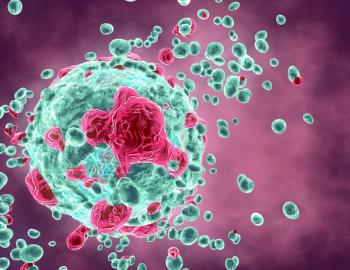
Results from the phase 3 CANOPY-A trial failed to show improved disease-free survival with adjuvant canakinumab in completely resected non–small cell lung cancer.
Overall survival remained durable in patients with metastatic non–small cell lung cancer when tremelimumab was added to durvalumab plus chemotherapy in the frontline setting.
Results from the phase 2 NEOpredict trial showed that the primary end point of feasibility of treatment in patients with surgical resection of non–small cell lung cancer was reached in those given preoperative nivolumab plus relatlimab.

Findings from a pooled analysis indicated that reductions in ctDNA were associated with improved clinical benefit across multiple end points in patients with non–small cell lung cancer treated with immune checkpoint inhibitors.
Treatment with adagrasib monotherapy yielded an overall response rate of 42.9% in patients with KRAS G12C–mutated advanced/metastatic non–small cell lung cancer, according to Alexander I. Spira, MD, PhD, FACP.
Advertisement
Advertisement
Trending on CancerNetwork
1
FDA Approves Tucatinib Combo as Maintenance in HER2+ Breast Cancer
2
Novel Cancer Vaccine Plus Temozolomide Miss Primary End Point in Glioblastoma
3
Personalized Vaccines May Have Utility Across All Lung Cancer Stages
4
Considering Talquetamab and Emerging Bispecifics in R/R Multiple Myeloma
5