






Non-Small Cell Lung Cancer (NSCLC)
Latest News
Advertisement
Latest Videos

































































Advertisement
More News

The phase 2 Neo-KAN study aims to determine if improved pathologic complete response rates with adagrasib alone or combined with immunotherapy for the neoadjuvant treatment of KRAS G12C–mutated non–small cell lung cancer are possible.

A challenging patient population with advanced non–small cell lung cancer and resistance to common immunotherapeutics appeared to derive promising benefit from treatment with eftilagimod alpha plus pembrolizumab.

Supported by data from an ongoing phase 2 trial, the ROS1 inhibitor taletrectinib was granted breakthrough therapy designation for the treatment of certain patients with advanced or metastatic ROS1-positive non–small cell lung cancer.

Nicholas Coupe, MBBS, PhD, discusses promising preliminary findings from a phase 1/2 study assessing the use of IMM60 in patients with advanced melanoma and non–small cell lung cancer.
At 2022 ASCO, Roy S. Herbst, MD, PhD, spoke about the results of a Lung-MAP substudy showing benefit of ramucirumab plus pembrolizumab vs standard of care chemotherapy for patients with advanced non–small cell lung cancer who demonstrated resistance to prior immunotherapy.
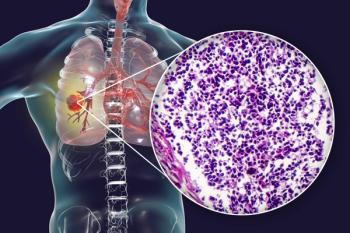
Results from the phase 3 IMscin001 trial indicated that atezolizumab given subcutaneously vs intravenously yielded non-inferior pharmacokinetics for patients with immunotherapy-naïve locally advanced or metastatic non–small cell lung cancer.

Durvalumab Appears to be Safe and Efficacious in Stage III NSCLC With Baseline Radiation Pneumonitis
Patients with stage III non–small cell lung cancer and baseline grade 1 radiation pneumonitis post-chemotherapy could benefit from treatment with durvalumab.

Biagio Ricciuti, MD, spoke about future analyses and major takeaways of a study analyzing outcomes with frontline immunotherapy based on PD-L1 expression in patients with non–small cell lung cancer.

Distinct clinical, genomic, and immunologic features were observed among patients with KRAS G12D–positive non–small cell lung compared with those with other types of KRAS positivity.

Kira MacDougall, MD, and Muhammad Rafay Khan Niazi, MD, spoke with CancerNetwork® about their research into the significance of peripheral blood biomarkers of response to immunotherapy in non–small cell lung cancer published in the journal ONCOLOGY®.

Tony S. Mok, MD, spoke about utilizing adjuvant or neoadjuvant treatment for patients with non–small cell lung cancer.
Those with non–small cell lung cancer who had increasing tumor mutational burden appeared to experience better inflammatory T-cell–mediated responses compared with those who had low tumor mutational burden.
Biagio Ricciuti, MD, spoke about results of pembrolizumab monotherapy administration in patients with non–small cell lung cancer who had a PD-L1 tumor proportion score of 90% or more.

Results from the phase 3 AEGEAN trial showed an improved pathological complete response in patients with resectable non–small cell lung cancer treated with durvalumab plus neoadjuvant chemotherapy vs chemotherapy alone.
Tony S. Mok, MD, spoke about future research efforts focused on capmatinib plus pembrolizumab in patients with previously untreated MET-unselected, PD-L1–positive non–small cell lung cancer.
Xiuning Le, MD, PhD, spoke about which patients with advanced non–small cell lung cancer with high MET-amplification could benefit most from tepotinib based on molecular markers.

Patients with stage IB to IIA non–small cell lung cancer who experienced a pathologic complete response to neoadjuvant nivolumab plus platinum-based doublet chemotherapy experienced a prolonged event-free survival.
Karen L. Reckamp, MD, spoke about current other Lung-MAP and what her colleague can take away from the phase 2 substudy S1800A presented at 2022 ASCO.
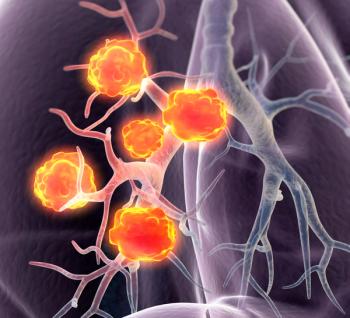
Patients with p53-mutated non–small cell lung cancer who were given ALRN-6924 completed more cycles of treatment with chemotherapy vs the placebo arm.

Based on results from the phase 2 GEOMETRY mono-1 trial, the European Commission has approved capmatinib for patients with non–small cell lung cancer who have MET exon 14 skipping mutations, and a need for systemic therapy following prior treatment with immunotherapy and/or platinum-based chemotherapy.

Results from the phase 3 AENA trial led to the United Kingdom’s Medicine and Healthcare products Regulatory Agency accepting a marketing authorization application for aumolertinib for review in patients with locally advanced or metastatic non–small cell lung cancer with activating EGFR mutations, and those with locally advanced or metastatic EGFR T790M mutation–positive non–small cell lung cancer.
Xiuning Le, MD, PhD, spoke about the use of ctDNA biomarkers and why research should continue for those with advanced non–small cell lung cancer with high MET-amplification being treated with tepotinib.
Xiuning Le, MD, PhD, spoke about unmet needs in patients with advanced non–small cell lung cancer with high MET-amplifications and why tepotinib may be a good treatment option.

A panel of experts review two patient cases to elucidate data in the adjuvant setting of non–small cell lung cancer.
Karen L. Reckamp, MD, Examines Safety of Ramucirumab Plus Pembrolizumab in IO/Chemo-Pretreated NSCLC
Karen L. Reckamp, MD, spoke about safety signals that emerged in the Lung-MAP nonmatched phase 2 substudy S1800A and what the next steps are for the combination of ramucirumab/pembrolizumab in patients with non–small cell lung cancer pretreated with chemotherapy and immunotherapy
Advertisement
Advertisement
Trending on CancerNetwork
1
FDA Approves Tucatinib Combo as Maintenance in HER2+ Breast Cancer
2
Novel Cancer Vaccine Plus Temozolomide Miss Primary End Point in Glioblastoma
3
Personalized Vaccines May Have Utility Across All Lung Cancer Stages
4
Considering Talquetamab and Emerging Bispecifics in R/R Multiple Myeloma
5