


Non-Small Cell Lung Cancer (NSCLC)
Latest News

Advertisement
Latest Videos



































































Advertisement
More News

FoundationOne CDx has been approved by the FDA as a companion diagnostic for entrecitinib for the treatment of ROS1 fusion–positive non–small cell cancer or NTRK fusion–positive solid cancers.

The phase 1/2 KRYSTAL-1 trial showed the use of adagrasib for KRAS G12C mutant-non–small cell lung cancer yielded results of positive intracranial activity and central nervous system penetration.
Biagio Ricciuti, MD, spoke about combination immunotherapy regimens for patients with non–small cell lung cancer who did not respond well to prior treatment.

Without regard for tumor pathology or PD-L1 expression, administering sugemalimab in combination with chemotherapy was superior to chemotherapy alone in treating patients with non–small cell lung cancer.

Patients with non–small cell lung cancer previously treated with multiple lines of therapy may benefit from treatment with patritumab deruxtecan.

Results from a correlative analysis conducted with 3-years of follow-up showed pembrolizumab monotherapy resulted in the greatest long-term survival benefit in patients with non–small cell lung cancer and a PD-L1 tumor proportion score of 90% or more.

Patients with previously untreated, locally advanced stage 3 non–small cell lung cancer continue to derive a benefit from pembrolizumab with concurrent chemoradiation followed by additional pembrolizumab after more than 2 years of follow-up.

An analysis presented at 2022 ASCO reveals a potential correlation between CDKN2A/B as well as cell cycle pathway alterations and brain metastases in non–small cell lung cancer.
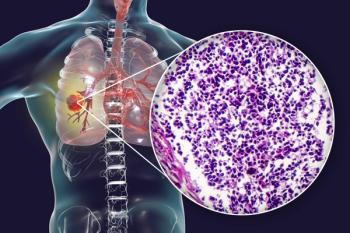
At a minimum follow-up of 3 years, an improvement in overall survival was seen in patients with metastatic non–small cell lung cancer treated with nivolumab and ipilimumab in combination with chemotherapy.
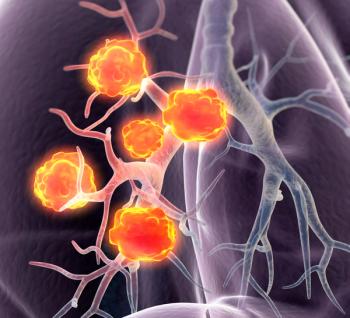
Results from the phase 3 PEARLS/KEYNOTE-091 trial showed improved disease-free survival with pembrolizumab vs placebo for patients with completely resected early-stage non–small cell lung cancer, without regard surgical treatment, extent of disease, or adjuvant chemotherapy.

The 5-year analysis of the phase 3 CheckMate 227 trial showed consistent, long-term survival with nivolumab plus ipilimumab for metastatic non–small cell lung cancer.

In a MET-unselected population of PD-L1–positive non–small cell lung cancer, the addition of capmatinib to pembrolizumab did not lead to more responses but increased toxicity.
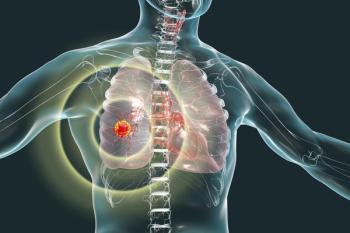
The results, however, showed that remaining on mobocertinib may be warranted for patients with EGFR exon 20 insertion-positive metastatic non-small cell lung cancer that has progressed after mobocertinib treatment.
Biagio Ricciuti, MD, spoke about patients with non–small cell lung cancer with a very high PD-L1 tumor proportion score of 90% or more who were treated with first-line pembrolizumab monotherapy.

Patients with EGFR exon 20 insertion–positive non–small cell lung cancer may have antitumor response with the selective EGFR inhibitor CLN-081 following multiple prior lines of treatment.

The combination of pembrolizumab plus ramucirumab resulted in better overall survival compared with the standard of care regimens despite similar response rates, according to results of a Lung-MAP substudy presented at 2022 ASCO.

The KRAS G12C inhibitor adagrasib demonstrated an objective response rate of 43% and disease control rate of 80% among patients with previously treated KRAS G12C–mutated non–small cell lung cancer.
The phase 3 ALTER 0303 trial demonstrated that although patients with non–small cell lung cancer and liver metastases have a worse prognosis than those without, treatment with anlotinib may result in better progression-free survival vs a placebo.
Expert oncologists review safety/efficacy data behind mobocertinib, a small molecule tyrosine kinase inhibitor, in patients with EGFR exon 20 insertion–positive metastatic non–small cell lung cancer.
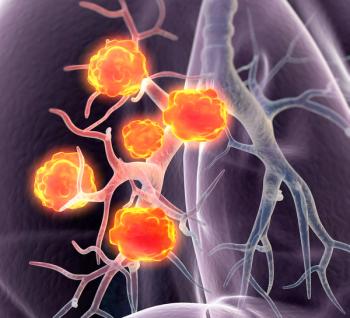
Final end point analysis of the GEMSTONE-301 trial confirmed that patients with stage III non–small cell lung cancer experienced significant clinical benefit and promising efficacy following consolidation therapy with sugemalimab monotherapy.

Results from the phase 3 CheckMate 816 trial show patients with resectable non¬–small cell lung cancer had improved event-free survival when treated with neoadjuvant nivolumab plus chemotherapy vs chemotherapy alone.
The primary end point of progression-free survival was not met in the phase 3 SKYSCRAPER-1 trial assessing tiragolumab plus atezolizumab for patients with PD-L1–high locally advanced or metastatic non–small cell lung cancer.

Nicolas Girard, MD, speaks with CancerNetwork® about the updated safety findings of nivolumab and chemotherapy in resectable non–small cell lung cancer.
In a conversation with CancerNetwork®, Nicolas Girard, MD, highlighted directions of future research with nivolumab and chemotherapy in patients with resectable non–small cell lung cancer.
Gregory Riely, MD, PhD, and Tarek Mekhail, MD, detailed the use of mobocertinib of platinum-pretreated patients with metastatic non–small cell lung cancer.
Advertisement
Advertisement
Trending on CancerNetwork
1
FDA Approves Tucatinib Combo as Maintenance in HER2+ Breast Cancer
2
Novel Cancer Vaccine Plus Temozolomide Miss Primary End Point in Glioblastoma
3
Personalized Vaccines May Have Utility Across All Lung Cancer Stages
4
Considering Talquetamab and Emerging Bispecifics in R/R Multiple Myeloma
5