
































































Patients who had resection within 12 weeks of diagnosis of stage I NSCLC were found to have lower rates of recurrence.
Patients who had resection within 12 weeks of diagnosis of stage I NSCLC were found to have lower rates of recurrence.

Bemcentinib plus PD-1/L1 inhibition moves forward as therapy for patients with AXL-expressing non–small cell lung cancer.
Jabbour detailed the importance of managing care in a multidisciplinary setting for patients enrolled in the KEYNOTE-799 trial with stage III NSCLC.

Among other things, Pennell focused on data regarding atezolizumab as adjuvant therapy to improve disease-free survival for patients with stage II/III resected non–small cell lung cancer.

According to data presented at the 2021 ASCO Annual Meeting, patients with crizotinib-refractory ALK-positive non–small cell lung cancer demonstrated long-term response and survival maintenance on brigatinib.

Reck mentioned the IMpower010 and CheckMate 816 trials investigating treatment options for patients with non-small cell lung cancer.

Larotrectinib’s tumor-agnostic indication for NTRK fusion–positive cancers is further validated by data presented at the 2021 ASCO Annual Meeting.

Patients with platinum-pretreated EGFR exon 20 insertion mutation–positive metastatic non–small cell lung cancer experienced antitumor activity with oral TKI mobocertinib, according to results presented at the 2021 ASCO Annual Meeting.

Compared with immediate prior therapy, selpercatinib resulted in a greater proportion of objective responses in patients with non–small cell lung cancer whose tumors harbor RET fusions.
Patients with pretreated KRAS p.G12C–mutated NSCLC experienced a continued durable clinical benefit with sotorasib.
For heavily pretreated patients with EGFR-mutated NSCLC resistant to EGFR TKIs, patritumab deruxtecan induced clinically meaningful and durable efficacy.

Some patients who progressed on osimertinib had a response to therapy with amivantamab and lazertinib, and these were seen regardless of known resistance mechanisms to EGFR inhibitors.
Patients with non-small cell lung cancer receiving alectinib did not have better results than patients receiving crizotinib.
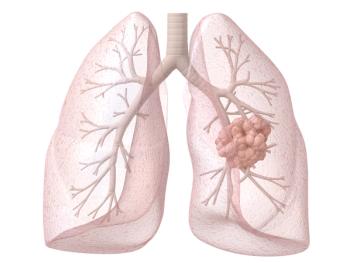
A phase 1 trial of the investigational agent CLN-081 indicates antitumor activity coupled with a tolerable safety profile as treatment of patients with non–small cell lung cancer and EGFR exon 20 insertion mutations.

Two-year efficacy and safety data from a pivotal trial of nivolumab/ipilimumab plus chemotherapy as treatment of non–small cell lung cancer support the continued use of the combination.
Data presented at the 2021 ASCO Annual Meeting from the phase 3 PACIFIC trial show long-term survival benefit for patients with unresectable stage III non–small cell lung cancer treated with durvalumab following chemoradiotherapy.
A positive efficacy and safety profile persists with pralsentinib in RET fusion–positive non–small cell lung cancer, according to data presented at the 2021 ASCO Annual Meeting.
CancerNetwork® sat down with Stephen V. Liu, MD, at the 2021 American Society of Clinical Oncology Annual Meeting to talk about pralsetinib for patients with non–small cell lung cancer harboring RET fusions and adequate biomarker testing in the frontline.
Based on positive phase 3 results, a new drug application for sugemalimab to treat patients with locally advanced or unresectable stage III non–small cell lung cancer will likely be submitted to the FDA.

Based on data from the phase 1/2 CodeBreaK 100 trial, the FDA approved the KRAS G12C inhibitor sotorasib.
Solid nodules, peritumoral interstitial thickening, and pleural contact can play a role in carefully selecting optimal patients to undergo sublobar resection instead of more extensive surgery.
The first targeted therapy for EGFR exon 20 insertion mutation–positive non–small cell lung cancer is now available for patients in the United States.
Findings from the phase 3 IMpower010 trial support the use of atezolizumab as adjuvant therapy for patients with stage II to IIIA non–small cell lung cancer.

Alessi detailed his research into cancer aneuploidy and its predictive capabilities for treating patients with non–small cell lung cancer.

Based on results of a phase 3 trial demonstrating the superiority of sintilimab versus placebo plus chemotherapy for nonsquamous non–small cell lung cancer, the FDA considers approval of the PD-1 inhibitor injection.