



Pediatric Cancers
Latest News
Advertisement
Latest Videos




Shorts


Podcasts


























































Advertisement
More News
The FDA has granted rare pediatric disease designation and orphan drug designation to FL118 for the treatment of osteosarcoma.

The ASPHO Conference brings together the world’s leading experts in pediatric oncology and hematology, and this collection of posters detail new findings in care.

Patients who received human milk oligosaccharide demonstrated preserved Shannon Diversity index compared with control.
New developments revealed regulatory milestones for bacterial therapeutic candidates and potential efficacy with vaccine-based approaches.

The conditional marketing authorization for tovorafenib in pediatric patients with low-grade glioma harboring a BRAF alteration is based on data from the FIREFLY-1 trial.

The FDA has granted FTD and cleared an IND application for daretabart, an anti-GD2 monoclonal antibody, for the treatment of high-risk neuroblastoma.

Treatment with Rhenium-186 Obisbemeda for pediatric malignant gliomas and ependymomas is being assessed in the ReSPECT-PBC trial.

An intern doctor at Al-Sabah Children’s Hospital sheds light on health care delivery gaps in a resource-limited setting.

The updated NDA submitted to the FDA included additional data and statistical analyses from existing clinical trials for pediatric and adult patients with glioma.

The guidelines offer best practices for diagnoses, classification, systemic treatment, radiation therapy, and surgery for patients with RMS.
New guidelines highlight asparaginase as a cornerstone of frontline therapy for adolescents and young adults with acute lymphoblastic leukemia.
Findings from the phase 1b/2 TENACITY-01 trial, which is assessing CTD402 monotherapy in these hematologic malignancies, supported the agency’s decision.

The FDA approved selumetinib as treatment for pediatric neurofibromatosis type 1, expanding options for young patients with inoperable plexiform neurofibromas.
Pediatric patients self-reported symptom burden using the SSPedi tool, which observed symptom burden from baseline, 4 weeks, and 8 weeks.

Balancing a career as a pediatric oncologist with leadership responsibilities, Maria C. Velez, MD, shares insights into her passion for the field and ASPHO’s impactful work.
The safety profile of iopofosine I 131 in the phase 1b CLOVER-2 trial appears consistent with prior reports of the agent.

The EMA’s CHMP has adopted a positive opinion for mirdametinib in patients with inoperable plexiform neurofibromas of neurofibromatosis type 1.

The B7-H3 CAR T-cell therapy showed positive survival results for younger patients with diffuse intrinsic pontine glioma in a phase 1 trial.

Clinical trial access alone appears to be insufficient in overcoming the worse survival outcomes observed in Black and Hispanic pediatric populations.

Prophylactic defibrotide conferred more ICU admissions and higher mortality among high-risk pediatric patients who underwent prior HSCT.
Data from the phase 3 MSB-GVHD001 trial support the FDA approval of remestemcel-L in pediatric SR-aGVHD.
The expanded approval of methotrexate may offer a convenient alternative to pediatric patients who have difficulty swallowing pills.

Investigators previously assessed treatment with opaganib in patients with advanced cholangiocarcinoma and prostate cancer.
Results from the phase 2 AGAVE-201 trial of axatilimab for patients with relapsed/refractory chronic GVHD support the FDA approval.
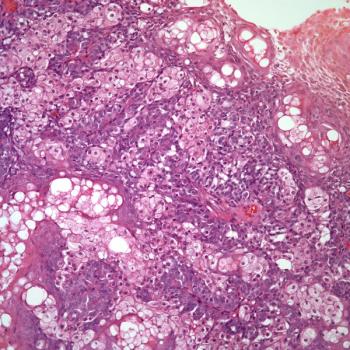
Phase 1 data may support the potential activity and safety of VCN-01 among pediatric patients with refractory retinoblastoma.
Advertisement
Advertisement
Trending on CancerNetwork
1
Acid Reducers, Drug-Drug Interactions, and Setting Expectations for Response
2
Reading a Changed Eye Examination and Impact on Therapy
3
VS-7375 Yields Responses in KRAS G12D–Mutated Solid Tumors
4
Operationalizing the First Dose and Building the Oncology and Eye Care Partnership
5