




Prostate Cancer
Latest News

Advertisement
Latest Videos
























































Advertisement
More News

Expert panelists center discussion around two patient cases to review use of newer anti-androgen deprivation therapy in the management of prostate cancer.

Findings from the phase 3 ARCHES trial highlighted a long-lasting survival improvement for patients with metastatic hormone-sensitive prostate cancer who were treated with enzalutamide plus androgen deprivation therapy regardless of whether they received prior local therapy.
Mark T. Fleming, MD, spoke about how use of 18F-rhPSMA-7.3 for PET/CT scans in patients with recurrent prostate cancer bests conventional imaging.

Results from a phase 3 trial indicated that olaparib yielded better-preserved health-related quality of life and reduced pain burden vs the control for patients with homologous recombination repair gene–altered metastatic castration-resistant prostate cancer who progressed following a prior next-generation hormonal drug.

Superior post-scan disease upstaging in patients with recurrent prostate cancer was observed with 18F-rhPSMA-7.3 compared with conventional baseline imaging.

Patients with metastatic castration-resistant prostate and DNA repair gene defects cancer treated with niraparib were found to experience significant anti-tumor activity.

Looking toward the future management of metastatic HSPC, experts consider the results of triplet combination trials like ARASENS and PEACE-1.
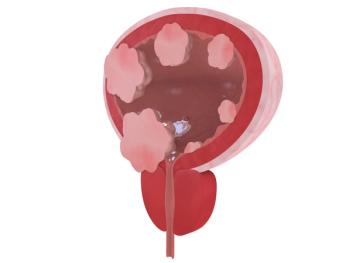
The FDA granted priority review to a supplemental new drug application for darolutamide plus docetaxel for the treatment of metastatic hormone-sensitive prostate cancer.

Expert perspectives on optimal genomic testing practices in patients with prostate cancer.
Discussion on the selection of therapy for a patient with metastatic HSPC in the context of available agents and FDA approvals.

Muhammad Rafay Khan Niazi, MD, and Alexander Bershadskiy, MD, spoke with CancerNetwork® about the latest research from the journal ONCOLOGY® on the use of PARP inhibitors as maintenance therapy for certain patients with metastatic castration-resistant prostate cancer.

Susan F. Slovin, MD, PhD, spoke about how new approaches can support clinical practice guidelines and physician intuition in treating patients with prostate cancer.

Switching to a patient scenario of metastatic hormone-sensitive prostate cancer, experts discuss which therapeutic approach they would undertake.
A brief discussion on the role of PSMA-targeted therapy’s role in managing patients with nonmetastatic castration-resistant prostate cancer.
Scott T. Tagawa, MD, spoke about potential approvals in the coming year for prostate cancer.
Phillip S. Low, PhD, spoke about what the future holds for treatments like 177Lu-PSMA-617 being developed for patients with prostate cancer.
Shared insight on the selection of specific androgen receptor inhibitors for patients with nonmetastatic castration-resistant prostate cancer.
Centering the discussion around a patient with nonmetastatic castration-resistant prostate cancer, experts share insight on optimal work-up and testing.
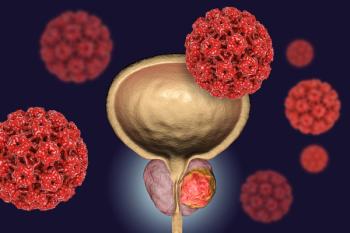
Patients with metastatic castration-resistant prostate cancer who had a high genomic loss of heterozygosity may respond better to treatment with talazoparib.
Genetic determinants of PSA proved to robustly predict prostate cancer diagnoses and improve the detection of aggressive disease; however, larger and more diverse studies are still required.

Steven Finkelstein, MD, DABR, FACRO, and Louis J. Mazzarelli, MD, react to the manuscript titled, “A Prospective Head-to-Head Comparison of 18F-Fluciclovine With 68Ga-PSMA-11 in Biochemical Recurrence of Prostate Cancer in PET/CT,” by Birgit Pernthaler and colleagues.
Neeraj Agarwal, MD, and Simon Chowdhury, MD, review final results from the TITAN study of apalutamide in patients with mCSPC and discuss the clinical implications of the findings.
Phillip S. Low, PhD, pioneered development of 177Lu-PSMA-617 for patients with metastatic castration-resistant prostate cancer and spoke about its recent approval.
Patients with prostate cancer who received surgery had the highest rate of treatment-related regret followed by radiotherapy and active surveillance.

Based on data from the phase 3 VISION trial, 177Lu-PSMA-617 may now be used to treat patients who were previously treated with androgen receptor pathway inhibitors plus taxane-based chemotherapy for metastatic prostate specific membrane antigen–positive castration-resistant prostate cancer.
Advertisement
Advertisement
Trending on CancerNetwork
1
FDA OKs Pirtobrutinib in Frontline CLL/SLL
2
EXCALIBER-RRMM: Iberdomide in Relapsed/Refractory Multiple Myeloma
3
Assessing IMPT Outcomes Across Localized Prostate Cancer Risk Groups
4
SBRT Matches Disease Control of Prostatectomy in Localized Prostate Cancer
5