



Prostate Cancer
Latest News
Advertisement
Latest Videos

























































Advertisement
More News
Expert oncologists review the selection of apalutamide + androgen deprivation therapy in this patient scenario of metastatic castration-sensitive prostate cancer.

A brief discussion on the toxicities and drug-drug interactions associated with frontline therapies in metastatic CSPC and when it would be appropriate to alter treatment to mitigate toxicity.

Focused discussion on drug and patient factors that aid in the selection of frontline therapy for metastatic castration-sensitive prostate cancer.
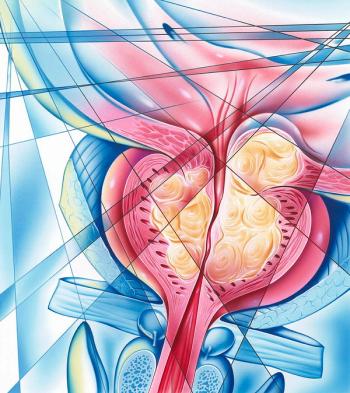
Based on data showing that patients with metastatic castration-resistant prostate cancer may achieve benefit following treatment with olaparib plus abiraterone and prednisone or prednisolone regardless of homologous recombination repair mutational status, the FDA gave the combination priority review.
Ian D. Davis, MBBS, PhD, spoke about the subgroup analysis of the ENZAMET trial which analyzed enzalutamide in metastatic hormone-sensitive prostate cancer.

Shared insight on the frontline use of chemotherapy options for patients with metastatic CSPC in the context of AR-targeted therapies.

After reviewing a patient scenario of metastatic castration-sensitive prostate cancer, expert panelists break down frontline treatment options in this setting.

Patients with metastatic hormone-sensitive prostate cancer can now receive treatment with oral darolutamide plus docetaxel following its approval by the FDA.
Data from a substudy of the phase 3 VISION trial presented at 2022 ASCO Annual Meeting showed that higher standard mean uptake value by PSMA-PET is strongly associated with outcomes for patients with metastatic castration-resistant prostate cancer.
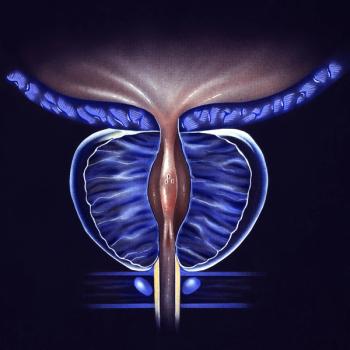
Results from the phase 3 KEYNOTE-921 trial showed the primary end points of overall survival and radiographic progression-free survival were not met despite a trend towards improvement following treatment with pembrolizumab and docetaxel in patients with metastatic castration-resistant prostate cancer.
Ian D. Davis, MBBS, PhD, spoke about updated survival results of the ENZAMET trial which analyzed enzalutamide in metastatic hormone-sensitive prostate cancer.
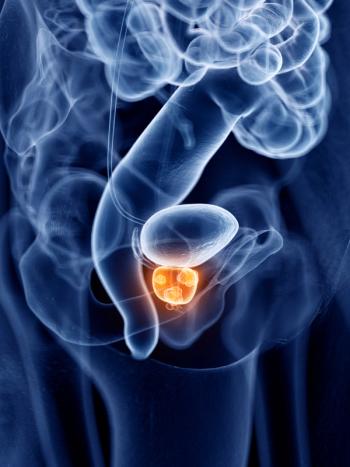
Radical proctectomy, external beam radiotherapy, and brachytherapy yielded comparable prostate cancer–specific mortality, while external beam radiotherapy with or without brachytherapy resulted in favorable distant metastases outcomes in patients with high-risk prostate cancer.

At 24 months of follow-up, MRI-guided focused ultrasound focal therapy was found to be safe and effective for patients with grade group 2 or 3 prostate cancer.
Enzalutamide monotherapy could be a promising alternative to active surveillance for patients with low- and intermediate-risk localized prostate cancer.
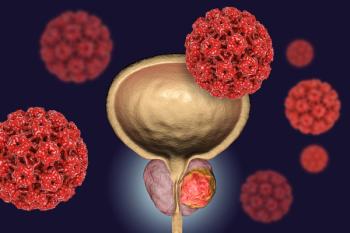
Metastatic castration-resistant prostate cancer tumors can be classified as luminal and basal, possibly allowing for a better precision medicine approach to treatment.
Patients with high-risk prostate cancer appeared to derive benefit from androgen deprivation therapy given for a minimal duration of over 18 months plus external beam radiotherapy.
Treatment with 177Lu-PSMA-617 resulted in poor outcomes for patients with metastatic castration-resistant prostate cancer whose tumors had little to no prostate-specific membrane antigen expression.

Data from the SPOTLIGHT trial indicate agreement among trained PET readers was highly concordant with use of 18F-rhPSMA-7.3 imaging for recurrent prostate cancer.
The radiotherapy schedules used in the ATLAS trial reflect recent evidence and guideline changes for its usage in patients with high-risk localized or locally advanced prostate cancer.
Results from the phase 3 SPOTLIGHT trial showed 18F-rhPSMA-7.3 increased post-scan disease upstaging in recurrent prostate cancer.
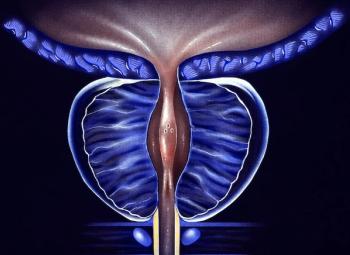
Metastatic progression pattern with darolutamide appears to be unaltered in nonmetastatic castration-resistant prostate cancer, despite the agent resulting in better survival outcomes.
A post-hoc analysis of the phase 3 TITAN trial revealed potential biomarkers that may predict overall survival in patients with metastatic castration-resistant prostate cancer receiving apalutamide plus androgen deprivation therapy.
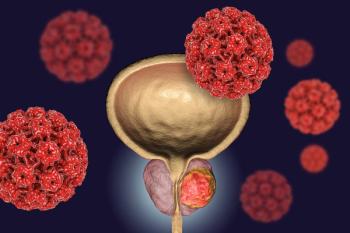
Unlike with enzalutamide, it appears darolutamide does not affect systemic exposure of cabazitaxel in patients with metastatic castration-resistant prostate cancer.
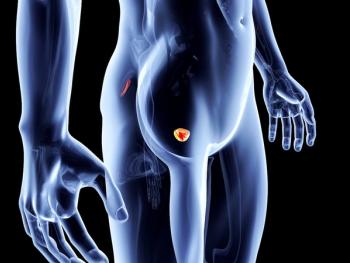
Data presented at 2022 ASCO reveals PET-imaging characteristics linked with 177Lu-PSMA-617 efficacy in metastatic castration-resistant prostate cancer.
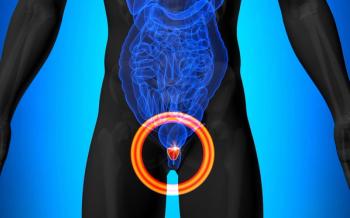
Results of the ENZAMET trial presented at 2022 ASCO continue to support use of enzalutamide in patients with metastatic hormone-sensitive prostate cancer.
Advertisement
Advertisement
Trending on CancerNetwork
1
FDA OKs Pirtobrutinib in Frontline CLL/SLL
2
EXCALIBER-RRMM: Iberdomide in Relapsed/Refractory Multiple Myeloma
3
Assessing IMPT Outcomes Across Localized Prostate Cancer Risk Groups
4
SBRT Matches Disease Control of Prostatectomy in Localized Prostate Cancer
5