





Prostate Cancer
Latest News
Advertisement
Video Series




Latest Videos






Shorts

1:18
TALAPRO-3 Data Show Striking 52% Reduction in CRPC Progression Risk
2 days ago
by
Neeraj Agarwal, MD

1:15
Why Frontline Talazoparib/Enzalutamide Therapy Is Critical in Metastatic CSPC
2 days ago
by
Neeraj Agarwal, MD

1:22
How Do GnRH Agents Impact Cardiovascular Risk in Prostate Cancer?
8 days ago
by
Faisal Mehmud, MD, MRCP

1:28
Are Prostate Cancer Molecular Signatures Driving the Right Decisions?
2 months ago
by
Herbert Lepor, MD

0:58
Seven-Year Data Drive Patient Preference for Focal Prostate Cancer Therapy
2 months ago
by
Herbert Lepor, MD

Developing Governance for AI in Prostate Cancer Genetic Testing
4 months ago
by
David M. Waterhouse, MD, MPH
1:06
AE Profile of Lu-177-PSMA-617 Similar Among Low, High Volume mHPSC Groups
4 months ago
by
Fred Saad, MD

0:59
PSMAtrack: 100% of mHSPC Group Show Residual PSMA-Avid Disease at 6 Months
4 months ago
by
Praful Ravi, MB, BChir, MRCP

1:15
Who is Most Likely to Undergo Conservative Management for Prostate Cancer?
5 months ago
by
Isaac Allen, PhD

0:45
Comparing HIFU To Surgery and SBRT in Localized Prostate Cancer
6 months ago
by
Mina Fam, MD
Podcasts






















































Advertisement
More News

In a secondary analysis of the DEPROMP trial, 94.8% of biopsy-naive men had no AEs immediately after multimodal MRI- and PSMA PET/CT–guided prostate biopsy.

The FDA cleared the SpaceOAR Flex System, a hydrogel spacer used during prostate cancer radiotherapy, in a 510(k) supported by the HYDROSPACE trial.

“Cardiovascular assessment should begin when the patient is being selected for treatment, not after the toxicity emerges,” said Faisal Mehmud, MD, MRCP.

Experts preview ASTRO 2026 presentations to watch, including those on SOFT Preop, PSMAgRT, radiosurgery for depression, and AI tools for patient safety.
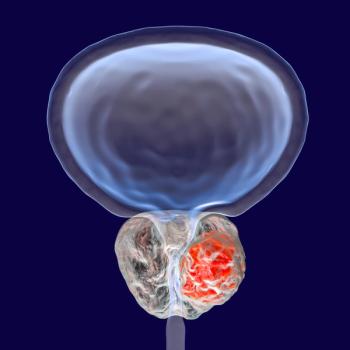
Patients with nonmetastatic prostate cancer in the highest quintile of postdiagnosis saturated fat consumption showed a 24% greater risk of all-cause mortality vs the lowest quintile.
Enrollment for a phase 1 trial evaluating ADI-212, an armored allogeneic Vδ1 CAR T-cell therapy, in metastatic CRPC is planned for Q4 2026.

Men with disabilities were less likely to have received prior PSA testing than men without disabilities, with mobility disability showing the most consistent association.

Data from the PSMAddition trial support the approval of the radioligand-based regimen for this prostate cancer population.
TALAPRO-3 trial findings support the regulatory decision for the talazoparib-based regimen in HRR-altered metastatic castration resistant prostate cancer.

This cross-sectional study evaluated the genetic landscape of a cohort of patients with metastatic prostate cancer who were treated at a referral center in Mexico City, Mexico.
Investigators will evaluate carotuximab plus radium-223 to overcome treatment resistance in metastatic CRPC with bone metastases.
A 10-year analysis of 3477 patients found low prostate cancer–specific mortality with focal high-intensity focused ultrasound or cryotherapy for nonmetastatic disease.
Patients with clinically higher-risk disease but favorable GPS results had higher 6-year EFS rates across treatment arms vs those at a lower clinical risk.
Findings from the phase 3 CAPItello-281 trial supported the regulatory decision for capivasertib among this PTEN-deficient HSPC group.

The clearance enables the developers to include China-based centers in an ongoing phase 1a/1b trial evaluating the agent in late-stage solid tumors.

NCCN-indicated germline and somatic testing performance was inconsistent, although rates have been increasing due to concurrent quality improvement efforts.

Among patients treated in the PSMAtrack analysis, all had residual PSMA-avid disease following 6 months of systemic therapy for metastatic HSPC.
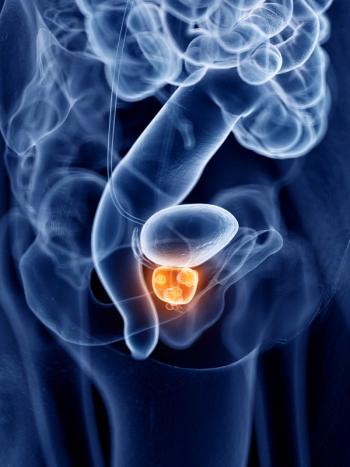
Patients with positive images may benefit from additional therapy not directed at the androgen receptor; however, prospective validation is required.

Patients were 9 times more likely to have little to no cancer remaining after their procedure with the apalutamide doublet compared with placebo plus ADT.
Enrollment for the WATER IV study evaluating aquablation vs radical prostatectomy has concluded, with primary end point results planned by spring 2027.
The ArteraAI Prostate Test is now available to predict mortality risk and guide treatment for metastatic hormone-sensitive prostate cancer.
PSA score at 24 weeks was the strongest predictor of survival, with a PSA concentration of 0.2 ng/mL or less predicting favorable outcomes in this group.
New developments revealed regulatory milestones for bacterial therapeutic candidates and potential efficacy with vaccine-based approaches.

Based on the clinical efficacy, ODAC members collectively voted to support the sNDA for capivasertib in this PTEN-deficient HSPC population.

Recently, conservative management has grown in popularity, especially among older patients and those with higher neighborhood-level socioeconomic status.
Advertisement
Advertisement
Trending on CancerNetwork
1
FDA OKs Pirtobrutinib in Frontline CLL/SLL
2
Multimodal Biopsy Combo Shows Low Morbidity in Suspected Prostate Cancer
3
Assessing IMPT Outcomes Across Localized Prostate Cancer Risk Groups
4
FDA Discussion Prompts Voluntary Withdrawal of BLA for I-DXd in ES-SCLC
5