

Investment in early detection will drive further progress in increasing survival rates, according to Diane Simeone, MD.
Investment in early detection will drive further progress in increasing survival rates, according to Diane Simeone, MD.


Craig H. Moskowitz, MD, discussed the transition toward molecularly defined lymphoma care and the declining role of autologous stem cell transplantation.

Reducing vein-to-vein time and expanding manufacturing capacity represent ongoing challenges to optimizing the use of cellular therapy across indications.
New developments revealed regulatory milestones for bacterial therapeutic candidates and potential efficacy with vaccine-based approaches.

MinhTri Nguyen, MD, discusses why timely breast cancer care in rural areas is hindered by a "combination of burdens," including systemic policy issues.

Hematologic oncologists discussed long-term survival data from the SEQUOIA and ALPINE trials exploring zanubrutinib in frontline and R/R CLL/SLL.

The FDA issued a “safe to proceed” letter for an expanded access program for daraxonrasib in metastatic pancreatic ductal adenocarcinoma.

A panel of experts discussed the implications of the AQUILA trial and the FDA approval of subcutaneous daratumumab in high-risk smoldering multiple myeloma.
Data from the phase 3 VERITAC-2 trial support the FDA approval of vepdegestrant in this breast cancer population.

Post-surgical treatment, functional gains were improved among patients with breast cancer.

Updated findings from the TRUST-I and TRUST-II trials may reflect the importance of molecular testing in non–small cell lung cancer therapy.

Based on the clinical efficacy, ODAC members collectively voted to support the sNDA for capivasertib in this PTEN-deficient HSPC population.

Ralph V. Boccia, MD, FACP, explained how his team utilizes patient monitoring kits to manage CRS and keep patients out of the hospital.
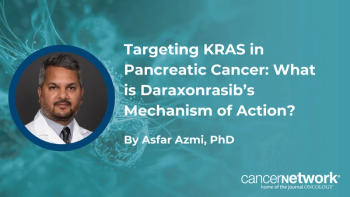
Asfar Azmi, PhD, discusses the tricomplex mechanism of daraxonrasib and its impact on overall survival for patients with pancreatic cancer.

The simlukafusp alfa–containing triplet displayed a profile comparable to the safety of each individual drug in this RCC population.

The ODAC has noted there was no clinical benefit of camizestrant for patients with HR+/HER2– advanced or metastatic breast cancer with ESR1 mutation and radiographic progression.

The FDA granted priority review to tislelizumab plus zanidatamab and chemotherapy for the first-line treatment of advanced HER2-positive gastric cancers.

Tovecimig plus paclitaxel yielded a median OS of 8.9 months vs 9.4 months with control in second-line biliary tract cancer in the phase 2/3 COMPANION-002 trial.

The MagnetisMM-5 study remains ongoing to assess the key secondary end point of overall survival among those with relapsed/refractory multiple myeloma.

According to Asfar Azmi, PhD, results from the study showed that the PCNA inhibitor AOH1996 was synergistic with KRAS inhibitors of all classes.