

Sherry Shen, MD, explained the compounding factors behind weight gain during breast cancer care and why managing cardiometabolic health is vital for survival.
Sherry Shen, MD, explained the compounding factors behind weight gain during breast cancer care and why managing cardiometabolic health is vital for survival.

ASCO insights on T-DXd plus pertuzumab in HER2-positive breast cancer: deep, durable responses and practical ILD/radiation safety considerations.
New phase III data reshapes HER2+ breast cancer care, spotlighting T-DXd from neoadjuvant to first-line metastatic, plus CNS and toxicity insights.

New ADC trial data reshapes metastatic breast cancer care: why OS differs, where T-DXd fits, and SG’s frontline gains in TNBC.
Experts unpack new antibody-drug conjugate trial data, sequencing choices, and toxicity management reshaping metastatic breast cancer care.
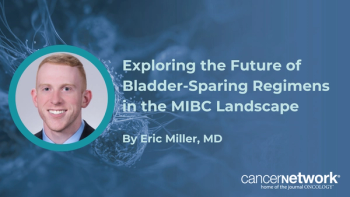
Eric Miller, MD, discussed the evolving role of immunotherapy, antibody-drug conjugates, and sequential therapeutic strategies for bladder preservation.
Joshua Richter, MD, joins The Moonlight Shift to discuss "cure" in relation to myeloma treatment, the linvoseltamab pipeline journey, and myths surrounding myeloma care.

C-POST shows adjuvant cemiplimab cuts recurrence risk in high‑risk cutaneous SCC after surgery and radiation, reshaping multidisciplinary care.
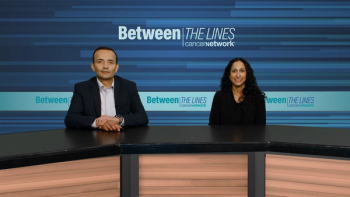
Dr. Ajai Chari and NP Samantha Shenoy discuss the clinical rationale for incorporating daratumumab-based regimens into the frontline management of newly diagnosed multiple myeloma (NDMM). The conversation explores the biologic rationale for targeting CD38 and reviews how daratumumab-based combinations have contributed to deeper responses and improved minimal residual disease (MRD) negativity in clinical studies. The faculty discuss patient selection in transplant-ineligible disease, emphasizing the importance of balancing efficacy with tolerability, comorbidities, and long-term treatment goals. Dr. Chari and NP Shenoy also share their perspectives on how CD38-directed therapy has influenced frontline treatment strategies and discuss practical considerations when selecting regimens for older or medically complex patients. The discussion provides important clinical context for understanding the evidence supporting daratumumab-based approaches and their role in optimizing outcomes for patients with NDMM.
Learn red flags for advanced cutaneous SCC and how PD‑1/PD‑L1 immunotherapy offers durable responses, reshaping treatment beyond surgery.
Dr. Ajai Chari and NP Samantha Shenoy introduce the program by reviewing the evolving treatment landscape in newly diagnosed multiple myeloma (NDMM) and discussing the factors that influence contemporary frontline treatment decisions. The faculty highlight the shift toward individualized treatment selection based on patient fitness, frailty, comorbidities, and treatment goals rather than transplant eligibility alone. They explore the growing incorporation of CD38-targeted therapies into frontline treatment strategies, the increasing emphasis on achieving deep and durable responses, and the importance of long-term disease control. Dr. Chari and NP Shenoy also discuss the expanding role of quadruplet regimens, minimal residual disease (MRD) assessment, and treatment duration considerations as part of modern NDMM management. The conversation establishes the clinical context for the subsequent review of MAIA and CEPHEUS trial data and their implications for everyday practice.
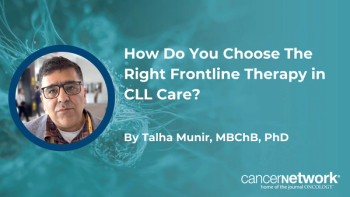
Those with TP53-mutated disease may benefit from continuous BTK inhibitor therapy, although limited-duration therapy is worthy of discussion.
In an expert-led review of pivotal clinical trial data presented at the 2026 ASCO Annual Meeting, CancerNetwork® spoke with oncology experts in the renal cell carcinoma (RCC), Merkel cell carcinoma, and chronic myeloid leukemia (CML) spaces to break down key abstracts at the conference.
Dr. Joshua Zeidner from University of North Carolina Lineberger Comprehensive Cancer Center and Dr. Jorge Cortes from O'Neal Cancer Center at University of Alabama Birmingham introduce their discussion on frontline chronic myeloid leukemia (CML) management.
Learn when high-risk skin SCC needs early oncology referrals, imaging, and coordinated tumor-board care to avoid delays and improve outcomes.
Learn how clinicians spot aggressive cutaneous squamous cell carcinoma and when multidisciplinary care and immunotherapy improve outcomes.
Combining pirtobrutinib with venetoclax/rituximab yielded high MRD clearance among those with CLL/SLL in the phase 3 BRUIN CLL-322 trial.
Updated data from the ASC4FIRST trial affirm asciminib as the treatment of choice for many patients with chronic myeloid leukemia in chronic phase.
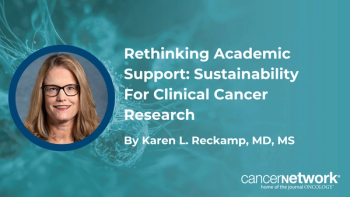
Karen Reckamp, MD, MS, analyzed the shifting funding models in academic oncology and the necessity of philanthropy to support clinical trial infrastructure.
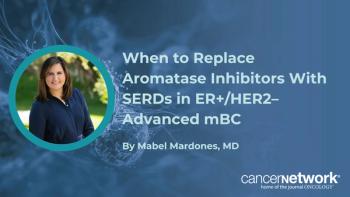
Although the results from persevERA were not statistically significant, they may support using oral SERDs for patients with ER+/HER2– breast cancer.
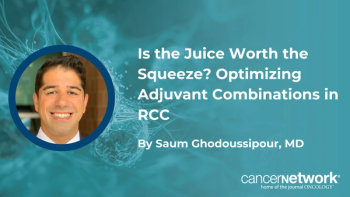
Considering the toxicity burden of dual checkpoint inhibition for adjuvant RCC, Saum Ghodoussipour, MD, posited potential alternatives in the space.

The safe administration of revumenib among pediatric patients broadens the applicability of results seen with the menin inhibitor.

Data from the phase 3 SENOMAC trial showed that omitting completion ALND led to non-inferior 5-year OS and lower arm morbidity for patients with breast cancer.
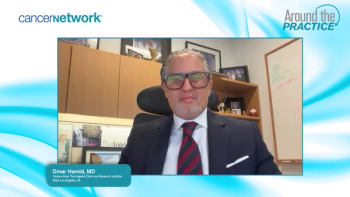
In this teaser for Around the Practice, Omid Hamid, MD, of Cedars-Sinai The Angeles Clinic and Research Institute, introduces an upcoming multidisciplinary roundtable focused on cutaneous squamous cell carcinoma (cSCC).

Timothy F. Cloughesy, MD, spoke with CancerNetwork after presenting data from the INDIGO trial, evaluating vorasidenib in IDH1/2-mutant glioma.
Proactive management of EGFR-mediated toxicities can help to prevent the escalation of grade 1/2 skin toxicities to higher-grade events.
Saum Ghodoussipour, MD, PhD, dissected the contrasting outcomes between adjuvant durvalumab plus tremelimumab compared with durvalumab alone in RCC.
Fred Saad, MD, FRCS, CQ, FCAHS, discussed the clinical benefits of introducing lutetium Lu 177-PSMA-617 earlier to delay progression to mCRPC.
Leveraging 6-month PSA and PSMA-PET metrics may guide therapy escalation or de-escalation in metastatic hormone-sensitive prostate cancer.
Clinicians share practical tips to prevent amivantamab-lazertinib rash, streamline orders, manage edema, and use short-term DOAC prophylaxis.