

Opinion|Videos|January 24, 2025
Clinical Perspectives: Selecting Between Daratumumab- and Isatuximab-Containing Quadruplet Induction Regimens
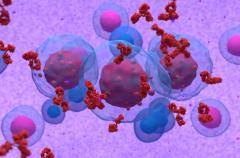
Panelists discuss how the choice between isatuximab-based quadruplet and daratumumab-based regimens in multiple myeloma treatment depends on clinical trial data comparing Isa-KRd vs KRd, with particular emphasis on efficacy outcomes and patient-specific factors that might influence treatment selection.
Advertisement
Episodes in this series
Video content above is prompted by the following:
- In what clinical scenario would you consider an isatuximab-based quadruplet over a daratumumab-based regimen?
- How have the latest data informed your treatment decision?
- IsKia, Isa-KRd vs KRd
Advertisement
Related to this article
Ralph V. Boccia, MD, FACP, discusses CAR T and bispecific sequencing, fixed-duration therapy, MRD, and bispecifics in AL amyloidosis.
Jeffrey V. Matous, MD, explains why ramantamig’s MRD negativity rates are clinically significant in relapsed/refractory myeloma.
Experts in multiple myeloma discussed long-term MAIA and CEPHEUS trial data and their implications for daratumumab-based regimens in newly diagnosed disease.

Jeffrey V. Matous, MD, discusses how to counsel patients on chronic, low-grade toxicities to support adherence to ramantamig.

Iberdomide plus daratumumab/dexamethasone met the second dual primary end point of the phase 3 EXCALIBER-RRMM trial in relapsed/refractory multiple myeloma.
Experts discuss data from the MonumenTAL-3 trial and the evolving roles of talquetamab and other bispecific antibodies in relapsed/refractory multiple myeloma.
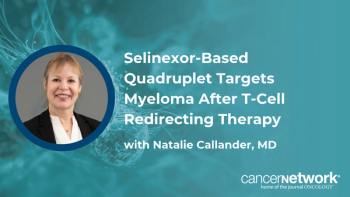
Natalie S. Callander, MD, discussed the rationale for combining selinexor, carfilzomib, subcutaneous isatuximab, and dexamethasone in relapsed/refractory myeloma.
Advertisement
Advertisement
Trending on CancerNetwork
1
Sequencing Bispecifics and CAR T-Cell Therapy in Myeloma and AL Amyloidosis
2
Clinical Applications and the Future of Remote Endovascular Procedures
3
Building a Low-Dose Radiation Therapy Program for Benign Disease
4
Novel Cancer Vaccine Plus Temozolomide Miss Primary End Point in Glioblastoma
5