

Opinion|Videos|February 7, 2025
Transplant-Ineligible NDMM: When to Use a Quadruplet Regimen
Panelists discuss how treatment strategies and sequencing decisions for patients with multiple myeloma who decline transplantation despite eligibility must be carefully tailored, considering both immediate therapeutic goals and potential future treatment options.
Advertisement
Episodes in this series
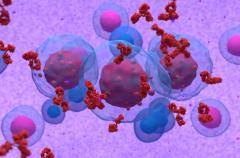
Video content above is prompted by the following:
- For patients who may be eligible for transplantation but decline, what is your preferred treatment approach in this population?
- How might a patient’s transplant status impact your sequencing strategy?
Advertisement
Related to this article
Ralph V. Boccia, MD, FACP, discusses CAR T and bispecific sequencing, fixed-duration therapy, MRD, and bispecifics in AL amyloidosis.
Jeffrey V. Matous, MD, explains why ramantamig’s MRD negativity rates are clinically significant in relapsed/refractory myeloma.
Experts in multiple myeloma discussed long-term MAIA and CEPHEUS trial data and their implications for daratumumab-based regimens in newly diagnosed disease.

Jeffrey V. Matous, MD, discusses how to counsel patients on chronic, low-grade toxicities to support adherence to ramantamig.

Iberdomide plus daratumumab/dexamethasone met the second dual primary end point of the phase 3 EXCALIBER-RRMM trial in relapsed/refractory multiple myeloma.
Experts discuss data from the MonumenTAL-3 trial and the evolving roles of talquetamab and other bispecific antibodies in relapsed/refractory multiple myeloma.
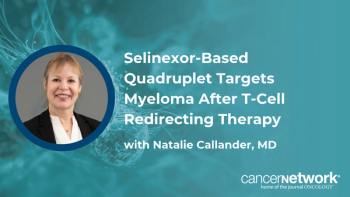
Natalie S. Callander, MD, discussed the rationale for combining selinexor, carfilzomib, subcutaneous isatuximab, and dexamethasone in relapsed/refractory myeloma.
Advertisement
Advertisement
Trending on CancerNetwork
1
Sequencing Bispecifics and CAR T-Cell Therapy in Myeloma and AL Amyloidosis
2
Clinical Applications and the Future of Remote Endovascular Procedures
3
Building a Low-Dose Radiation Therapy Program for Benign Disease
4
Novel Cancer Vaccine Plus Temozolomide Miss Primary End Point in Glioblastoma
5