

Opinion|Videos|January 3, 2025
Key Highlights From the PERSEUS and CASSIOPEIA Studies
Panelists discuss how recent pivotal trials like PERSEUS and CASSIOPEIA demonstrate superior outcomes with daratumumab-based quadruplet and triplet combinations compared with standard regimens in transplant-eligible newly diagnosed multiple myeloma patients, particularly showing improved progression-free survival when daratumumab is added to VRd (bortezomib, lenalidomide, and dexamethasone) or VTd (bortezomib, thalidomide, and dexamethasone) backbones.
Advertisement
Episodes in this series
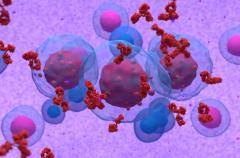
Video content above is prompted by the following:
- Let’s begin our discussion with newly diagnosed multiple myeloma, specifically in patients who are transplant eligible. Can you briefly comment on recent updates surrounding combination therapies for transplant-eligible NDMM:
- Dara-VRd vs VRd
- Dara-VTd vs VTd
Advertisement
Related to this article
C. Ola Landgren, MD, PhD, discusses the FDA’s endorsement of MRD as an accelerated approval end point in multiple myeloma.

Hans C. Lee, MD, discussed how community oncologists with limited access to MRD testing can think about the new IMS/IMWG definition of cure in myeloma.

Hans C. Lee, MD, discussed how he monitors patients with multiple myeloma who achieve deep, sustained MRD negativity after coming off therapy.
![“[W]e should strive to increase the [number] of patients…who enjoy long-term disease-free survival and possibly cure,” said Meletios Dimopoulos, MD.](https://cdn.sanity.io/images/0vv8moc6/cancernetwork/c7abebf9344f9b1be9aee80d9879d139c1655bcc-1200x1197.jpg?w=350&fit=crop&auto=format)
“We should strive to increase the [number] of patients…who enjoy long-term disease-free survival and possibly cure,” said Meletios Dimopoulos, MD.
Pieter Sonneveld, MD, PhD, explained how sustained MRD negativity with DVRd in the PERSEUS trial may guide long-term outcome counseling in multiple myeloma.
Advertisement
Advertisement
Trending on CancerNetwork
1
Prioritizing Proton Therapy for Pelvic Nodal Irradiation in Prostate Cancer
2
How Well Does Radiotherapy Pair With Dual PD-1/LAG-3 Blockade in NSCLC?
3
FDA OKs Pirtobrutinib in Frontline CLL/SLL
4
How Is Subcutaneous Administration Changing Oncology Care Delivery?
5