“Cardiovascular assessment should begin when the patient is being selected for treatment, not after the toxicity emerges,” said Faisal Mehmud, MD, MRCP.
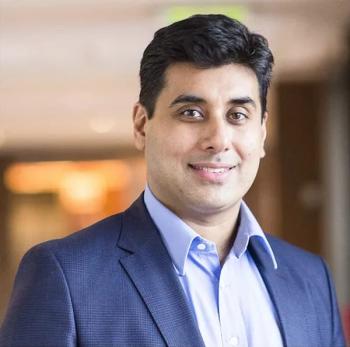
Ash Tewari, MBBS, hopes that with institutional partner aid, in 10 years, 1 million men will undergo prostate cancer screening through mobile units.
Ash Tewari, MBBS, MCh, FRCS, hopes that at least 1 million men will engage with a mobile prostate cancer testing unit within 10 years as part of his Million Strong Men initiative.1
In an interview with CancerNetwork®, Tewari, professor and chair of the Milton and Carroll Petrie Department of Urology at the Icahn School of Medicine at Mount Sinai, highlighted this key initiative aimed at delivering prostate cancer testing to at-risk populations who might otherwise experience barriers to accessing health care. Additionally, he touched upon key advances in the field, particularly regarding artificial intelligence (AI)–based testing for early identification of cancer, as well as nerve-sparing procedures.
First, he outlined the background of the initiative and defined its impact, stating that, to date, it has reached 13,000 men despite deployment in only 2 regions and for a duration of 3 years. Tewari explained that the next steps for the initiative include partnerships with other institutions to scale up this service and bring it to a larger proportion of the population. Additionally, he discussed elements of the initiative that go beyond prostate cancer testing, such as encouraging overall healthy living for men and a “He for She” program aimed at supporting women who support men undergoing testing and treatment for the disease.
[The] Million Strong Men initiative is an extension of my mobile unit for prostate cancer. Prostate [cancer] is common, but it’s a bit of a unique cancer [in which] many of the patients have a very low-grade, less invasive cancer, but there are some which are more aggressive cancers, and there is no clear-cut guideline as to how to approach these patients [or] how to even engage them in talking. The American Urological Association and other agencies have come up with what we call shared decision-making, in which we bring up the discussion about prostate cancer, and bring up the discussion about their unique risk of having prostate cancer. We bring up, “What are the different tests which can be done? What are the pros? What are the cons? What are the [adverse] effects? What [are the] intellectual or psychological impacts of it?”
Ultimately, we need to bring up that discussion to the people [at risk for] prostate cancer. The bottom line is, [at least] 200,000 men every year get diagnosed with prostate cancer, of which about 7% to 8% of the patients have a cancer that is quite extensive, meaning it has gone outside the prostate, and many of them have very indolent cancer.2 How to engage them in this discussion is an important question and a challenge, and it is more so a challenge to people who do not have great access to health.
[Barriers to] access to health could be because they are busy and working, [it] could be because of their understanding of their own risk, and then understanding the medical problems. [Barriers to] access to health could be the financial and [they] could be how far they are from a qualified group. All that combined in the access to health discussion is an important challenge in managing or delivering the care to men [at risk for] prostate cancer.
We combined our resources, our knowledge about this cancer, our tools about diagnosing it with philanthropist Robert F. Smith, and then later on with Arthur M. Blank, to create mobile units that…could be a doctor’s office on wheels, equipped with high-tech equipment, equipped with every tool which we normally use in an office, equipped with a point-of-care PSA [prostate-specific antigen test], equipped with point-of-care imaging, and all interconnected within a network and on Wi-Fi, so that we can go to the places where people live. It bypasses the element of access-to-health issues.
My goal about 3 years ago [was being] able to reach 1000 or 2000 patients, so that I will reach out to them––go to the community centers, go to the churches, go to the sports events––exactly [where] they are, bring up a discussion about prostate cancer awareness, and then see if they are interested in finding out what their risk [is]. [Then] doing it in point-of-care PSA, if that PSA is abnormal, then taking it to the next level of imaging and next-level care. That initiative of a few thousand people [was] successful, and we [surpassed] 13,000 men in the last 3 years.
That [raised] people’s interest, so we thought, why are we stopping [at] 13,000? Why not expand it to a larger pool of patients? That’s where the Million Strong [Men] Initiative started. I came up with a mindset that if I partner with the right group of people, if we have any scalability, if we have the right tools, this mechanism, this entity, this program, has the potential to be very successful.
It does not all need to be [managed] by me. It could be partnering with other institutions. That partnership mindset led me to reach out to Arthur Blank, and then Emory Winship Cancer Institute to create something in Atlanta, Georgia. If Atlanta is going to do the same thing, and then if we find 10 other institutions, my goal is, in the next 10 years, to reach out to 1 million people, and that’s the Million Strong [Men initiative], so that we can find the cancer early [and] we can educate them.
I often do not brag about anything else, but my team, yes, they know what they are doing. There is a group of drivers, [a] group of educators, [a] group of coordinators, [a] group of [physician assistants, and, [there are a] group of doctors. They all show up every day, and they connect, they engage, they educate, they make friendships, and then they offer them what care needs to be done. Then, if they have cancer, if they have an abnormality, they take it to the next level. They bring them to whatever needs to be done.
That mindset resulted in finding out that of these 13,000 people, about 15% of them had an abnormality of the PSA, and many of them had very high-grade PSA and sometimes metastatic cancer. Finding all that happened because of the team, and I’m proud of the people who are working on this initiative.
I can give one small story. Early on, when we had started this initiative, I was part of an event that was happening in Harlem, New York, and our bus driver was new, and [it was] a big bus. There are 2 roads, [they] were a little narrow, so we parked the bus somewhere near the event location, and inside the building, we started doing all the testing. The bus itself was engaging a lot of people.
There was another bus driver [who] was trying to bypass our bus, but the space must have been a little narrow. He felt a little frustrated and walked out of his bus, came to this bus to talk to the driver. “Hey, can you do a better parking [attempt].” The driver agreed, but before agreeing, he somehow convinced the [other driver] to do a PSA [test]. Guess what? This person had a [curable] cancer.
The fact that we were there, someone walked into the bus, which changed the trajectory of what needed to be done. These are the small stories that are full of hope, motivation, and the effort that my team is [making]. Hopefully, that gives you a perspective on how my team has taken it to this [next] level.
One thing which I want people to know [is that] not everyone needs to have a PSA [test]. There are risk categories, there are age groups, there are racial groups, and there are family histories. We have to incorporate all [those variables]. We do not need everyone to have a PSA [test done], but we need a [Prostate Health Index] test. Not everyone needs a biopsy. Not everyone who has cancer needs an intervention, but understanding the pros and cons, understanding the shared decision-making, understanding what the gain is, what the loss is, that’s what we are trying to do, and if we do it smartly, we will hopefully be able to help certain patients who may [otherwise] have missed an opportunity.
Other cancers, especially breast and lung, are the people [who are worth] talking to, but I’m personally involved more often in men’s health issues. One thing which I want to talk about is hypertension, diabetes, obesity, [overeating or unhealthy eating]––habits like lack of exercise––all that can be combined. That’s what my Million Strong mindset is. We are not just going to help you find prostate cancer. We will expand the discussion so that you can live healthily.
At that juncture, I will pivot toward something different, and that is that a lot of men owe it to a lady partner in their life who got them to get the testing done. It could be a wife, it could be a daughter, it could be a niece, it could be a sister, and many times, men would not have gone, but for someone nudging them to go and get tested. We are making that nudge easy for them to come to.
My initiative also has another element, which we call “He for She.” We want to create an awareness about the female [concerns], the female cancers, and we want to take it to the next level, so that the people who are helping us, [who] needed help too, if we can help in that process, at least increase the awareness and partner with the other groups, that’s what my next level of initiative would be.
Understanding the biology and understanding the behavior is going to be one of the most critical tools, since not every cancer behaves the same way. If we have a magic potion that tells us whose cancer is going to misbehave, that itself is a victory. A combination of imaging, biomarkers, [and] genomics, packaged all together through an AI [system], will be the next major thing that is going to happen.
The second thing is we will have better ways of following the patients who are on active monitoring, so that patients who are put on interactive monitoring––and [we] have a large pool of patients who are on active monitoring––some patients progress to what we call an “oops” moment. If that happens, we have to react. How to predict that “oops” moment, how to predict [the] progression.... There could be an extracapsular extension. How to predict that there will be an upgrading [of the tumor] using the combination of tools, will be another thing that is happening, and my own group is working quite a bit on that.
Then, there are different ways of enhancing the recovery of sexual function, and that is a major focus of my program, in which we are developing methods to save the nerves that are responsible for erectile function. There are nuances in it, there are techniques in it. Then there are details which we are trying to build [upon]. We recently had an international conference in which we showcased how we are doing it, and the patients [responded] very well. A lot of doctors attended. This is an exciting time for prostate cancer care, not [only in identifying] it early, [but with] AI and newer tools, including genomics and imaging, which to help in that nerve-sparing will be a major force.