

Opinion|Videos|July 6, 2026
Monitoring the No Evidence of Disease Patient and Multidisciplinary Collaboration
Dr. Zager outlines a monitoring strategy for the Case 1 patient who is NED following surgery and radiation.
Advertisement
Episodes in this series
Dr. Zager outlines a monitoring strategy for the Case 1 patient who is NED following surgery and radiation. He recommends serial ultrasounds of regional lymph nodes and the parotid and cervical basins, combined with cross-sectional imaging (head/neck and chest). Initially, imaging every 4 months, transitioning to every 6 months and then annually as the patient demonstrates no recurrence over time.
Dr. Schoenfeld emphasizes that patients like this (ECOG 0, age 68 years) represent the minority of patients with cSCC, who are typically older with multiple comorbidities. He highlights the importance of ongoing collaboration between radiation oncology and medical oncology throughout the treatment course: communicating about patient recovery, radiation field details, post-treatment inflammation versus true disease, and readiness to begin adjuvant therapy. These ongoing communications help all providers interpret imaging accurately and ensure treatment continuity.
He acknowledges that establishing multidisciplinary networks can be challenging in community settings, and advocates for early communication pathways, noting that barriers around timing, particularly the 4 to 6 week window from surgery to radiation, are best addressed proactively. Dr. Singh adds that he personally provides his cell number to referring clinicians, reflecting that multidisciplinary care can take many forms in the real world.
Advertisement
Related to this article

SurVaxM, a cancer vaccine, missed statistical significance for overall survival in patients with newly diagnosed glioblastoma in the SURVIVE trial.

Veronika Bachanova, MD, PhD, discussed how the favorable safety profile of CAR natural killer cell therapies may come with trade-offs in persistence and response durability.

“What we have here, I believe, is a strong signal that there is a population…who will benefit from chemotherapy,” said Mark D. Hurwitz, MD, FASTRO, FACRO.
Experts discuss data from the MonumenTAL-3 trial and the evolving roles of talquetamab and other bispecific antibodies in relapsed/refractory multiple myeloma.
Data from the phase 3 HER2CLIMB-05 study support the FDA approval of tucatinib-based maintenance treatment in HER2-positive metastatic breast cancer.

PRV111 eliminated planned surgery in 100% of evaluable patients with non-invasive oral cancer or high-grade dysplasia.
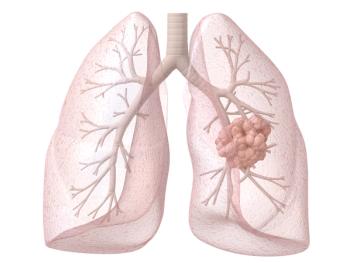
The final 3-year OS rate was 72.7% with OST-HER2 vs 45.8% in a combined historical control in a phase 2b trial of pulmonary metastatic osteosarcoma.
Dan Costin, MD, discusses where personalized mRNA vaccines could fit into lung cancer care within 5 to 10 years.
Advertisement
Advertisement
Trending on CancerNetwork
1
FDA Approves Tucatinib Combo as Maintenance in HER2+ Breast Cancer
2
Selinexor-Based Quadruplet Targets Myeloma After T-Cell Redirecting Therapy
3
Personalized Vaccines May Have Utility Across All Lung Cancer Stages
4
Firmonertinib Misses PFS End Point in First-Line EGFR Exon 20 NSCLC
5