
Yan Leyfman, MD, discussed the factors that may ultimately define the next era of transplant medicine across hematologic malignancies.
Yan Leyfman, MD, discussed the factors that may ultimately define the next era of transplant medicine across hematologic malignancies.

Data from a phase 1b/2 study may support further assessment of AZD0120 in earlier treatment settings for patients with multiple myeloma.
Retrospective data show that relapse-free survival outcomes were worse for patients with MDS/MPN compared with those who had other types of MDS.
Yan Leyfman, MD, reviewed how toxicity management in hematologic oncology is shifting to phenotype- and mechanism-informed intervention.
Irtiza Sheikh, DO, sought to assess the impact of age and clinical setting on liso-cel efficacy in patients with large B-cell lymphoma.
Yan Leyfman, MD, shared key clinical and practice-shaping insights related to cellular therapy from the 2026 Tandem Meetings.
Further follow-up is necessary to see if AZD0120 may be preferentially used as a treatment for patients with relapsed/refractory multiple myeloma.

Researchers and clinicians share key updates in leukemia, lymphoma, and myelodysplastic syndrome that they presented at the 2026 Tandem Meetings.
Irtiza N. Sheikh, DO, hopes liso-cel accessibility increases in non-clinical trial settings and is considered for use earlier in the LBCL treatment course.
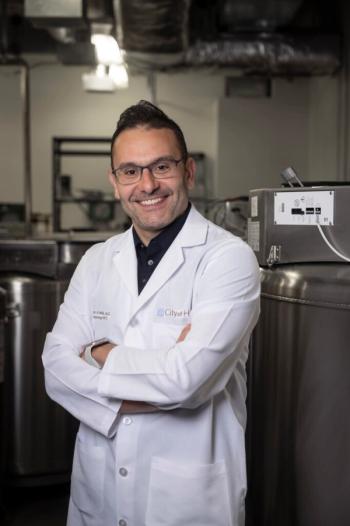
TRX103 could foster a durable tolerizing environment, with regulatory cell levels matching those of healthy donors by day 42 post-transplant.
Safety-optimized CAR-T platforms and supportive-care breakthroughs highlight a maturing field focused on access, durability, and real-world implementation.

Further research will investigate rates of adverse effects among patients treated with liso-cel in the real world vs a clinical trial setting.

From key clinical trial updates to reports on treatment disparities, the 2026 Tandem Meetings saw several critical developments in multiple myeloma.

CAR T-cell therapies displayed strong efficacy and manageable safety across lymphoma populations at the 2026 Tandem Meetings.

Older age appeared to correlate with worse survival among those undergoing allogenic hematopoietic cell transplantation for acute lymphoblastic leukemia.
No serious adverse effects were observed with TRX103 in patients with hematologic malignancies undergoing HLA-mismatched HCT.
Shernan Holtan, MD, and Rahul Banerjee, MD, FACP, discussed various trials of significance shared as posters and presentations at the 2025 Tandem Meeting.
Adverse physical functions were indicative of reduced survival and increased risk of ICANS in patients with non-Hodgkin lymphoma who were previously treated with CAR T-cell therapy.
Median PFS and OS were comparable between age groups when CAR T-cell therapy was given as treatment for patients with relapsed/refractory LBCL.
Idecabtagene vicleucel led to high rates of MRD negativity in multiple myeloma who responded did not have complete responses to first-line therapy.

Ruxolitinib shows promise in improving transplant outcomes for myelofibrosis patients by reducing GVHD incidence without compromising survival.
Results from the FELIX study showed that obe-cel induces high rates of MRD-negative remission in relapsed/refractory B-ALL, leading to improved EFS and OS.

Updated CARTITUDE-4 trial data show cilta-cel induces deep MRD negativity in patients with lenalidomide-refractory multiple myeloma.

Prophylactic defibrotide conferred more ICU admissions and higher mortality among high-risk pediatric patients who underwent prior HSCT.
The analysis saw minimal evidence of increased relapse among patients with hematologic cancers and minimal residual disease vs those without.
Anakinra prophylaxis did not significantly decrease the incidence or severity of CRS or ICANS in patients with LBCL treated with liso-cel.
Obe-cel shows efficacy in R/R B-ALL, especially in those with a favorable CAR-HT risk profile, according to data from the phase 1/2 FELIX study.
Some patients with large B-cell lymphoma may have to travel a great distance for an initial evaluation for CAR T-cell therapy.
Education is essential to referring oncologists manage toxicities associated with CAR T-cell therapy for patients with large B-cell lymphoma.
There is no absolute age cutoff where CAR T cells are contraindicated for those with large B-cell lymphoma, says David L. Porter, MD.