

!["Patients [with cancer] and physicians would rather have a fixed-duration treatment, if possible," said Julie M. Vose, MD, MBA, at SOHO 2026.](https://cdn.sanity.io/images/0vv8moc6/cancernetwork/1cfb57db416943d8f8690afb0bc0d13aa3d90683-400x400.jpg)


Hematologic Oncology
Latest News
Advertisement
Video Series
Latest Videos
Shorts
0:47
Breaking Down Payer Misconceptions Surrounding Cellular Therapy
2 months ago
by
Zahra Mahmoudjafari, PharmD, MBA, BCOP, FHOPA
0:31
How Might Extended-Release Ruxolitinib Tablets Impact Delivery of Care?
4 months ago
by
Naveen Pemmaraju, MD

0:49
Bridging Gaps of Care Via Bispecific Antibodies in Hematologic Oncology
5 months ago
by
Zahra Mahmoudjafari, PharmD, MBA, BCOP, FHOPA
0:50
From Chemotherapy To T-Cells: The Evolution of Cancer Treatment
5 months ago
by
Ralph V. Boccia, MD, FACP
0:45
Rusfertide Approval Would Move Past ‘Archaic’ Polycythemia Vera Standard
6 months ago
by
Andrew T. Kuykendall, MD

0:55
Implementing AI as a Supportive Tool in Palliative Oncological Care
7 months ago
by
Ram Prakash Thirugnanasambandam, MBBS
0:40
NIH Funding May Be Instrumental to Developing Multiple Myeloma Research
8 months ago
by
Surbhi Sidana, MD
1:04
Daratumumab/Teclistamab Multiple Myeloma Approval Could Expand Treatment Options
8 months ago
by
Surbhi Sidana, MD
0:30
Dosing Considerations for Optimizing Ruxolitinib Efficacy in Myelofibrosis
a year ago
by
Francesca Palandri, MD, PhD
Podcasts





























































Advertisement
More News
Ruben Mesa, MD, discusses the FDA approval of ropeginterferon alfa-2b-njft, the first new essential thrombocythemia therapy in nearly 30 years.
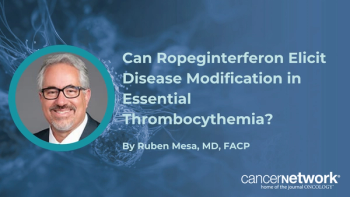
Ropeginterferon alfa may play an important role in future combination strategies in essential thrombocythemia, said Ruben Mesa, MD, FACP.
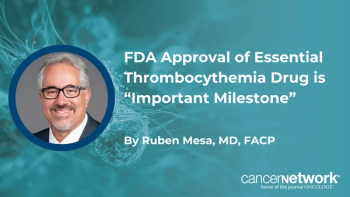
The FDA approval of ropeginterferon alfa-2b may lead to longer and better outcomes in essential thrombocythemia, according to Ruben Mesa, MD, FACP.

Data from the phase 3 SENTRY trial support the supplemental new drug application for selinexor plus ruxolitinib in patients with myelofibrosis.

Data from the phase 3 SURPASS ET trial supported the approval of ropeginterferon alfa-2b-njft for those with essential thrombocythemia.
Results from the phase 3 VERIFY trial led to the approval of rusfertide in polycythemia vera.

In a real-world setting, venetoclax plus a hypomethylating agent produced a median overall survival of 13.0 months in newly diagnosed acute myeloid leukemia.

Andrew Evens, DO & Joanna Rhodes, MD, on CLL's transformation, CAR-T vs bispecifics, Hodgkin survivorship, and delivering world-class lymphoma care across NJ.

The FDA cited outstanding manufacturing observations while raising no concerns about clinical data, bioequivalence, or stability in its CRL.

The phase 2 SANRECO trial met its primary end point, with 88% of this polycythemia vera population achieving a response with divesiran vs 19% with placebo.
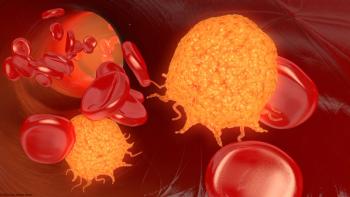
Updated results from the phase 2 ELIANA trial support tisa-cel as definitive therapy for pediatric and young adult patients with relapsed/refractory B-ALL.

Pirtobrutinib plus venetoclax/rituximab reduced the risk of progression or death by 45% among those with CLL in the phase 3 BRUIN CLL-322 trial.
Transplant-associated thrombotic microangiopathy GVHD are related, but distinct consequences of endothelial injury after allogeneic HCT.
Zahra Mahmoudjafari, PharmD, BCOP, FHOPA, MBA, predicts operational challenges as CAR T-cell therapy expands to non-oncology indications.
Zahra Mahmoudjafari, PharmD, MBA, BCOP, FHOPA, says equitable access to CAR T-cell therapy depends on partnership, not just center certification.
Clinicians “still don’t have the answer” on true toxicity thresholds, says Tiba Al Sagheer, PharmD, BCOP, BCACP, on CAR T-cell toxicity management.
Tiba Al Sagheer, PharmD, BCOP, BCACP, said CAR T-cell expansion signals toxicity risk differently across cilta-cel and ide-cel.
Differentiating between CRS and IEC-HS remains a challenge in mitigating toxicity associated with cellular therapy, said Tiba Al Sagheer, PharmD, BCOP, BCACP.

The world of cellular therapy is “still ever-expanding” as novel constructs continue to emerge, according to Megan Melody, MD.

Megan Melody, MD, says it could be “years” before data clarify how to sequence bispecific antibodies and CAR T-cell therapy.
Megan Melody, MD, says acute CAR T-cell toxicities are well managed, but delayed neurotoxicity remains a challenge.

The approval of Orca-T validates many years of work dedicated to manipulating the graft to improve outcomes among patients undergoing allogeneic transplant.
Orca-T is a “big advance” that must be studied further among patients with acute leukemias and myelodysplastic syndromes.
Whether Orca-T competes with post-transplant cyclophosphamide for GVHD prevention must be studied prospectively, said Wendy Stock, MD.
The FDA approval of Orca-T represents an “important advance” in the world of allogeneic transplant, according to Wendy Stock, MD.
Advertisement
Advertisement
Trending on CancerNetwork
1
FDA MCGP Panel Votes in Favor of the Galleri Multicancer Early Detection Test
2
Belzutifan Combo Receives FDA Approval in Advanced Clear Cell RCC
3
FDA Grants Approval to Lirafugratinib for Advanced Cholangiocarcinoma with FGFR2 Alteration
4
Approaching Cardiovascular Risk in Prostate Cancer Hormonal Therapy
5