
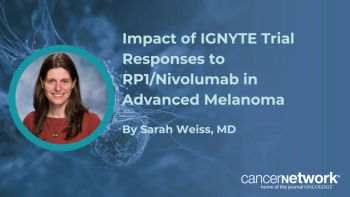
Sarah Weiss, MD, discussed key IGNYTE trial findings of RP1 and nivolumab in patients with advanced melanoma who progressed on prior anti-PD-1 therapy.

Your AI-Trained Oncology Knowledge Connection!
Sarah Weiss, MD, discussed key IGNYTE trial findings of RP1 and nivolumab in patients with advanced melanoma who progressed on prior anti-PD-1 therapy.
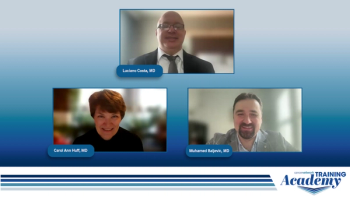

The teams debate whether CAR-T or bispecific antibodies should be prioritized as the treatment paradigm evolves in relapsed large B-cell lymphoma, with Team NYC centering the argument on “cure” and the curative-intent potential/plateau of CAR-T outcomes. Team Roswell agrees cure is the goal but argues that real-world access barriers and “off-the-shelf” availability make bispecifics, and especially emerging combination strategies, crucial for patients who cannot reliably reach or complete CAR-T. The discussion highlights a key tradeoff: CAR T as a one-time, time-limited intervention vs bispecifics requiring ongoing dosing and infrastructure, with durability, infection risk, and sequencing still actively evolving.
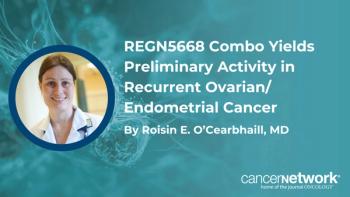
Roisin E. O’Cearbhaill, MD, discussed the MUC16×CD28 bispecific antibody REGN5668 in treating patients with recurrent ovarian or endometrial cancer.
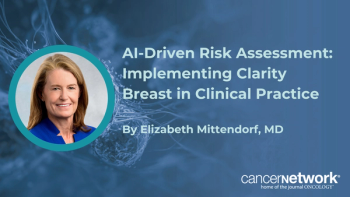
Elizabeth Mittendorf, MD, discusses Clarity Breast, an FDA-authorized AI tool that predicts 5-year breast cancer risk using standard 2D mammograms.
In this segment on advanced renal cell carcinoma, Dr. Ornstein transitions the discussion to the second-line setting, noting that most patients will eventually experience disease progression and require additional therapy. He highlights that treatment goals evolve in the refractory setting, where achieving disease control becomes the primary objective rather than long-term durable remission.
In this segment on advanced renal cell carcinoma, Dr. Ornstein emphasizes that treatment is only effective if patients are able to remain on therapy, framing dose management as a critical component of clinical care. He asks how clinicians approach dosing and tolerability, particularly with VEGF receptor targeted therapy–based combinations.
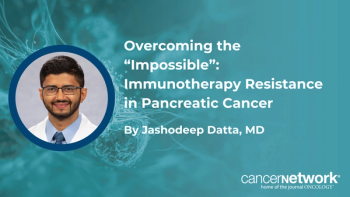
Making pancreatic cancer an immunotherapy-receptive disease requires identifying select patient subgroups who may benefit.
Combining ctDNA and modern imaging with novel therapeutics may help determine subsets of patients who are eligible to receive reduced treatment courses.
Orca-T may facilitate faster immune reconstitution in patients who undergo allogeneic transplant, according to Wendy Stock, MD.
Ting Bao, MD, MS, suggested chemotherapy-induced neuropathy could be mitigated through acupuncture, although phase 3 clinical trial results are pending.
An analysis conducted by Starr and associates showed that patients with high disease burden in the liver did not experience liver failure with PRRT.
Microsatellite instability-high status may make patients suitable candidates to receive agents like pembrolizumab, according to Steven Bialick, DO.
Data from the EMPOWER-Lung 1 study reinforce the value of long-term immune checkpoint inhibition in PD-L1–high non–small cell lung cancer.
Alexander Z. Wei, MD, identified key abstracts in bladder and kidney cancer to optimize treatment in select patient groups.

In this segment, the panel further examines the case of a patient with EGFR mutated metastatic non-small cell lung cancer and asymptomatic brain metastases.
In this case based segment, Dr. Devarakonda introduces a newly diagnosed 62 year old patient with EGFR exon 19 deleted metastatic non-small cell lung cancer and asymptomatic brain metastases.
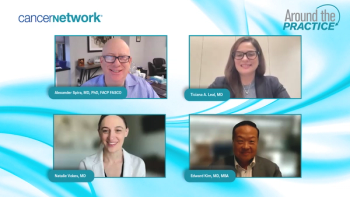
In this closing segment, Dr. Alexander Spira and Dr. Edward Kim reflect on key takeaways from the patient case discussions, with a focus on the importance of early and comprehensive biomarker testing in early-stage EGFR-mutated non–small cell lung cancer (NSCLC).
In this segment, Dr. Alexander Spira and Dr. Ticiana Leal discuss how to approach the transition from neoadjuvant therapy to the adjuvant setting in early-stage EGFR-mutated non–small cell lung cancer (NSCLC).
In this segment, Dr. Alexander Spira and Dr. Natalie Vokes explore the impact of neoadjuvant targeted therapy on surgical planning and outcomes in early-stage EGFR-mutated non–small cell lung cancer (NSCLC).
In this segment, Dr. Alexander Spira and Dr. Edward Kim discuss which outcomes are most clinically meaningful when evaluating neoadjuvant targeted therapy in early-stage EGFR-mutated non–small cell lung cancer (NSCLC).
In this segment, Dr. Alexander Spira introduces a second patient case involving a 62-year-old woman with resectable stage IIIA EGFR-mutated non–small cell lung cancer (NSCLC), where the mutation was identified from an initial biopsy.
In this segment, Dr. Alexander Spira and Dr. Edward Kim discuss how to counsel patients who are hesitant to continue adjuvant therapy despite feeling well in early-stage EGFR-mutated non–small cell lung cancer (NSCLC).
In this segment, Dr. Alexander Spira and Dr. Ticiana Leal discuss strategies for monitoring and managing treatment-related adverse events over time in patients receiving adjuvant therapy for early-stage EGFR-mutated non–small cell lung cancer (NSCLC).
In this segment, Dr. Alexander Spira and Dr. Natalie Vokes discuss how to effectively counsel patients on completing the full course of adjuvant therapy in early-stage EGFR-mutated non–small cell lung cancer (NSCLC).
In this segment, Dr. Alexander Spira and Dr. Edward Kim discuss key considerations in selecting patients for adjuvant targeted therapy in early-stage EGFR-mutated non–small cell lung cancer (NSCLC), particularly those with multiple comorbidities.
In this segment, Dr. Alexander Spira introduces the first patient case scenario, focusing on a 72-year-old man with resected stage IIB EGFR-mutated non–small cell lung cancer (NSCLC) who has completed adjuvant chemotherapy and is considering further treatment.