Andy Liao, MD, discusses the distribution of KRAS mutations in biliary tract cancer and the different classes of KRAS inhibitors in development.
The approval of durvalumab plus FLOT for patients with resectable gastric/GEJ cancer cements itself as a new standard of care in the space.
In November 2025, the
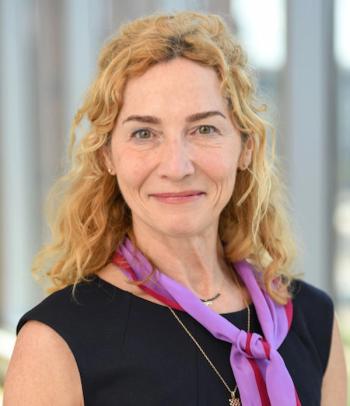
CancerNetwork® spoke with Yelena Y. Janjigian, MD, lead investigator of the trial, regarding the impact of the approval and solidifying this regimen as the new standard of care in this gastric/GEJ cancer space.
For patients who had a pathological complete response (pCR), the 24-month event-free survival (EFS) rate was 92.7% in the durvalumab arm vs 79.4% in the placebo arm (HR, 0.29; 95% CI, 0.08-0.96); for those with a major pCR, EFS rates were matched (HR, 0.32; 95% CI, 0.15-0.68); and for those with any pathological response, the 24-month EFS rates were 78.3% vs 68.0% (HR, 0.60; 95% CI, 0.46-0.79).
Janjigian is chief of the Gastrointestinal Oncology Service and Caroll and Milton Petrie Chair at Memorial Sloan Kettering Cancer Center.
Janjigian: MATTERHORN is a global phase 3 study that was designed to answer the question of whether perioperative immunotherapy with durvalumab, compared with placebo, can improve outcomes in combination with standard perioperative chemotherapy, which is a triplet drug combination, FLOT, 5-fluorouracil, leucovorin, oxaliplatin, and docetaxel. We designed MATTERHORN with a question in mind: Can gastroesophageal adenocarcinomas, gastric cancer globally, be treated with the same regimen? Is FLOT in combination with anti-PD-1 therapy with durvalumab safe? Can it improve efficacy?
The 3 points of efficacy that we focused on [included] the primary end point, which is event-free survival in the intent-to-treat population. We looked at the early readout of efficacy, which is the pathological complete response rate. We looked at the key secondary end point of overall survival. This was the first study to try to answer that question using FLOT, which is the modern backbone regimen, and treating patients irrespective of PD-L1 status. All over the world, patients were [randomly assigned] in a 1:1 fashion to receive durvalumab with FLOT or placebo with FLOT before and after surgery, followed by additional cycles of durvalumab by itself or pembrolizumab by itself for up to a year of therapy. That was the point of MATTERHORN to bring immunotherapy to the perioperative setting. We know that in the metastatic setting, immunotherapy and drugs with anti-PD-1 blockade improved survival. We wanted to improve outcomes in early-stage disease [as well].
This is a very important early indicator of the likelihood of cure, and how likely it is that someone’s cancer is going to come back. The patients want to have reassurance. They want to know whether or not their cancer will come back, and knowing that pathologic complete response is a good surrogate for long-term outcomes, and long-term survival is a helpful tool, because it can help us, in the future, prioritize certain strategies. Hopefully, we can have early readouts from other studies, but also for each individual patient, the knowledge is so powerful and reassuring to them that their chances of cancer recurrence are low. It’s [quite] helpful.
The most common AEs in the MATTERHORN study were from chemotherapy. This is a combination drug regimen, [including] FLOT chemotherapy. The common [AEs] are neutropenia and alopecia in patients from Asian countries, so, Japan, Taiwan, and the Republic of Korea. The rate of febrile neutropenia was notable. Neuropathy and anorexia are common [AEs] that chemotherapy can cause. The rate of immune-related adverse events was not any higher than you would expect in any other immunotherapy trials, so it was relatively low, and in fact, serious immune-related adverse events are relatively rare with anti-PD-1 therapy. Most of the [AEs] are in combination with chemotherapy. We know how to recognize them and mitigate them. Because of MATTERHORN, more doctors are using perioperative therapy, and they are using FLOT. [Fewer] patients are getting chemoradiation. More patients are getting durvalumab and FLOT. The doctors, as they become more comfortable and know how to dose, reduced the use of prophylactic growth factors such as GCSF, which makes the regimen much more doable in clinical practice.
It’s now the accepted standard combination of durvalumab with FLOT. As you remember, this past summer at ASCO, in the plenary session, I presented the data for the first time, and we saw the positive pathologic complete response rates and the event-free survival. We even got the NCCN Compendium listing and approval in the NCCN guidelines. There are still some physicians who were holding out and waiting for the OS data, and certainly, we were waiting for the OS data until we got the final FDA approval. Having unequivocal FDA approval, irrespective of PD-L1, so both PD-L1-positive and negative tumors. To show the OS curves so clearly solidified it as the standard [of care]. I just came back from China, and people were talking about the regimen there, and the European colleagues are increasingly using it. It’s important, it’s definitive, and it’s clear.
It’s important to highlight that the MATTERHORN study is a huge step forward, because it unified the approach east vs west. It brought immunotherapy to the perioperative setting. The No. 1 question I get asked is, “Why would we do it perioperatively? Why not just have the surgery first, especially in Asian countries?” What we are seeing increasingly, both in gastric and esophageal but also in other diseases, is that the totality of the data suggests that it’s so important to give your patients a chance at mounting an immune response while the primary tumor is in place and the lymph nodes are still in place. [Giving] neoadjuvant [therapy] before the surgery is more important than ever, because the patients then can have the anti-tumor immune response and use their own immune system to [suppress] the disease after surgery, while they are recovering for additional cycles of chemotherapy and immunotherapy. Removing the lymph nodes and then doing the upper immunotherapy is counterintuitive. That’s an important factor for the patients to know, because there’s still some practice patterns where the doctors may jump the gun and plan to operate, and that’s why I never miss an opportunity to talk to you and other platforms. Patients need to be their own advocates. They need to ask their doctor, “I heard there was an immunotherapy trial. Do you think I should get immunotherapy first?” The answer is yes, I think they should.