



Leukemia
Latest News
Advertisement
Latest Videos

CME Content































Advertisement
More News

Phase 2 results showed high undetectable MRD rates with pirtobrutinib, venetoclax, and obinutuzumab for patients with chronic lymphocytic leukemia.
Findings from the phase 1/2 CaDAnCe-101 trial showed that promising ORRs in R/R WM and R/R CLL/SLL stemmed from BGB-16673 treatment.
Phase 3 data show meaningful benefits with uproleselan in patients with primary refractory AML and post-transplant survival.
Zanubrutinib maintained a PFS benefit at 5 years vs benadmustine and rituximab for patients with CLL/SLL.
The venetoclax regimen improved CR/CRi rates for patients with acute myeloid leukemia and myelodysplastic syndromes.
For patients with acute lymphoblastic leukemia and mantle cell leukemia, lymphodepletion then brexu-cel show positive efficacy and safety outcomes.
Acalabrutinib-based treatment also improves overall survival vs standard chemoimmunotherapy in the phase 3 AMPLIFY trial.

Data from the phase 3 ASC4FIRST trial support asciminib as a standard of care in newly diagnosed chronic myeloid leukemia in chronic phase.
Patients aged 60 to 69 years old had comparable efficacy when treated with brexu-cel for relapsed/refractory B-cell ALL.
Olverembatinib appears effective in patients with CP-CML without T315I mutations following prior first-line tyrosine kinase inhibitor therapy.
Addressing socioeconomic barriers may help ensure that all patients with AML can benefit from potentially curative therapies.

Responses with epcoritamab were comparable across the expansion and optimization cohorts in the EPCORE CLL-1 trial.

Bulkiness of disease did not appear to impact PFS outcomes with ibrutinib plus venetoclax in the phase 2 CAPTIVATE study.
Findings from the SAVE study showed that an all-oral revumenib-based combination may improve responses in patients with acute myeloid leukemia with certain genetic alterations.
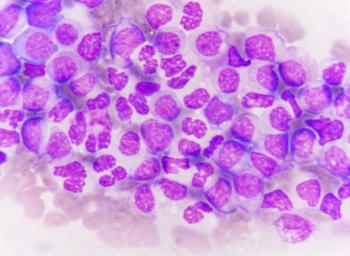
For patients with relapsed or refractory KMT2Ar acute leukemia, revumenib showed promising outcomes of overall response rate and duration of response.
Blinatumomab plus chemotherapy may represent a new treatment standard for most patients with standard-risk B-ALL, says Rachel E. Rau, MD.
Bicistronic CD19/CD22 CAR T-cell therapy had improved safety, durability, and high remission rates in pediatric patients with R/R B-ALL.
The updated labeling also includes new information on the recommended dosage of fludarabine phosphate when given with cyclophosphamide and rituximab.

The FDA has approved revumenib (Revuforj) for the treatment of patients with relapsed/refractory acute leukemia with a KMT2A translocation in adult and pediatric patients 1 year and older.
Developers are expected to file a supplemental NDA for revumenib in NPM1-mutated AML in the first half of 2025.
Patients with Philadelphia chromosome–positive CML in chronic phase will no longer be required to fast before taking nilotinib tablets.
Nicole Lamanna, MD, discusses addressing a clinically unmet need among patients with CLL who have relapsed on multiple prior lines of therapy.
Results from the FELIX trial support the approval of obecabtagene autoleucel in B-cell ALL.
Consolidative hematopoietic cell transplantation also confers improved progression-free survival among those with relapsed/refractory B-ALL.
Investigators will present topline data from the phase 2/3 study of uproleselan/chemotherapy at a future medical meeting.
Advertisement
Advertisement
Trending on CancerNetwork
1
Modifiable Risk Factors Suggest Potential for Improving Cancer Prevention
2
2026 Tandem Meetings: What’s the Latest Research in Multiple Myeloma?
3
Barriers to CAR T-Cell Referral and Center Access in Multiple Myeloma
4
Dato-DXd Receives Priority Review in Unresectable/Metastatic TNBC
5