
Over the long term, local recurrence is more likely in young women with invasive breast cancer who undergo breast conserving surgery compared with those who undergo mastectomy, though survival is no different.
Over the long term, local recurrence is more likely in young women with invasive breast cancer who undergo breast conserving surgery compared with those who undergo mastectomy, though survival is no different.

Postmenopausal women with breast cancer who took aromatase inhibitors (AI) had endothelial dysfunction, according to the results of a study.

With the help of a scalp-cooling device, 50% of women with breast cancer undergoing neoadjuvant or adjuvant chemotherapy were able to prevent hair loss, according to the results of the SCALP trial.

Adding the PARP inhibitor veliparib to carboplatin and paclitaxel chemotherapy significantly increased response rates among women with BRCA1 or BRCA2 mutations and locally recurrent or metastatic breast cancer, according to a randomized phase II trial.
Circulating tumor DNA (ctDNA) measured by liquid biopsy was able to identify actionable mutations and provide a real-time molecular assessment of metastatic breast cancer, according to a new study.
In a potential step toward precision endocrine therapy, a new study found that certain single nucleotide polymorphisms within CSMD1 are associated with changes in estrogen levels in postmenopausal breast cancer patients.

Treatment with buparlisib in combination with endocrine therapy significantly improved PFS compared with placebo in patients with HR-positive advanced breast cancer that had progressed after treatment with everolimus plus exemestane.

The addition of estrogen deprivation to neoadjuvant chemotherapy did not significantly affect pathologic complete response in women with HR-positive, HER2-positive breast cancer.

The addition of everolimus to fulvestrant was associated with more than a doubling of progression-free survival in women with metastatic hormone receptor–positive, HER2-negative breast cancer who were resistant to aromatase inhibitor therapy.

Whole exome and transcriptome sequencing found that the genomic landscape of estrogen receptor-positive metastatic breast cancer differs from that of primary tumors.

In this interview we discuss breast cancer prevention and risk assessments, including the questions these assessments aim to answer, what classifies someone as average or high risk, and appropriate next steps for patients who fall in these categories.

We are speaking with Maximilian Diehn, MD, PhD, on developing genomics-based biomarkers to identify the presence of cancer cells for prognosis and predicting response to cancer therapies.
Two studies of the new HER2 selective tyrosine kinase inhibitor ONT-380 showed the drug has promising activity in HER2-positive breast cancer and especially in patients with central nervous system metastases.
T-DM1 improved survival in women with HER2-positive breast cancer, even after treatment with two or more other HER2-targeted therapies including trastuzumab and lapatinib.

Women with early-stage breast cancer treated with breast-conserving therapy had significantly improved 10-year overall survival compared with women who underwent mastectomy without radiation therapy.

A preclinical study looking at ER-positive breast cancer indicated that tamoxifen response was improved by reducing levels of the enzyme APOBEC3B and worsened by increasing levels of the enzyme.

Women with advanced endocrine-resistant breast cancer who had PIK3CA mutations in their circulating tumor DNA had an almost 4-month progression-free survival improvement when adding the PIK3CA inhibitor buparlisib to fulvestrant.

The addition of carboplatin to a neoadjuvant chemotherapy regimen resulted in improvements in disease-free survival for women with triple-negative breast cancer.

Among local treatment options for early breast cancer patients, mastectomy plus reconstruction has the highest rate of complications and is highest in cost.

The addition of denosumab to adjuvant hormonal therapy in postmenopausal breast cancer patients improves disease-free survival compared with placebo.

Patients with breast cancer who still had residual disease after undergoing neoadjuvant chemotherapy and surgery had improved survival outcomes with the addition of adjuvant capecitabine to standard treatment.

Premenopausal women with luminal A breast tumors received no benefit from treatment with adjuvant chemotherapy.

Ahead of SABCS we discuss the biology and treatment of ductal carcinoma in situ, as well as research into prognostic indicators that could help guide treatment decisions.

Accelerated partial breast irradiation was shown to be just as effective and safe as whole breast irradiation in early-stage breast cancer patients.
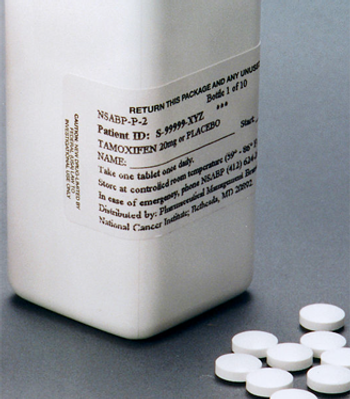
Tamoxifen given to women at high risk for breast cancer lowered the rate of estrogen receptor (ER)-positive breast cancer diagnosis in the IBIS-I trial.
Fulvestrant improved overall survival compared with anastrozole, among women with treatment-naive, advanced, hormone receptor-positive breast cancer.
Data from the Women’s Intervention Nutrition Study found a reduction in dietary fat intake resulted in lower death rates in ER- and PR-negative breast cancer.
The PD-1 inhibitor pembrolizumab showed activity and had an acceptable safety profile in heavily pretreated metastatic triple-negative breast cancer patients.
Results of a phase II study of a PI3K inhibitor in ER-positive breast cancer showed a trend toward improved progression-free survival.

A study of triple-negative breast cancer patients found that adding bevacizumab to chemo resulted in higher pCR rates in those with basal-like disease.