
In a phase 1 dose-escalation trial, duvelisib plus azacitidine produced a 46% overall response rate in relapsed/refractory T-cell lymphoma.
In a phase 1 dose-escalation trial, duvelisib plus azacitidine produced a 46% overall response rate in relapsed/refractory T-cell lymphoma.

The phase 2 SANRECO trial met its primary end point, with 88% of this polycythemia vera population achieving a response with divesiran vs 19% with placebo.
Additional work is needed on a “significant population that develops lung cancer without a tobacco history,” according to Edward S. Kim, MD, MBA.
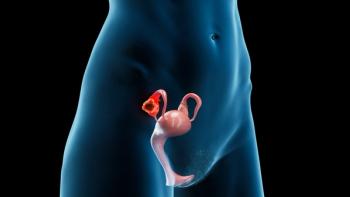
Age of 35 years or older, stage III/IV disease, and nondysgerminoma histology were linked with worse cancer-specific survival in malignant ovarian germ cell tumors.

Ami Shah, MD, Megan Kruse, MD, and Ruta Rao, MD, discuss DESTINY-Breast09, -11, and -05 data on trastuzumab deruxtecan in HER2-positive breast cancer.

The FDA did not highlight any concerns regarding the clinical or nonclinical data or safety profile of 177Lu-edoterotide.

City of Hope’s national clinical trials model can activate a study across a network of 40 sites in 4 states within 90 days, according to Edward Kim, MD, MBA.

The FDA granted fast track designation to BI-1808 plus pembrolizumab, which produced a 24% confirmed ORR in pretreated platinum-resistant ovarian cancer.

Patrick Borgen, MD built Brooklyn's breast cancer program from 47 patients to 8000. Now he and Joshua Feinberg, MD discuss what surgery looks like next.
Two pharmacy specialists discuss real-world data and clinical trial findings on the use of CAR T-cell therapy for pediatric patients with hematologic cancers.
Joshua Richter, MD, and Marco Davila, MD, PhD, focused on real-world CAR T-cell therapy outcomes in multiple myeloma.
Kim Stravers, an end-of-life doula and educator, outlined how training and certification standards vary across end-of-life doula organizations.
Goutham Vemana, MD, discussed navigating regional access logistics, insurance coverage, and patient assistance programs to deliver intravesical gemcitabine in NMIBC.
Joshua Richter, MD, and Marco Davila, MD, PhD, discussed what are some optimal candidates for CAR T-cell therapy in multiple myeloma.
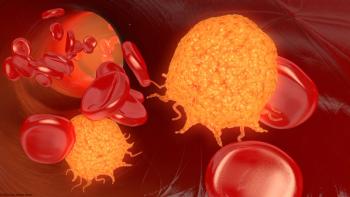
Updated results from the phase 2 ELIANA trial support tisa-cel as definitive therapy for pediatric and young adult patients with relapsed/refractory B-ALL.
Goutham Vemana, MD, explained how the intravesical system provides continuous treatment exposure, deeper bladder penetration, and zero systemic absorption.

Allegheny Health Network Department of Urology is offering a gemcitabine intravesical system to provide the therapy for BCG-unresponsive NMIBC.

In a phase 1b/2 trial, epcoritamab plus bendamustine/rituximab produced a 96% complete response rate in patients with untreated follicular lymphoma.
Joshua Richter, MD, and Marco Davila, MD, PhD, weighed in on sequencing CAR T-cell therapy and bispecifics in multiple myeloma.

Kim Stravers, an end-of-life doula, discussed how she helps patients assert autonomy over end-of-life medical decisions, including pain management preferences.
Joshua Richter, MD, and Marco Davila, MD, PhD, weighed in on the optimal timing of CAR T-cell therapy for multiple myeloma.
The FDA has approved RP1 plus nivolumab for adults with advanced melanoma who progressed on anti–PD-1 therapy.
Kim Stravers, an end-of-life doula, defined the role as a non-medical companion offering emotional and relational support to patients and their families.
Ajay K. Nooka, MD, MPH, FACP, discusses how results from the MonumenTAL-6 trial build upon prior studies assessing bispecific antibodies in multiple myeloma.
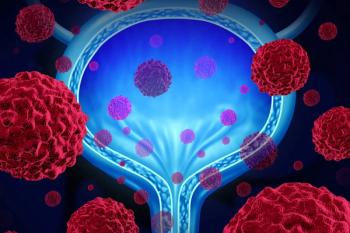
Two bladder cancer specialists discussed how emerging ctDNA MRD testing advances will impact treatment selection for patients with MIBC.
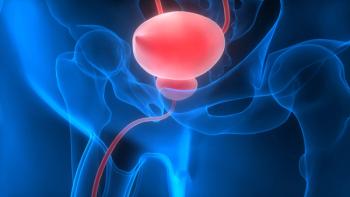
A phase 2/3 trial will evaluate enfortumab vedotin plus either ivonescimab or pembrolizumab as frontline therapy for locally advanced/metastatic bladder cancer.
Mamta Parikh, MD, MS, outlined strategies to overcome payer coverage friction and optimize ctDNA testing windows after cystectomy.

A multidisciplinary panel broke down ILC's distinct biology, imaging challenges, and emerging trial data, including OFSET and SUMMIT.
Adam D. Cohen, MD, said that more data are necessary to help determine how cevostamab can be sequenced with other T-cell–directed therapies.
Mamta Parikh, MD, MS, contextualized recent NCCN updates on ctDNA MRD testing after radical cystectomy in muscle-invasive bladder cancer.