
Updated phase 1/1b BGB-11417-101 trial data showed sonrotoclax 320 mg plus zanubrutinib achieved uMRD4 rates exceeding 90% in treatment-naive CLL/SLL.
Updated phase 1/1b BGB-11417-101 trial data showed sonrotoclax 320 mg plus zanubrutinib achieved uMRD4 rates exceeding 90% in treatment-naive CLL/SLL.
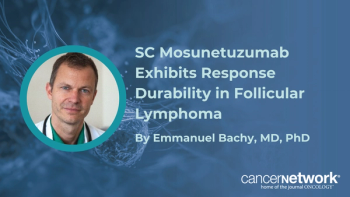
Emmanuel Bachy, MD, PhD, highlighted high efficacy, durable responses, and a favorable adverse effect profile in follicular lymphoma with high tumor burden.

In BRUIN CLL-322, fixed-duration pirtobrutinib plus venetoclax/rituximab improved PFS vs venetoclax/rituximab in relapsed/refractory CLL.
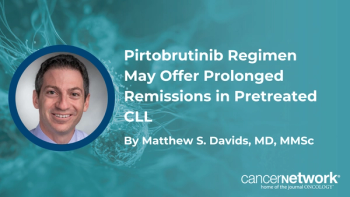
Combining pirtobrutinib with venetoclax/rituximab yielded high MRD clearance among those with CLL/SLL in the phase 3 BRUIN CLL-322 trial.
In KOMET-007, ziftomenib plus 7+3 produced high responses and MRD-negativity rates in newly diagnosed NPM1-mutated or KMT2A-rearranged AML.
The safety profile of the CAR T-cell product in the real world was consistent with that observed in the TRANSCEND MCL study.
No new safety signals were observed with the LAG-3 inhibitor-based therapy among patients with relapsed/refractory classic Hodgkin lymphoma.

Explore how newer HER2 therapies and anthracycline-sparing regimens cut breast cancer heart damage, with monitoring and cardioprotective drugs.
Real-world study shows T-DXd benefits older metastatic breast cancer patients, but higher ILD risk and toxicity-driven discontinuation demand close monitoring, especially in octogenarians.

The brentuximab vedotin-based regimen was consistently favored in sensitivity analyses regardless of covariate adjustment tested.
The use of CD20×CD3 bispecific antibodies correlated with lower hematologic toxicity, higher responses, and preserved CAR T fitness in LBCL groups.
MRD responses appeared to be more favorable with the use of blinatumomab among pediatric patients with high-risk B-cell acute lymphoblastic leukemia.

The phase 3 EPCORE DLBCL-1 data showed epcoritamab reduced progression or death risk by 26% vs chemoimmunotherapy in relapsed/refractory LBCL.
In MonumenTAL-3, talquetamab plus daratumumab with or without pomalidomide significantly improved PFS vs DPd in relapsed/refractory myeloma.
Does infusion timing matter in TNBC? Early-day pembrolizumab may boost pCR and cut recurrences, prompting new scheduling questions.
Clonal blood mutations common in breast cancer may sharply raise heart failure risk after anthracyclines, urging better screening and personalized cardio-oncology care.

Data from the MAXILUS study affirm the importance of early treatment initiation among those with lower-risk myelodysplastic syndrome.

High rates of MRD negativity were observed with a combination of carfilzomib, lenalidomide, daratumumab, and dexamethasone in the ASCENT trial.
There was no clear prognostic impact of age, comorbidities, complex living skills, or basic self-care tasks on PFS for diffuse large B-cell lymphoma.

Findings from the phase 3 CAPItello-281 trial supported the regulatory decision for capivasertib among this PTEN-deficient HSPC group.

Based on data from the phase 3 LITESPARK-022 trial, the FDA has approved adjuvant belzutifan/pembrolizumab for patients with clear cell RCC.

Investigators observed no new safety signals with lurbinectedin alone or in combination with irinotecan in the phase 3 LAGOON trial.

Atezolizumab plus chemotherapy reduced the risk of disease recurrence or death by 50% compared with chemotherapy alone in this patient population.
A phase 1b/2 trial of azacitidine, venetoclax, and ivosidenib showed composite complete remissions and MRD negativity in newly diagnosed IDH1-mutated AML.
Findings from the ASC4FIRST trial show that asciminib is meeting high expectations as a frontline therapy in chronic myeloid leukemia in chronic phase.
Explore how ADCs reshape breast cancer care, with practical sequencing strategies across subtypes and guideline-based toxicity management for ILD, neutropenia, and GI effects.
Real-world data show most first-line mTNBC patients are immunotherapy-ineligible, use chemotherapy, and face poorer survival, underscoring major unmet treatment needs.
The addition of epcoritamab to lenalidomide and rituximab showed improved efficacy and manageable safety in relapsed/refractory follicular lymphoma.
Data from the CASSIOPEIA trial showed that more than half of patients with high-risk disease achieved 5-year disease-free survival with tisagenlecleucel.
Adverse drug reactions occurred in 1 patient treated with VT-EBV-N, although no grade 3 or higher events emerged.