

The FDA cited that the data provided for RP1 were insufficient and did not provide substantial evidence of effectiveness for this population.
The FDA cited that the data provided for RP1 were insufficient and did not provide substantial evidence of effectiveness for this population.

CT-P71 is being assessed in patients with locally advanced or metastatic urothelial carcinoma.

The FDA has set a Prescription Drug User Fee Act date of September 11, 2026, for TLX101-Px for patients with brain cancer.

Elizabeth Mittendorf, MD, discussed how the Clarity Breast AI tool utilizes mammography to predict 5-year breast cancer risk.

Integrative analysis reveals that targeting uPAR with CAR T cells produces durable regressions as well as systemic metastasis clearance.

The FDA has removed the partial clinical hold on the phase 2 LINNET study of lorigerlimab for patients with platinum-resistant ovarian cancer and clear cell gynecologic cancer.
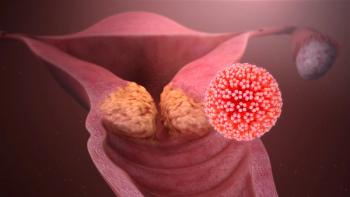
The FDA has also approved the BD Onclarity HPV Assay for the screening of cervical cancer, with support from the SHIP trial evaluating at-home cervical cancer screening.

Treatment with Rhenium-186 Obisbemeda for pediatric malignant gliomas and ependymomas is being assessed in the ReSPECT-PBC trial.

Alexander Z. Wei, MD, highlighted key clinical trials presented at ASCO GU and initiated at Columbia University to “move the needle” in bladder cancer.
JNJ-1900 may avoid the main limitations observed with other radiosensitizers and radioprotectors, according to Benjamin Cooper, MD.

Mina Fam, MD, discussed his use of MRI and genomic testing to inform his use of HIFU focal therapies vs more radical alternatives.

A large community-based chart review demonstrates robust real-world responses with tafasitamab/lenalidomide across a racially diverse US population.
Jamin C. Morrison, MD, discussed the shift toward personalized cancer vaccines in melanoma.

The FDA granted fast track designation to SIM0505, a CDH6-directed antibody-drug conjugate, for the management of platinum-resistant ovarian cancer.

According to the phase 3 TORPEdO investigators, where IMPT is not used routinely for OPSCC, IMRT remains the standard of care.

Data from the PRESERVE-003 trial may support the use of a novel chemotherapy-free option for patients with squamous non–small cell lung cancer.

The FDA has granted orphan drug designation to tovecimig (CTX-009) for the treatment of bile duct cancer, following results from the phase 2/3 COMPANION-002 trial.

The RUBY trial demonstrates that disrupting the BCL11A binding site in the γ-globin promoters can normalize hemoglobin in severe sickle cell disease.
According to Jeff P. Sharman, MD, determining whether a patient requires inpatient or outpatient admission is a critical concern in community practice.

Data from the phase 1/2 ALKOVE-1 trial support the application for neladalkib in this non–small cell lung cancer population.

Natalie Berger, MD, discusses the evolving landscape of ADC sequencing in breast cancer, the role of HER2 expression, and the "sandwich approach" to treatment.
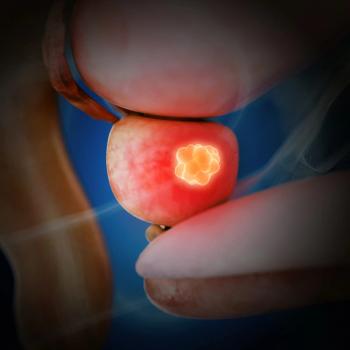
Most treatment-related adverse effects were grades 1 or 2, and no grade 4 adverse effects or treatment-related deaths were observed with Lu-PSMA-617.

Data from a phase 3 trial may support the role of carfilzomib in the upfront treatment setting for patients with multiple myeloma.
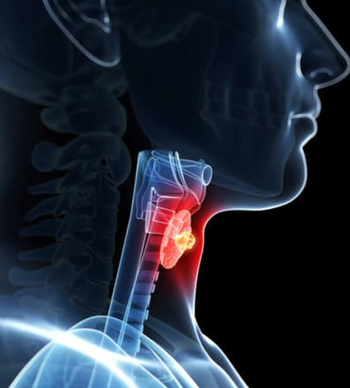
The 2026 ASCO thyroid cancer guideline update focused on the shifting landscape of systemic therapy for advanced disease.

Experts discussed the critical intersection of oncology and mental health, which included identifying and mitigating suicide risk factors.

Teclistamab/daratumumab is one of the most exciting combinations seen in relapsed/refractory multiple myeloma, said María-Victoria Mateos, MD, PhD.

Mina Fam, MD, explored the integration of multiparametric MRI and genomics in focal HIFU selection and compared its AE profile to radical intervention.
Frequent hydration, salivary gland stimulation, and overnight humidifier use are strategies Bradley J. Stish, MD, employs to manage dry mouth.

Data from the PALOMA-2 trial showed comparable efficacy with subcutaneous amivantamab vs prior reports of the intravenous formulation.

Robert Coleman, MD, FACOG, FACS, discusses the significance of the relacorilant and nab-paclitaxel approval in PROC supported by phase 3 ROSELLA trial data.