



























































While the risk of a new treatment-related cancer diagnosis after childhood is known, a new study now shows that this risk remains into the fifth and sixth decade of life.
While the risk of a new treatment-related cancer diagnosis after childhood is known, a new study now shows that this risk remains into the fifth and sixth decade of life.
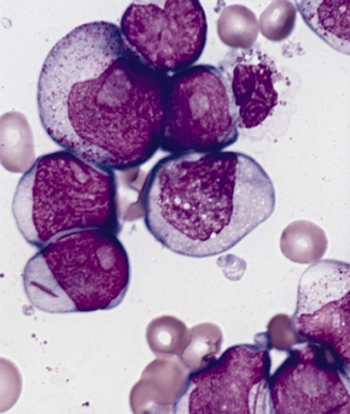
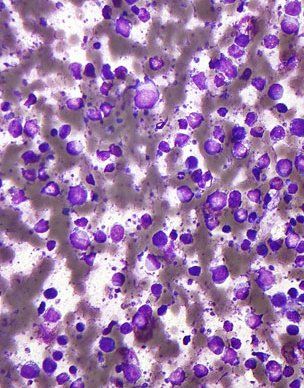
Adding vosaroxin to cytarabine resulted in no significant improvement in overall survival in patients with relapsed or refractory acute myeloid leukemia, but the trial did suggest that vosaroxin could be an option for salvage therapy in patients aged 60 and older.
Treatment of CML with various tyrosine kinase inhibitors can induce changes in glomerular filtration rate over time and have other kidney-related effects.
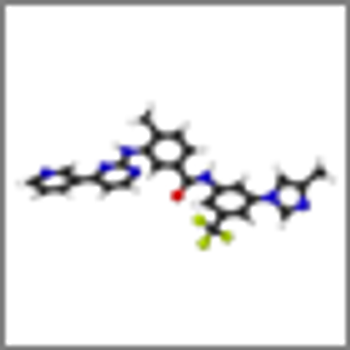
Long-term follow-up of a phase II study shows that nilotinib is highly effective in treating chronic phase CML as a first-line therapy, though with relatively common cardiovascular toxicity associated with treatment.
Lymphoma survivors who underwent autologous HSCT may be at greater long-term risk for heart failure and left ventricular systolic dysfunction than previously thought.
Patients with CML undergoing treatment with dasatinib had a narrower spectrum of mutations in BCR-ABL1 compared to those treated with imatinib.
Advanced Hodgkin lymphoma patients who discontinue their treatment with bleomycin and vincristine as part of a BEACOPP regimen did not experience an effect on survival.
Results of a large trial have indicated that the use of interim PET/CT imaging has limited prognostic value to DLBCL patients being treated with R-CHOP-14.
Several lymphoma subtypes may present with isolated splenomegaly. Establishing a correct histologic diagnosis is critical, since patient management is largely determined by histology.
Incorporation of PD-1 blockade into the treatment algorithms for hematologic malignancies is currently being pursued in multiple active clinical trials. Here we review the data on anti–PD-1 monoclonal antibodies to date and discuss ongoing and future clinical trials.
While the results of the multitude of ongoing PD-1 blockade trials are eagerly awaited, it is clear that research involving the immunotherapy of blood cancers is moving swiftly through this first “checkpoint” at breakneck speed. It is sure to be a fascinating ride.
Beliefs regarding medication for chronic myeloid leukemia (CML) are strongly associated with suboptimal treatment adherence, according to a new study.
Ponatinib demonstrates continuing clinical activity in chronic-phase chronic myeloid leukemia patients who failed prior treatment with other TKIs.
Obinutuzumab in combination with bendamustine followed by obinutuzumab maintenance improved PFS over bendamustine monotherapy in patients with refractory non-Hodgkin lymphoma.
With a high sensitivity for detecting disease recurrence, follow-up imaging using PET/CT may help to more successfully guide the management of NHL patients at risk for disease recurrence.
A vaccine known as AST-VAC1 was successfully produced from most patients in a phase II trial of patients with acute myeloid leukemia.
Even in the absence of cranial radiation therapy, survivors of childhood acute lymphoblastic leukemia (ALL) have decreased neurocognitive function years later.
An inhibitor of FLT3 known as ASP2215 showed good clinical activity in FLT3-mutated patients with relapsed or refractory acute myeloid leukemia (AML).
Researchers have discovered that people carrying activating killer-cell immunoglobulin-like receptor (KIR) genes, which are expressed in natural killer cells (NK cells), may experience a protective benefit.

An analysis of more than 34,000 5-year survivors of childhood cancer treated over 3 decades finds that modern treatments have reduced long-term mortality rates.
Patients with acute myeloid leukemia who had a DNMT3A mutation had poorer disease prognosis, according to an analysis of patients aged 60 years or younger.
Women who were treated for Hodgkin lymphoma during childhood and adolescence had similar rates of post-treatment parenthood as that of the general population.
CML patients with more comorbidities at diagnosis have significantly reduced overall survival, according to an analysis of the randomized CML-Study IV.
A new study using CML in blast crisis cells has identified existing anticancer agents that may provide benefit to patients with this difficult-to-treat disease.
Older adults with acute myeloid leukemia have a substantial health care burden and high rates of health care utilization even at the end of life.