


Multiple Myeloma
Latest News
Advertisement
Video Series
Latest Videos



Shorts
1:18
Defining Cure and Long-Term MRD Negativity in Multiple Myeloma
25 days ago
by
Meletios A. Dimopoulos, MD
0:53
CELMoD Approval Brings “Familiar” Dosing Protocols to Multiple Myeloma
2 months ago
by
Surbhi Sidana, MD
1:07
CELMoDs Have “a Lot of Potential” in Multiple Myeloma Treatment Landscape
3 months ago
by
Adam D. Cohen, MD

0:48
Using Bispecific Antibodies as Definitive Therapy in Multiple Myeloma
3 months ago
by
Benjamin Diamond, MD
0:58
Investigating the Evolution of Cellular Therapy in Multiple Myeloma
4 months ago
by
Yan Leyfman, MD
1:03
How is CAR T-Cell Therapy Transforming Expectations in Multiple Myeloma?
4 months ago
by
Yan Leyfman, MD
0:51
On-Body Injector Brings “Modern” Isatuximab Delivery for Multiple Myeloma
5 months ago
by
Mary Steinbach, NP, APRN
0:47
Examining the Impact of the WETT Tool on Talquetamab-Related Oral AEs
5 months ago
by
Beth Faiman, PhD, MSN, APN-BC

0:46
Finding a “Sweet Spot” for Fixed-Duration Multiple Myeloma Therapy
5 months ago
by
Barry Paul, MD
0:33
Therapy is Only as Good as Its Access in Multiple Myeloma Care
5 months ago
by
Prerna Mewawalla, MD
Podcasts


























































Advertisement
More News
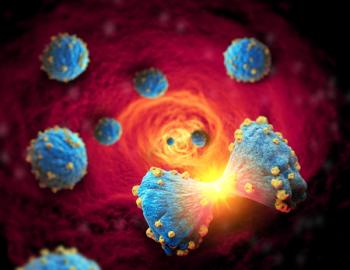
Experts in multiple myeloma discussed long-term MAIA and CEPHEUS trial data and their implications for daratumumab-based regimens in newly diagnosed disease.

Jeffrey V. Matous, MD, discusses how to counsel patients on chronic, low-grade toxicities to support adherence to ramantamig.

Iberdomide plus daratumumab/dexamethasone met the second dual primary end point of the phase 3 EXCALIBER-RRMM trial in relapsed/refractory multiple myeloma.
Experts discuss data from the MonumenTAL-3 trial and the evolving roles of talquetamab and other bispecific antibodies in relapsed/refractory multiple myeloma.
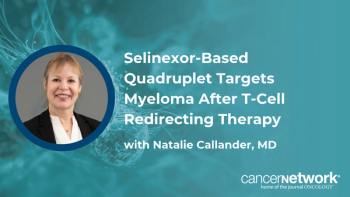
Natalie S. Callander, MD, discussed the rationale for combining selinexor, carfilzomib, subcutaneous isatuximab, and dexamethasone in relapsed/refractory myeloma.
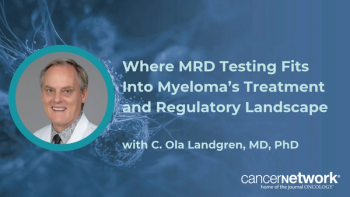
C. Ola Landgren, MD, PhD, discusses the FDA’s endorsement of MRD as an accelerated approval end point in multiple myeloma.

Hans C. Lee, MD, discussed how community oncologists with limited access to MRD testing can think about the new IMS/IMWG definition of cure in myeloma.

Hans C. Lee, MD, discussed how he monitors patients with multiple myeloma who achieve deep, sustained MRD negativity after coming off therapy.
![“[W]e should strive to increase the [number] of patients…who enjoy long-term disease-free survival and possibly cure,” said Meletios Dimopoulos, MD.](https://cdn.sanity.io/images/0vv8moc6/cancernetwork/c7abebf9344f9b1be9aee80d9879d139c1655bcc-1200x1197.jpg?w=350&fit=crop&auto=format)
“We should strive to increase the [number] of patients…who enjoy long-term disease-free survival and possibly cure,” said Meletios Dimopoulos, MD.
Pieter Sonneveld, MD, PhD, explained how sustained MRD negativity with DVRd in the PERSEUS trial may guide long-term outcome counseling in multiple myeloma.

Hematologic specialists discussed where ciltacabtagene autoleucel fits in the treatment paradigm at first relapse and beyond in multiple myeloma.
Updated NCCN Guidelines for multiple myeloma add a dedicated MRD testing framework and expand recommended MRD assessment timepoints.
Experts discussed whether CAR T cells or bispecific antibodies should be used first in relapsed/refractory multiple myeloma at the 2026 SOHO Annual Meeting.
Full results from the phase 3 CERVINO trial assessing etentamig in relapsed/refractory multiple myeloma will be shared at the 23rd IMS Annual Meeting.
Surbhi Sidana, MD, discusses the first CELMoD and first MRD-based approval, iberdomide, in relapsed/refractory multiple myeloma.
In the final analysis of the phase 3 MAIA trial, daratumumab-based treatment yielded a median overall survival of 90.3 months in transplant-ineligible NDMM.
Surbhi Sidana, MD, discusses how CELMoDs like iberdomide could complement CAR T and bispecific antibody therapies.
The availability of iberdomide as an easy-to-give, orally available drug “is tremendous” for patients with multiple myeloma, according to Surbhi Sidana, MD.

The European Commission based its approval of teclistamab plus daratumumab for relapsed/refractory multiple myeloma on data from the MajesTEC-3 study.
Two teams of multiple myeloma experts debate the use of early CAR T-cell therapies and bispecific antibodies based on key trial data and various hot topics.
Bispecific antibodies “will form the standard backbone agents for multiple myeloma therapies,” according to Hans Lee, MD.
Experts gathered to discuss various facets of early-relapse multiple myeloma treatment, such as exposure vs refractoriness and CAR T vs bispecifics.

Treatment until progression may not be the way forward with bispecific antibodies, according to Hans Lee, MD.

Hans Lee, MD, said it is only a matter of time before bispecific antibodies move into the newly diagnosed multiple myeloma setting.

Data from the phase 3 EXCALIBER-RRMM trial support the FDA accelerated approval of iberdomide plus daratumumab and hyaluronidase and dexamethasone in this multiple myeloma population.
Advertisement
Advertisement
Trending on CancerNetwork
1
Acid Reducers, Drug-Drug Interactions, and Setting Expectations for Response
2
How Psycho-Oncology Addresses Existential Distress, Body Image, and Intimacy
3
Meaning-Centered Therapy, Psychiatry Referrals, and Humanistic Cancer Care
4
How to Work With a Patient Who Declines Cancer Treatment
5