



Oncology
Latest News

Access to Care and Drug Prices: Recent Department of Health and Human Services Guidance
Advertisement
Video Series
Latest Videos

Shorts
1:00
Designing a New Cancer Center to Facilitate Seamless Teamwork
20 days ago
by
Steven K. Libutti, MD
1:16
What New Tools Can Improve Mental Health Screening in Cancer Care?
3 months ago
by
Julian C. Hong, MD, MS
0:34
Study Finds 80% of Young Cancer Survivors Face Sexual Dysfunction
4 months ago
by
Chiara Acquati, PhD, LMSW, FAOSW
1:07
When Do New Mental Health Disorders Occur Most in Patients with Cancer?
4 months ago
by
Julian C. Hong, MD, MS
1:03
Chemobrain Vs Dementia: Understanding the Difference
4 months ago
by
Yesne Alici, MD
0:50
Key Advances Across Oncology Research and Care at Columbia University
4 months ago
by
Russ Conroy
0:57
Overcoming Fear to Change in the Commercialization Aspect of Oncology
5 months ago
by
Vanessa Almendro Navarro, PhD, MBA
1:14
Collaboration Across Departments is Key in Oncology Development
5 months ago
by
Vanessa Almendro Navarro, PhD, MBA
0:36
COVID-19 Was ‘Added Layer of Trauma’ in Psycho-Oncology Care
5 months ago
by
Daniel C. McFarland, DO
0:48
ACRO Day 1 Quick Take With CancerNetwork
5 months ago
by
Ariana Pelosci(+1 more)
Podcasts














































Advertisement
More News
ASCO Breakthrough 2026 spotlights ADCs, CAR-T, ctDNA-guided colorectal care and menin inhibitors driving precision cancer treatment.

INELDA-certified death doula Kim Stravers shares a detailed account of supporting a patient with pancreatic cancer and Lynch syndrome.
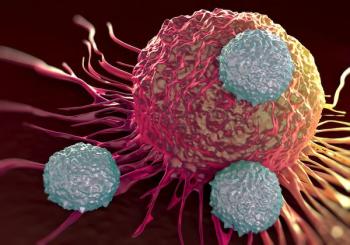
Preliminary data from the phase 1/2 TARGET-D 101 trial showed a manageable safety profile for VS-7375 across KRAS G12D–mutated solid tumors.

Kim Stravers, an INELDA-certified death doula and educator, explains how end-of-life doulas provide nonmedical emotional, practical, and relational support to patients with cancer and their families.

The FDA has approved gadoquatrane for contrast-enhanced MRI to detect lesions with abnormal vascularity in the central nervous system and body.
A large real-world analysis found that concurrent GLP-1 receptor agonist use was linked to significantly improved long-term survival and lower rates of irAEs in patients receiving ICIs.

Findings from a cohort study demonstrated that coexposure to a COVID-19 mRNA vaccine within 90 days of anti–PD-(L)1 treatment improved OS in patients with cancer.

The FDA has approved the updated Guardant360 Liquid CDx, a blood-based cancer test combining genomic and epigenomic analysis, across multiple tumors.
See which trials in lung, gastrointestinal, and genitourinary cancers to be on the lookout for at 2026 ASCO.

Cedars-Sinai investigators transitioned hematology-oncology units to progressive care models to improve safety for patients receiving immunotherapy.

A total of 100 RNs successfully completed the full chemotherapy training program during the 2024 and 2025 evaluation periods.

Investigators are currently evaluating emiltatug ledadotin among patients with different solid tumors in a phase 1 trial.

ASCO has recommended expanded eligibility for independent oncology practices and stricter oversight to ensure savings benefit for underserved patients.

A young father faces a potential lymphoma diagnosis, revealing how medical language, restraint, and rapid coordination reshape care and ease uncertainty.

The new guidelines address 11 key clinical questions for optimizing communication between clinicians and patients with cancer.

The affordability of health care will be the top issue in the upcoming midterm elections.

In vivo CAR T-cell engineering represents a fundamental rethinking of how cellular therapies are produced and delivered.
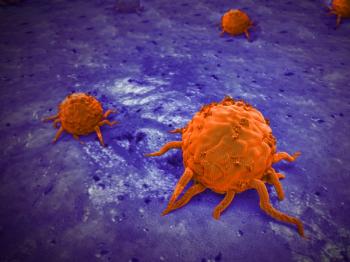
Data presented at the 2026 AACR Annual Meeting highlighted promising therapeutic approaches in diseases such as NSCLC and oral premalignant lesions.
A prospective evaluation shows that using large language models within an oncology-specific knowledge graph may help close oncology's enrollment crisis.

Integrative analysis reveals that targeting uPAR with CAR T cells produces durable regressions as well as systemic metastasis clearance.
Data demonstrate that reprogramming immunosuppressive macrophages can convert cold tumors into self-sustaining immune battlefields without lymphodepletion.

Three experts in surgery, radiation, and integrative care disclosed the most salient advances and keen insights in their respective fields.
ONCOLOGY has identified FDA approvals that have affected the oncology treatment paradigm over the last 40 years.

Today the patient-physician relationship that Pergament et al outlined in 1999 is even more prevalent, driven by the rapid development, use, and uptake of social media across all oncology fronts.
Advertisement
Advertisement
Trending on CancerNetwork
1
Pembrolizumab Monotherapy Improves PFS in Frontline dMMR Endometrial Cancer
2
Agenus Discontinues Phase 3 BATTMAN Trial in Metastatic MSS Colorectal Cancer
3
01 Real-World Outcomes of Radiation Omission After Breast-Conserving Surgery in Older Women With Stage I ER-Positive Breast Cancer: A SEER Analysis (2000–2022)
4
OS Does Not Improve With Continuous Vs Fixed Lenalidomide Dosing in NDMM
5