

Two hematologic oncologists debated the clinical trade-offs of CAR T-cell therapy vs bispecific antibodies in relapsed/refractory follicular lymphoma.
Two hematologic oncologists debated the clinical trade-offs of CAR T-cell therapy vs bispecific antibodies in relapsed/refractory follicular lymphoma.
Megan Melody, MD, says acute CAR T-cell toxicities are well managed, but delayed neurotoxicity remains a challenge.
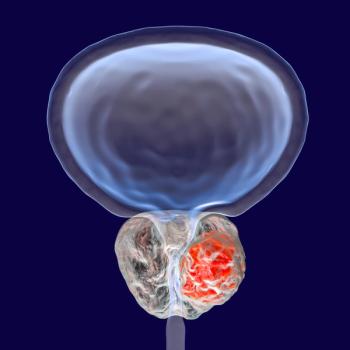
A 10-year analysis of 3477 patients found low prostate cancer–specific mortality with focal high-intensity focused ultrasound or cryotherapy for nonmetastatic disease.

Kathryn Eckert, DO, described how her breast surgery practice and imaging partners responded on day 1 of the Hologic Brevera needle recall.

A peptide vaccine targeting KRAS variants was safe and produced durable T-cell responses in individuals with hereditary predisposition to pancreatic ductal adenocarcinoma.
Courtney D. DiNardo, MD, MSCE, and Michael R. Savona, MD, weigh whether ASCERTAIN-V data make oral HMA therapy the frontline default in AML.

Patients with a multiple myeloma relapse within 36 months of upfront quadruplet therapy and transplantation should be prioritized for immunotherapy, said Gayathri Ravi, MD.

Traditional acupuncture plus auricular acupressure improved overall quality of life among patients with HNSCC undergoing radiotherapy.

A breast surgeon and a radiologist describe the impact the breast biopsy needle shortage has had on their current clinical practice.

The approval of Orca-T represents a “big advance” that must be studied further, according to Wendy Stock, MD.
A pharmacist explored how recent NCCN guideline updates leverage ctDNA MRD testing to guide adjuvant immunotherapy and improve EFS in bladder cancer.
Michael R. Savona, MD, and Courtney D. DiNardo, MD, MSCE, explained how an all-oral AML regimen impacts infusion center logistics and patient visits.
A pharmacist discussed the operational hurdles, payer coverage rates, and lack of standardized surveillance protocols for bladder cancer ctDNA testing.
Courtney D. DiNardo, MD, MSCE, and Michael R. Savona, MD, discussed how fast oral DEC-C plus venetoclax may replace IV HMA regimens in AML.

In 50,845 SEER patients aged ≥70 years with stage I ER-positive breast cancer after BCS, radiation omission was not associated with inferior BCSS (aHR, 0.95; 95% CI, 0.87-1.04), though radiation conferred modest OS benefit, supporting selective de-escalation in older patients.
Data from the phase 3 ENDURANCE trial challenge the assumption that a longer duration of therapy is likely to better multiple myeloma care.

Adjuvant atezolizumab nearly doubled disease-free survival in patients with ctDNA-positive muscle-invasive bladder cancer in the phase 3 IMvigor011 trial.
Sara Hurvitz, MD, FACP, explained how to prevent and manage stomatitis in patients with breast cancer receiving the newly approved gedatolisib.

Experts discuss sequencing HER2-, FGFR3-, and nectin-4–directed therapies after enfortumab vedotin and pembrolizumab in urothelial cancer.
In a prospective pilot of 74 patients enriched for under-represented risk factors, 15-fraction breast/chest wall RT with SIB yielded 10-year LRFS of 93.1%, DMFS of 94.2%, and OS of 89.2%, with no grade 3 brachial plexopathy or significant lymphedema, supporting condensed SIB use in routine practice.
In 536,783 NCDB breast RT courses from 2020 to 2023, 5-fraction RT rose from 4.3% to 17.4% overall, with uptake significantly lower among uninsured patients (6.9%), Black patients (9.4% vs 12.2% White), and mid-size metro areas, revealing persistent access disparities.
In a phase 1 trial, englumafusp alfa plus glofitamab produced a 68.7% overall response rate in heavily pretreated aggressive B-cell non-Hodgkin lymphoma.
Phase 3 data may support orelabrutinib as a safe and effective option for patients with treatment-naïve CLL or SLL.

The phase 3 KEYNOTE-C93 trial met its primary end point of PFS with pembrolizumab monotherapy vs chemotherapy in dMMR advanced or recurrent endometrial cancer.

Dosing has resumed in the INVINCIBLE-4 trial of INT230-6 plus standard therapy in early-stage triple-negative breast cancer.

Sara Hurvitz, MD, FACP, discussed the IV formulation of gedatolisib and its favorable toxicity profile compared with oral PI3K inhibitors in breast cancer.
In an NCDB cohort of 536,783 breast radiation courses from 2020 to 2023, 5-fraction RT utilization rose from 4.3% to 17.4%, with overall 10.7% adoption across the 4-year period.
This narrative review synthesizes evidence and sarcoma-based extrapolation to support multicatheter interstitial HDR brachytherapy as a feasible chest-wall irradiation strategy for selected high-risk malignant phyllodes tumors.

Sara Hurvitz, MD, FACP, explained why the FDA approval of gedatolisib is practice changing for patients with HR+/HER2– metastatic breast cancer.
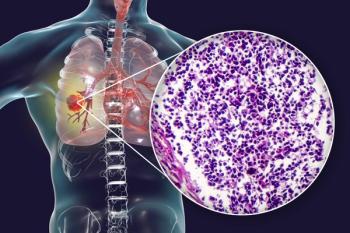
Data from the phase 3 OptiTROP-Lung06 trial also showed a positive trend in overall survival with sac-TMT plus pembrolizumab in patients with NSCLC.