

Treatment until progression may not be the way forward with bispecific antibodies, according to Hans Lee, MD.
Treatment until progression may not be the way forward with bispecific antibodies, according to Hans Lee, MD.

Barbara Burtness, MD, discussed strategies for managing skin reactions and MET-driven edema in head and neck cancer treated with subcutaneous amivantamab.

Laura Alder, MD, discussed a retrospective analysis evaluating tarlatamab’s efficacy and safety in patients with SCLC and brain metastases excluded from DeLLphi-304.

Men with disabilities were less likely to have received prior PSA testing than men without disabilities, with mobility disability showing the most consistent association.
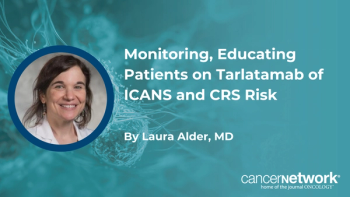
Laura Alder, MD, discussed how her team at Duke monitors and educates patients for immune-related toxicities while receiving tarlatamab for brain metastases.

Detailed findings from the phase 3 DESTINY-Lung04 trial will be presented at a future medical meeting and shared with regulatory health authorities.

Hans Lee, MD, said it is only a matter of time before bispecific antibodies move into the newly diagnosed multiple myeloma setting.
The FDA has cleared an investigational new drug application for C-CAR039, a CD19/CD20 bispecific CAR T-cell therapy, in relapsed/refractory large B-cell lymphoma.

In a retrospective cohort study, neoadjuvant chemoimmunotherapy produced a deep pathologic response in 67.0% of patients with resectable HNSCC.

The FDA has granted OncoSil Medical a humanitarian device exemption for its intratumoral radiation device in unresectable, non-metastatic distal cholangiocarcinoma.
The phase 3 eVOLVE-Lung02 trial will halt after an independent committee concluded that volrustomig plus chemotherapy was unlikely to improve survival.
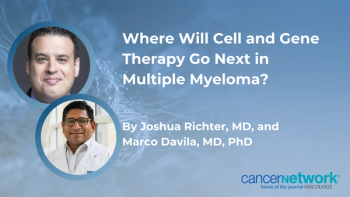
Experts emphasize that ongoing communication, whether from an academic or community oncology standpoint, is key for providing optimal multiple myeloma care.
Laura Alder, MD, discussed how tarlatamab’s intracranial activity compared with chemotherapy and radiation options for brain metastases in small cell lung cancer.

A new ASTRO clinical practice guideline expands radiotherapy recommendations across resectable, locally advanced, recurrent, and metastatic pancreatic cancer.

Data from the SAFFRON trial may represent a critical advance in the management of EGFR-mutated NSCLC with MET-driven resistance.

This analysis demonstrated that the prognostic effect of age was predominately attributable to its association with molecular risk factors.

Daniel McFarland, DO, and Boris Kiselev, MD, discuss how oncologists can safely treat depression in patients with cancer, including medication choices.

Barbara Burtness, MD, discussed the biological rationale for dual EGFR/MET targeting and how the OrigAMI-4 data may reshape treatment workflows for HNSCC.
Cell therapy will eventually become a part of the therapeutic strategy for newly diagnosed multiple myeloma, according to Joshua Richter, MD.
Experts outline how certain practices may have an “incomplete understanding” of where the multiple myeloma field is today.

The phase 1b PRISM study is assessing the ability of ruxolitinib/retifanlimab to reinvigorate the tumor microenvironment in immune-resistant RCC.
A multidisciplinary panel discussed CAR-T candidacy and second-line treatment sequencing for patients with relapsed/refractory DLBCL.
Experts discuss the roles that telemedicine and outpatient programs can play in increasing access to novel cellular therapies among those with multiple myeloma.

Data presented at the 2026 AACR Annual Meeting demonstrated the promise of blood-based lung cancer detection via SimpleScreen Lung.

Based on 2.5-year OS data from a phase 2b trial, the FDA has granted a Type C meeting to discuss OST-HER2 in fully resected, pulmonary metastatic osteosarcoma.
NETTER-2 findings showed a consistent reduction in the risk of progression or death with first-line lutetium Lu 177 dotatate in advanced GEP-NETs groups.

Data from the phase 3 EXCALIBER-RRMM trial support the FDA accelerated approval of iberdomide plus daratumumab and hyaluronidase and dexamethasone in this multiple myeloma population.

A post-hoc analysis of the ARISTOTLE trial demonstrated that patients with rectal cancer with high tumor cell density had improved DFS and OS.

Investigators will submit full results from the REZILIENT3 trial assessing zipalertinib in EGFR-mutated NSLCC at a future international medical meeting.

The primary end point of PFS-6 was met in the phase 2 NEO100-01 trial assessing NEO100 in patients with grade III/IV IDH1-mutant glioma.