
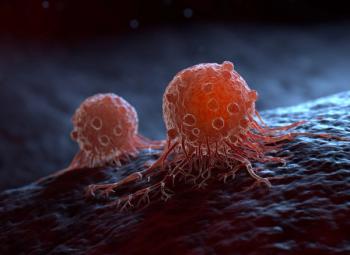
A positive CHMP opinion supports the perioperative use of pembrolizumab plus enfortumab vedotin in resectable MIBC regardless of cisplatin eligibility.
A positive CHMP opinion supports the perioperative use of pembrolizumab plus enfortumab vedotin in resectable MIBC regardless of cisplatin eligibility.
Jasmine Zain, MD, described how pre-existing CHIP mutations should inform pre-infusion risk counseling and treatment selection.

T-DXd and Dato-DXd are now approved treatments in Japan for patients with breast cancer.

Data from the phase 3 EMBER-3 trial support the full approval of imlunestrant plus abemaciclib in this breast cancer population.
!["Patients [with cancer] and physicians would rather have a fixed-duration treatment, if possible," said Julie M. Vose, MD, MBA, at SOHO 2026.](https://cdn.sanity.io/images/0vv8moc6/cancernetwork/1cfb57db416943d8f8690afb0bc0d13aa3d90683-400x400.jpg?w=350&fit=crop&auto=format)
"Patients [with cancer] and physicians would rather have a fixed-duration treatment, if possible," said Julie M. Vose, MD, MBA, at SOHO 2026.

Updated NCCN Guidelines for multiple myeloma add a dedicated MRD testing framework and expand recommended MRD assessment timepoints.

The European Medicines Agency’s CHMP recommended approval of relacorilant plus nab-paclitaxel for platinum-resistant ovarian cancer based on the ROSELLA trial.

Posters highlighted sex-based differences in aggressive B-cell NHL, third-line therapies in aggressive BCL, and real-world safety with CD20/CD3 bispecifics.
NICE recommended trastuzumab deruxtecan for reimbursement in England for HER2-low metastatic breast cancer, backed by DESTINY-Breast04 data.
Subcutaneous amivantamab is safer and more convenient for patients compared with the intravenous formulation, according to Misako Nagasaka, MD, PhD.
Mary Jo Lechowicz, MD, discussed how pre-transplant depth of response informs the choice between autologous and allogeneic HSCT in T-cell lymphoma.
Jasmine Zain, MD, described the molecular workup to determine whether a secondary malignancy after CAR T-cell therapy reflects direct insertional mutagenesis.
SOHO 2026 sessions covered chemoimmunotherapy in frontline DLBCL, treatment selection via molecular classifiers, and bispecific antibodies for unfit patients.

The FDA cleared the Triton 1 robotic endoscopy system for diagnostic and therapeutic procedures such as colorectal cancer screening and lesion removal.

ASTRO’s first standalone clinical practice guideline for bladder cancer recommends trimodal therapy vs radical cystectomy for select muscle-invasive disease cases.

Investigators are evaluating cesalatamig among patients with advanced cancer in the international phase 1/2 BiPAVE-001 trial.

The FDA granted fast track designation to the oral pan-KRAS inhibitor KST-6051 for patients with KRAS-mutant advanced or metastatic solid tumors.
Based on updated data from the TRUST-1 trial, a sNDA for taletrectinib has been approved by the FDA for patients with TKI-naive ROS1+ NSCLC.
Misako Nagasaka, MD, PhD, explains how subcutaneous amivantamab’s shorter administration time benefits patients and infusion centers.

Jasmine Zain, MD, emphasized the importance of good patient counseling when outlining the potential risks of secondary T-cell malignancies following CAR T-cell therapy.
Misako Nagasaka, MD, PhD, discusses PALOMA-2’s 70% 3-year survival rate compared with historical MARIPOSA data for intravenous amivantamab.
Adult T-cell lymphoma and leukemia may warrant upfront allogeneic transplant, according to Mary Jo Lechowicz, MD.

Poster presentations at SOHO 2026 may inform multiple myeloma practice across the newly diagnosed and relapsed/refractory settings.

The IND clearance for IASO208, a CD20-targeted in vivo CAR-T therapy requiring no leukapheresis or lymphodepletion, enables advancement of a phase 1b trial.

The OMNI-EGFR inhibitor BH-30643 produced a 45% objective response rate among patients with EGFR C797S–positive disease in the phase 1/2 SOLARA trial.

Data presented at WCLC 2026 support the use of B7-H3–directed antibody-drug conjugates and brain MRI surveillance in small cell lung cancer.
Amir T. Fathi, MD, explains which AML subgroups were excluded from PARADIGM and why chemotherapy remains standard for them.
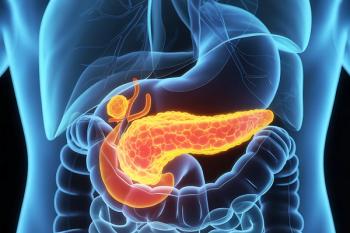
The FDA granted breakthrough therapy designation to daraxonrasib/chemotherapy for treatment-naive pancreatic adenocarcinoma based on phase 1/2 trial data.

Trastuzumab botidotin more than doubled median PFS vs trastuzumab emtansine in HER2-positive advanced breast cancer in the phase 3 KL166-III-06 trial.
Amir T. Fathi, MD, discusses how azacitidine/venetoclax’s lower toxicity and hospitalization burden should factor into treatment decisions.