





Breast Cancer
Latest News
Advertisement
Latest Videos




Podcasts




























































Advertisement
More News

Community-clinic data shows real-world EFS and pCR closely match KEYNOTE-522, strengthening confidence in real-world endpoints for eTNBC care.
Gedatolisib combinations significantly extend progression-free survival after CDK4/6 inhibitor failure in HR+/HER2– breast cancer, with manageable adverse effects and stable quality of life.
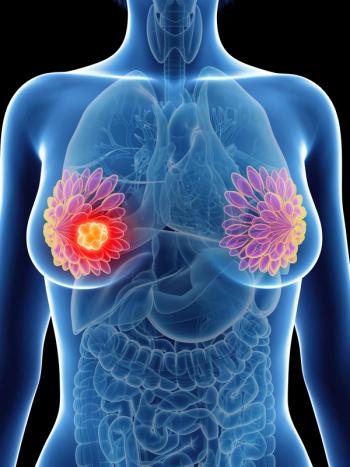
The FDA extends camizestrant review. Plus, promising Bria-IMT survival data and a ctDNA blood test that spots breast cancer recurrence 4 years early.
88 Imlunestrant With or Without Abemaciclib in Advanced Breast Cancer (ABC): A Subgroup Analysis in CDK4/6 Inhibitor (CDK4/6i)-Pretreated Patients From EMBER-3
ByCristina Saura,Lisa A. Carey, MD,Giuseppe Curigliano,Nadia Harbeck, MD, PhD,Joyce O’Shaughnessy, MD,François-Clément Bidard,Monica Lis Casalnuovo,Sung-Bae Kim,Eriko Tokunaga,Norikazu Masuda,Junichiro Watanabe,Xiaojia Wang,Quchang Ouyang,Hee Kyung Ahn,Christoph Cramer von Laue,Shanshan Cao,Holly Knoderer,Komal L. Jhaveri,Philippe Aftimos

Leading experts preview highly anticipated breast cancer data at ASCO 2026, including readouts from the SERENA-6, persevERA, and OPTIMA trials.
89 Imlunestrant With or Without Abemaciclib as First- and Second-Line Therapy in Advanced Breast Cancer (ABC): A Subgroup Analysis From the EMBER-3 Trial
ByPatrick Neven, MD, PhD,Andre Mattar,Antonio Llombart-Cussac,Giuseppe Curigliano,Nadia Harbeck, MD, PhD,Joyce O’Shaughnessy, MD,François-Clément Bidard,Monica Lis Casalnuovo,Sung-Bae Kim,Eriko Tokunaga,Cristina Saura,Lisa A. Carey, MD,Kamnesh R. Pradhan,Shanshan Cao,Monique Coersmeyer,Anna Emde,Francisco Sapunar,Komal L. Jhaveri,Philippe Aftimos
93 monarchE: Primary Overall Survival Results of Adjuvant Abemaciclib + Endocrine Therapy for HR+/HER2−, High-Risk, Early Breast Cancer
ByStephen R.D. Johnston,Miguel Martin, MD, PhD,Joyce O’Shaughnessy, MD,Roberto Hegg,Sara M. Tolaney, MD, MPH,Valentina Guarneri, MD,Lucia Del Mastro,Mario Campone,Javier Cortés, MD,Hope S. Rugo, MD,Matthew P. Goetz, MD,Erika P. Hamilton, MD,Elzbieta Senkus,Laura Testa,Patrick Neven, MD, PhD,Jens Huober, MD,Ran Wei,Maria Munoz,Priya Rastogi, MD,Nadia Harbeck, MD, PhD,Victoria Jennifer Stefaniak (Non-Author Presenter)
95 monarchE: Subgroup Analysis of Adjuvant Abemaciclib + Endocrine Therapy for HR+/HER2−, High-Risk, Early Breast Cancer by Nodal Status
ByJavier Cortés, MD,Stephen R.D. Johnston,Miguel Martin, MD, PhD,Sara M. Tolaney, MD, MPH,Matthew P. Goetz, MD,Hope S. Rugo, MD,Joohyuk Sohn,Ozgur Ozyilkan,Miguel Henriques Abreu,Matthias Zaiss,Karina Maia Vianna,Hanne Melgaard Nielsen,Arlene Chan,Haralambos Kalofonos, MD,Serafin Morales,Belen San Antonio,Maria Munoz Fernandez,Sasha Amdur,Patrick Neven, MD, PhD,Brenda Grimes
96 Efficacy and Safety of Abemaciclib in Younger Patients With Early Breast Cancer in the monarchE Trial
ByNadia Harbeck, MD, PhD,Eleni Karapanagiotou,Fanny Le Du,Kevin Kalinsky, MD, MS,Shani Paluch-Shimon,Jasotha Sanmugarajah,Luis Costa,Einav Nili Gal-Yam,Joyce O’Shaughnessy, MD,Eriko Tokunaga,Sercan Aksoy,Rajnish Nagarkar,Brenda Grimes,Ran Jennifer Wei,Belen San Antonio,Katheryn Moreira,Hope S. Rugo, MD
97 monarchE: Evaluation of Prognostic and Predictive Value of Ki-67 Index Pre- and Post-Neoadjuvant Chemotherapy and Changes Following NAC
ByJose Angel Garcia Saenz,Stephen R.D. Johnston,Nadia Harbeck, MD, PhD,Peter A. Fasching,Qiang Liu,Sema Sezgin Goksu,Ivan Toledano,Daphne T.F. Tsoi,Dorte Nielsen,Patricia Xavier Santi,Norikazu Masuda,Yoon Sim Yap,Margaret Block,Maria Munoz Fernandez,Brenda R Grimes,Jennifer Wei,Deli Liu,Miguel Martin, MD, PhD
98 A Phase 1/2 Trial of LY4064809, A Pan-Mutant-Selective PI3Kα Inhibitor in HR+/HER2− Advanced Breast Cancer, Updated Results From PIKALO-1
ByKomal L. Jhaveri,Dejan Juric,Antonio Giordano,Antoine Italiano,Gennaro Daniele,Jordi Rodón,Amita Patnaik, MD,Jorge Bartolomé,Anthony D. Elias, MD,Pamela N. Munster, MD,Patricia Lorusso, DO,Aixa Soyano,Maria de Miguel,Joyce O’Shaughnessy, MD,Robert Wesolowski,Giuseppe Curigliano,Tatiana Hernández,Aurélie Lombard,Shawn T. Estrem,Lin Du,Xiaofan Xu,Alberto J. Montero, MD, MBA, CPHQ
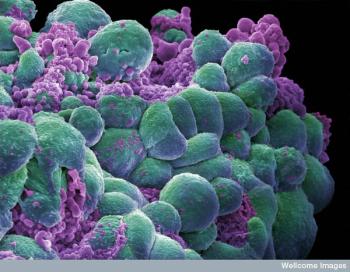
Sac-TMT demonstrated a significant improvement in PFS vs chemotherapy as first-line treatment for unresectable locally recurrent or metastatic TNBC.

The approval, based on the phase 3 TROPION-Breast02 trial, marks a significant shift in the first-line treatment of patients with mTNBC.
99 Imlunestrant With or Without Abemaciclib in Advanced Breast Cancer: Updated Efficacy Results From the Phase 3 EMBER-3 Trial
ByKomal L. Jhaveri,Patrick Neven, MD, PhD,Monica Lis Casalnuovo,Sung-Bae Kim,Eriko Tokunaga,Phillippe Aftimos,Cristina Saura,Joyce O’Shaughnessy, MD,Nadia Harbeck, MD, PhD,Lisa A. Carey, MD,Giuseppe Curigliano,Junichiro Watanabe,Elgene Lim, MBBS, FRACP, PhD,Juan Huang,Qingyuan Zhang,Antonio Llombart-Cussac,Chiun-Sheng Huang,Bhardwaj Desai,Xuejing Aimee Wang,Shanshan Cao,Francois Clement Bidard

A telephone-based weight loss intervention from the phase 3 BWEL trial improved physical function, fatigue, and social role outcomes vs health education alone in patients with stage II to III breast cancer and BMI of at least 27.

Jesus D. Anampa, MD, MS, discussed SEER database trends in chemotherapy use for older women with TBNC and explained the rationale for using breast cancer–free survival vs OS.
101 Patient-Reported Outcomes (PROs) in Patients With ER+, HER2- Advanced Breast Cancer (ABC) Treated with Imlunestrant, Investigator’s Choice Standard Endocrine Therapy, or Imlunestrant+Abemaciclib: Results From the Phase III EMBER-3 Trial
ByGiuseppe Curigliano,Joyce O'Shaughnessy, MD,François-Clément Bidard,Sung-Bae Kim,Eriko Tokunaga,Philippe Aftimos,Cristina Saura,Lisa A. Carey, MD,Meena Okera,Everton Melo,Flora Zagouri,Manuel Ernesto Magallanes Maciel,Nuri Karadurmus,Shakeela Bahadur,Rebecca M Speck,Xuejing Aimee Wang,Suzanne Young,Komal L. Jhaveri,Nadia Harbeck, MD, PhD
102 Imlunestrant (imlu) With or Without Abemaciclib (abema) in Advanced Breast Cancer (ABC): Safety Analyses From the Phase III EMBER-3 Trial
ByJoyce O’Shaughnessy, MD,Francois Clement Bidard,Patrick Neven, MD, PhD,Monica Lis Casalnuovo,Philippe Aftimos,Cristina Saura,Nadia Harbeck, MD, PhD,Lisa A. Carey, MD,Giuseppe Curigliano,J A Garcia-Saenz,Maria Fernandez Abad,Larissa de Paula,Yeon Hee Park,Ozgur Ozyilkan,Maria Munoz,Sabrina Formentini,Emily Barrett,Shanshan Cao,Aarti Chawla,Komal L. Jhaveri
TIP103 Randomized Phase 3 Clinical Trial Evaluating Atirmociclib Plus Letrozole Versus a CDK4/6 Inhibitor Plus Letrozole as First-Line Treatment for Patients With HR+/HER2− Advanced/Metastatic Breast Cancer
ByFrancois Clement Bidard,Michail Ignatiadis,Giuseppe Curigliano,Binghe Xu,Theresa Link,Yoichi Naito,Huiping Li,Madoka Iwase,Mark A. Taylor,Carlos H Barrios,Tomofumi Osako,Kevin Kalinsky, MD, MS,Antonio Giordano,Shom Goel, MD,Libero Santarpia,Jason Quan Gong,Kathrine C. Fernandez,Zhe Zhang,Hope S. Rugo, MD
Advertisement
Advertisement
Trending on CancerNetwork
1
FDA MCGP Panel Votes in Favor of the Galleri Multicancer Early Detection Test
2
FDA Grants Approval to Lirafugratinib for Advanced Cholangiocarcinoma with FGFR2 Alteration
3
Approaching Cardiovascular Risk in Prostate Cancer Hormonal Therapy
4
Emerging Endocrine Doublets and Serial ESR1 Testing in HR+/HER2− mBC
5