



Oncology
Latest News

Advertisement
Latest Videos































































Advertisement
More News

The FDA’s decision to grant KVA12123 an investigational new drug application now allows its manufacturer, Kineta, to begin a clinical trial assessing its safety and efficacy across several solid tumors.

Elevated circulating tumor fraction was associated with worsened overall survival across 4 advanced cancer types, according to data from an observational study.

In her Letter to the Readers, co-editor-in-chief of the journal ONCOLOGY Julie M. Vose, MD, MBA, reviews developments from the fourth annual LEAD Conference for women in hematology and oncology.

Patients with advanced solid tumors treated with milademetan experienced promising anti-tumor activity at the interim analysis for the phase 2 MANTRA-2 basket trial.
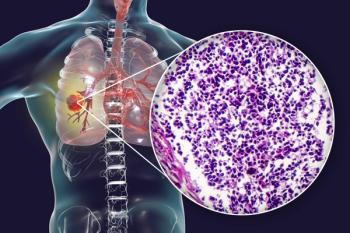
Results from the phase 1 ARROS-1 trial showed NVL-520 may stop tumor growth and yielded response in brain metastases in patients with ROS1-positive non–small cell lung cancer and other solid tumors.

Patients with advanced solid malignancies may benefit from treatment with next-generation tissue factor–targeting antibody-drug conjugate XB002.

Across various cancer types, stereotactic ablative body radiotherapy was found to be a safe method for treating oligometastes.
Patients with advanced type B3 thymoma and thymic carcinoma who progressed after chemotherapy were responsive to treatment with avelumab plus axitinib, according to data from the phase 2 CAVEATT trial.

Data from the phase 1 LuMIERE study highlighted that targeted radiotherapy agent 177Lu-FAP-2286 demonstrated a manageable safety profile and promising preliminary antitumor activity.

In a conversation during Hispanic Heritage Month, Ruben Mesa, MD, highlights factors that may contribute to disparities in clinical trial enrollment of Hispanic and Latinx patients with cancer and strategies that may encourage study participation.

CancerNetwork® sat down with Ruben Mesa, MD, to discuss the disparities present in Hispanic and Latinx patients with cancer.

Jun J. Mao, MD, MSCE, spoke about updated guidelines from ASCO and SIO for pain management in patients with cancer.

CancerNetwork spoke with AmerisourceBergen's Lisa Harrison, RPh, about how the new Enhancing Oncology Model and medically integrated dispensing factor into combating health disparities.

Based on results from a phase 3 trial, a bevacizumab biosimilar, bevacizumab-adcd, was approved by the FDA for patients with metastatic or recurrent non-squamous non–small cell lung in addition to 5 other disease types.

Treatment with gavocabtagene autoleucel demonstrated efficacy and tolerability in patients with mesothelin-expressing solid tumors, according to updated data from an ongoing phase 1/2 clinical trial.
FORE8394, which received fast track designation by the FDA, is under ongoing evaluation in a phase 1/2a trial in patients with advanced solid and central nervous system tumors harboring BRAF alterations.

Kim Blenman, PhD, MS, discussed the promising developments in cell-counting software for predicting pathologic complete response in breast cancer.
At 2022 ASCO, Matthew Schabath, PhD, discussed the COLORS training designed to improve cultural sensitivity amongst oncologists treating patients within the LGBTQ+ community.
One of the CRESTONE investigators, Tejas Patil, MD, assistant professor of medicine–medical oncology at the University of Colorado School of Medicine in Aurora, discussed seribantumab in previously treated patients with NRG1 fusion–positive tumors.

Alison M. Schram, MD, spoke about key findings from the phase 2 eNRGy trial assessing zenocutuzumab in patients with NRG1 fusion–positive advanced solid tumors.
Patients with RET fusion–positive locally advanced or metastatic solid tumors can now receive treatment with selpercatinib following its approval by the FDA.
Sodium thiosulfate, which appears to be effective in decreasing the risk for hearing loss related to treatment with cisplatin, received FDA approval in pediatric patients with localized, non-metastatic solid tumors.

Matthew Schabath, PhD, spoke about COLOR designed as competency training for oncologists treating patients from the LGBTQ+ community.

Howard S. Hochster, MD, considers drug price negotiation in this month's Letter to the Readers.

Results from a presentation at 2022 ESMO showed DCC-3116 was tolerated in patients with RAS or RAF-mutant solid tumors.
Advertisement
Advertisement
Trending on CancerNetwork
1
Sequencing Bispecifics and CAR T-Cell Therapy in Myeloma and AL Amyloidosis
2
Clinical Applications and the Future of Remote Endovascular Procedures
3
Building a Low-Dose Radiation Therapy Program for Benign Disease
4
FDA Approves Atezolizumab/Chemo for Stage III dMMR Colon Cancer
5