




Oncology
Latest News
Advertisement
Latest Videos
































































Advertisement
More News

Researching the feasibility of consolidating extensive information into a unified cancer database is the “tip of the iceberg”, said Leila Tchelebi, MD.

A consolidated database may allow providers to access information on a patient’s prior treatments and genetic abnormalities all in 1 place.
A study presented at ASTRO 2025 evaluated the feasibility of using a unified cancer database to consolidate information gathered across 14 institutions.

Co-hosts Kristie L. Kahl and Andrew Svonavec highlight what to look forward to at the 2025 ESMO Annual Congress, from hot topics and emerging trends to travel recommendations.
Kelly Dyckman, MSW, LCSW, offers advice for caregivers of patients with cancer, emphasizing the need for proactive self-care and recognizing burnout.

Physical therapists may play a key role in patient care before, during, and after treatment for cancer, according to Alison Ankiewicz, DPT, PT.
Kelly Dyckman, MSW, LCSW, discusses the need for proactive, not reactive, communication about posttreatment challenges to better support cancer survivors.
Recommending counseling sessions may help patients with cancer navigate sexual health and emotional issues during their cancer treatment.
Kelly Dyckman, MSW, LCSW, discusses how her role integrates with multidisciplinary oncology teams to support patients' emotional and relational well-being.
Pathologists should try to educate oncologists about the sensitivity and specificity of assays to help optimize care plans, said David Rimm, MD, PhD.

Beyond DNA-centric diagnostics, protein-based methods may play a role in accurately matching patients with the most effective therapies.
David Rimm, MD, PhD, discussed how AI tools may help automate routine tasks for pathologists and predict genomic alterations from images.
David Rimm, MD, PhD, shared the rationale behind developing an AI-driven tool for quantifying tumor-infiltrating lymphocytes in melanoma.

In the oncology setting, having discussions about mortality and death may be daunting for patients, but is vital and inevitable.

Black patients experienced lower survival rates across cancer types and several categories of urbanicity, particularly in breast and colorectal cancers.
Experts weigh in on tumor-informed testing, false positives, relevant trial data, and other key concepts related to circulating tumor DNA.
Experts discuss key considerations for applying ctDNA to clinical practice, such as distinguishing between tumor-informed and tumor-uninformed testing.

Daniel C. McFarland, DO; and guest William S. Breitbart, MD, discuss the critical role of meaning-centered therapy in addressing the psychosocial needs of patients with cancer.

Data from the phase 3 3475A-D77 trial support the FDA approval of subcutaneous pembrolizumab across different pediatric and adult solid tumor indications.

Greater regulatory and policy clarity may better optimize clinician use of artificial intelligence in treating patients with cancer.

An independent data monitoring committee recommended the continuation of the phase 2 AMPLIFY-7P trial evaluating ELI-002 7P in PDAC in August 2025.
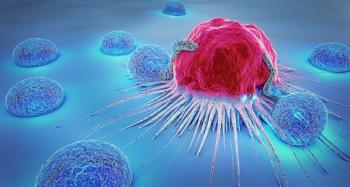
Clinical benefit with the investigational agent was reported among 48% of patients with solid tumors at or above the therapeutic dose threshold.
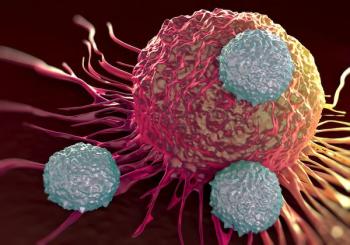
Rezatapopt achieved an ORR of 33% in all patients, and an ORR of 43% in patients with ovarian cancer, with 1 confirmed complete response.

Referrals to dietitians may help in the management of TEAEs affecting taste and smell, as well as fatigue in patients undergoing cancer treatment.

Results from a phase 2 trial showed a 1-year local control rate of 93.1% with SABR in patients with solid tumors who have uncomplicated bone metastases.
Advertisement
Advertisement
Trending on CancerNetwork
1
Sequencing Bispecifics and CAR T-Cell Therapy in Myeloma and AL Amyloidosis
2
Clinical Applications and the Future of Remote Endovascular Procedures
3
Building a Low-Dose Radiation Therapy Program for Benign Disease
4
FDA Approves Atezolizumab/Chemo for Stage III dMMR Colon Cancer
5