





Surgery
Latest News
Advertisement
Latest Videos







Shorts
0:51
Multidisciplinary Care Key to Success in Robotic Whipple Pancreatic Surgery
a month ago
by
Mohamed Adam, MD

1:19
The Reality of Biopsy Needle Conservation Requests
2 months ago
by
Harriet Borofsky, MD
1:15
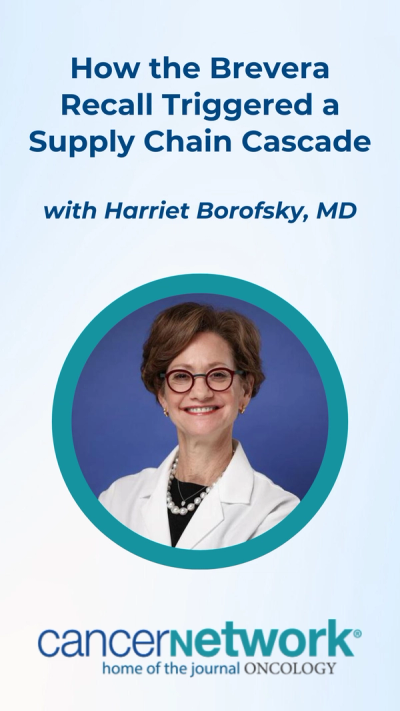
How the Brevera Recall Triggered a Supply Chain Cascade
2 months ago
by
Harriet Borofsky, MD

1:17
Examining the Impact of ctDNA on Breast Cancer Surgery
7 months ago
by
Patrick I. Borgen, MD

0:38
The Missing Link in Cancer Research: Diversity
8 months ago
by
Kathie-Ann Joseph, MD, MPH, FACS

0:38
Beyond Mastectomy: The Power of Oncoplastic Surgery
8 months ago
by
Kathie-Ann Joseph, MD, MPH, FACS

0:40
What is Inflammatory Breast Cancer?
8 months ago
by
Kathie-Ann Joseph, MD, MPH, FACS
0:34
Managing Narcotic Use in Perioperative CRC Care
a year ago
by
Ronald Bleday, MD
Podcasts



























































Advertisement
More News

Kathryn Eckert, DO, shared how her team communicates with patients and keeps referral guidelines unchanged during the shortage.

Kathryn Eckert, DO, discussed her role of bridging surgery and radiology teams as breast biopsy needle shortages continue nationwide.

Kathryn Eckert, DO, described how her breast surgery practice and imaging partners responded on day 1 of the Hologic Brevera needle recall.

A breast surgeon and a radiologist describe the impact the breast biopsy needle shortage has had on their current clinical practice.
The role of adjuvant immunotherapy remains unclear in this NSCLC population following data from the phase 3 ALCHEMIST trial.

Neoadjuvant ipilimumab plus nivolumab and relatlimab achieved a major pathologic response in 73.7% of patients with resectable stage III/IV melanoma.

Mohamed Adam, MD, discusses switching from open to robotic Whipple procedures and the impending integration of AI-driven navigation in surgical oncology.

Patients with breast cancer who omitted sentinel lymph node surgery did not have an increased uptake in other forms of treatment like radiation therapy.

Post-surgical treatment, functional gains were improved among patients with breast cancer.
Patrick A. Kenney, MD; and David A. Braun, MD, PhD, discussed parameters they use to determine a patient’s eligibility for cytoreductive nephrectomy.
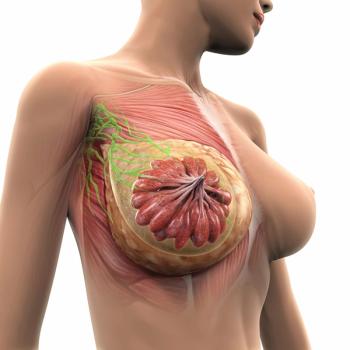
Tousimis explored the feasibility, complications, and surgical strategies for nipple-sparing mastectomy in patients with a history of radiation therapy.

Marc Lehrer Greenwald, MD, spoke with CancerNetwork® about how North Shore University Hospital treats young patients with colorectal cancer.

A predetermined change control plan was authorized as part of the premarket approval, allowing for AI enhancements without the need for FDA oversight.

Patrick Borgen, MD, discussed using ctDNA for “molecular interception” to de-escalate surgery and minimize AEs in biology-driven breast cancer care.

Emily Papai, MD, discussed her study on RECIST responses to neoadjuvant radiation in retroperitoneal sarcoma and the challenges of organ-sparing surgery.
Emily Papai, MD, discussed her recent study on radiographic response in retroperitoneal sarcoma and the limitations of neoadjuvant radiation for organ preservation.
Surgical updates for invasive breast cancer from the NCCN Breast Cancer meeting revealed insights on neoadjuvant endocrine therapy and SLNB omission.

Kathie-Ann Joseph, MD, MPH, FACS, described the clinical criteria for nipple-sparing mastectomies and oncoplastic surgery, focusing on tumor-to-nipple distance and oncologic safety for breast cancer patients.

Kathie-Ann Joseph, MD, MPH, FACS, explored evolving surgical strategies for inflammatory breast cancer and phyllodes tumors.
Next steps in surgery for gastroesophageal cancer include offerings for patients with advanced disease, such as those with oligometastases.
Data from the GALAXY study in Japan may inform future use of total neoadjuvant therapy among patients with rectal cancer in the US.
The complicated nature of gastroesophageal cancer underscores the importance of collaboration between teams to safely treat patients with the disease.
Bodies like the NCCN must keep up with data related to ctDNA so that it can be incorporated in a measured manner, said Nicholas Hornstein, MD, PhD.
Circulating tumor DNA may particularly help adjuvant treatment decision-making in stage II colon cancer, according to Nicholas Hornstein, MD, PhD.

Investigators assessed recurrence rates between axillary lymph node dissection recipients after neoadjuvant chemotherapy vs nonrecipients.
Advertisement
Advertisement
Trending on CancerNetwork
1
Multimodal Biopsy Combo Shows Low Morbidity in Suspected Prostate Cancer
2
The Value of Testing in The Expanding EGFR Exon 20 Insertion Landscape
3
Hydrogel Spacer Receives FDA 510(k) Clearance for Prostate Cancer Radiotherapy
4
Exploring Advancements in Targeting KRAS in Cholangiocarcinoma
5