

Leveraging novel agents, innovative clinical trial designs, and correlative studies may improve the treatment of patients with kidney cancer.

Your AI-Trained Oncology Knowledge Connection!
Leveraging novel agents, innovative clinical trial designs, and correlative studies may improve the treatment of patients with kidney cancer.

Panelists discuss how patient selection criteria for second-line chimeric antigen receptor T-cell therapy in relapsed/refractory multiple myeloma encompass both clinical eligibility guidelines and practical considerations, including geographical and financial factors.

Panelists discuss how institutional decisions to implement early-line chimeric antigen receptor T-cell therapy for relapsed/refractory multiple myeloma are influenced by patient characteristics, logistical capabilities, cost considerations, and subsequent treatment strategies.

Panelists explain how CAR-T cell therapy works and describe the treatment process, discussing whether CAR -T is considered a complex procedure at their institution or if the logistics have been streamlined into clinical workflows, and they also detail their institution's approach to bridging therapy for patients awaiting CAR-T manufacturing and infusion, including whether patients are managed in-house or sent back to community centers.
Panelists discuss which patients are considered for CAR-T therapy in second-line treatment for relapsed/refractory multiple myeloma (R/R MM) (cilta-cel vs ide-cel), describe the specific criteria and institutional guidelines used to determine patient eligibility, and explore how non-medical factors like such as location and financial considerations impact patient selection, while also outlining the typical CAR-T referral process from community physician outreach to patient evaluation and selection.

Panelists discuss the broader treatment landscape for advanced clear cell renal cell carcinoma (RCC), outlining the current standards of care, how treatment approaches vary for aggressive versus benign or indolent tumors, and the approach to shared decision-making with patients, including counseling and educating them on different treatment options.
Panelists discuss the multidisciplinary team’'s role in supporting patients through a renal cell carcinoma n( RCC) diagnosis, addressing informational gaps as patients process their diagnosis, offering supportive strategies and resources, and highlighting the unique challenges faced by patients with clear cell RCC compared to with those with non–-clear cell RCC.
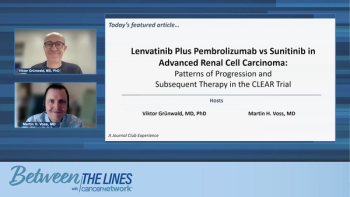
Panelists discuss how the Phase phase 3 CLEAR trial evaluates organ-specific progression patterns in advanced renal cell carcinoma to better understand the efficacy of lenvatinib plus pembrolizumab compared to with sunitinib and guide subsequent treatment strategies.
Panelists discuss how clinical decision-making with TKI-IO combinations for advanced renal cell carcinoma involves evaluating factors such as efficacy, safety, patient characteristics, and the management of treatment-related toxicities to optimize patient outcomes.
Panelists note that while both teclistamab and elranatamab are weekly doses, elranatamab is a flat dose, and physicians have seen quick and positive responses to elranatamab treatment and physicians have seen…treatment and have been able to pull back patients from doses earlier to prevent an increase in adverse effects from infection.
Panelists discuss how patient 3 is a 61-year-old man with R-ISS stage III IgG-L double-hit myeloma/plasma cell leukemia and extramedullary plasmacytoma diagnosed in 2023 s/p radiation, now with a CNS relapse on elranatamab.

Sympathomimetic effects related to psilocybin may preclude use among patients with coronary artery disease or those with a high risk of stroke.

Panelists discuss how teclistamab administration and outcomes vary between academic and community settings, highlighting the need for standardized monitoring protocols, staff education, and communication frameworks to ensure consistent patient care and safety across different practice environments.
Psilocybin-assisted psychotherapy may be integrated into pre-existing behavioral health aspects of comprehensive cancer treatment.
Panelists discuss how long-term follow-up data from MajesTEC-1 demonstrates teclistamab’s sustained efficacy and safety profile while identifying optimal candidates based on factors like prior therapy exposure, disease characteristics, and fitness level.
Psilocybin may help address a need for effective medication to aid those who have psychological challenges related to a serious cancer diagnosis.

Panelists discuss how to help patients weigh the risks and benefits of different treatment options for paroxysmal nocturnal hemoglobinuria (PNH), outlining tools and techniques used to ensure that patients and caregivers fully understand their choices and make informed decisions.
Panelists debate the best posttransplant follow-up approach for acute myeloid leukemia, weighing the benefits of maintenance therapy vs close monitoring with regular laboratory testing to optimize patient outcomes and minimize long-term risks.

Explore effective strategies for managing dermatologic adverse events in lung cancer patients, ensuring optimal care and patient comfort.
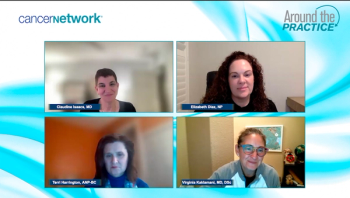
Panelists discuss how the evolving treatment landscape, particularly with the introduction of new agents, has influenced Ms. Diaz's approach to patient education, highlighting strategies for staying informed and proactive, as well as ensuring effective coordination of care across multidisciplinary teams to optimize patient outcomes.
Panelists discuss strategies for patient education and monitoring hyperglycemia with PI3K inhibitors, including pre-treatment screening, baseline assessments, early recognition of adverse events, and supportive care measures such as dietary modifications, with Ms. Harrington sharing practical approaches and helpful resources; Dr Isaacs comments on potential differences in adverse event management, particularly hyperglycemia, between inavolisib, capivasertib, and alpelisib, offering practical advice for oncologists; and Dr Kaklamani explores how the varying safety profiles of these agents may influence treatment selection and sequencing, including the potential for inavolisib to become standard of care in the first-line PIK3CA-mutant setting and how this will affect PI3K inhibitor sequencing in later treatment lines.
Panelists discuss how clinicians should weigh the decision between initiating treatment with erythropoiesis-stimulating agents (ESAs) vs luspatercept in patients with myelodysplastic syndromes.

Panelists discuss how a third-line approach for a 54-year-old patient treated with a tucatinib-based regimen involves careful consideration of prior treatment responses, comorbidities, and the potential benefits of combining tucatinib with capecitabine and trastuzumab to improve outcomes in HER2+ metastatic breast cancer.

Panelists discuss how oral and subcutaneous therapies have improved the quality of life for patients with EGFR-mutated advanced non–small cell lung cancer (NSCLC), with Squires sharing patient benefits from newer administration routes, and Dr Scott highlighting promising developments in EGFR-mutated NSCLC treatments, while exploring the evolving role of patient empowerment, self-management, and the multidisciplinary care team in supporting patients through home-based care and active participation in their treatment journey.
Panelists discuss resources and strategies to help patients and caregivers cope with the initial shock of a paroxysmal nocturnal hemoglobinuria (PNH) diagnosis, emphasizing critical points during the first consultation, and explore how Brandi communicated her treatment preferences to her care team, reflecting on her sense of inclusion in the decision-making process and areas for improvement.
Panelists discuss how talquetamab demonstrates superior efficacy compared with physician-chosen treatments for patients with heavily pretreated multiple myeloma, with improved progression-free survival and response rates.
Panelists discuss how the MEDALIST and IMerge trials provide crucial insights into novel therapeutic approaches for treating myelodysplastic syndromes.
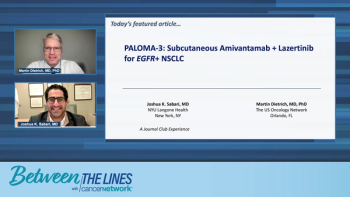
A panelist discusses how managing resistance mechanisms and toxicity profiles and identifying optimal sequencing strategies remain key challenges in treating EGFR-mutated metastatic non–small cell lung cancer despite advances in targeted therapies.

Panelists discuss how recent pivotal trials like PERSEUS and CASSIOPEIA demonstrate superior outcomes with daratumumab-based quadruplet and triplet combinations compared with standard regimens in transplant-eligible newly diagnosed multiple myeloma patients, particularly showing improved progression-free survival when daratumumab is added to VRd (bortezomib, lenalidomide, and dexamethasone) or VTd (bortezomib, thalidomide, and dexamethasone) backbones.
Panelists discuss how the CARTITUDE-4 and KarMMa-3 trials differ in their patient populations, study designs, and outcomes, providing crucial insights for clinicians choosing between cilta-cel and ide-cel chimeric antigen receptor T-cell therapies in relapsed/refractory multiple myeloma.