
Biomarker research is needed to better ascertain patient benefit with tarlatamab among those with relapsed extensive-stage small cell lung cancer.
Biomarker research is needed to better ascertain patient benefit with tarlatamab among those with relapsed extensive-stage small cell lung cancer.

Biochemical markers and advanced imaging modalities play a critical role in monitoring patients undergoing RLT therapy for metastatic prostate cancer.

Experts discuss the trade-offs between long-term efficacy and real-world tolerability in EGFR-mutant non–small cell lung cancer (NSCLC) treatment, debating innovative targeted regimens vs familiar chemotherapy-based approaches and emphasizing the importance of personalized care, supportive infrastructure, and shared decision-making in optimizing outcomes.
Experts have a nuanced debate on frontline treatment for EGFR-mutant non–small cell lung cancer (NSCLC) with brain metastases, contrasting the central nervous system (CNS) efficacy and clinical familiarity of chemotherapy-based combinations with the precision and potential durability of newer targeted regimens, ultimately emphasizing individualized care and critical appraisal of trial data.
There will be an unmet need for therapy in patients with aggressive lymphomas who did not benefit from therapy with bispecifics, CAR-T, chemotherapy, and targeted therapy.
Less lymphocyte depletion with twice-daily radiotherapy warrants further assessment to optimize the synergistic effect of radiotherapy and immunotherapy.

David Rimm, MD, PhD, discussed how AI tools may help automate routine tasks for pathologists and predict genomic alterations from images.

Panelists discuss the evolving clinical trial landscape in non–clear cell renal cell carcinoma, highlighting ongoing studies of combination therapies integrating TKIs and immuno-oncology agents, the challenges of rare subtypes, and the critical role of trials and support networks in advancing personalized treatment options.
Panelists discuss the KEYNOTE-B61 phase 2 trial of lenvatinib and pembrolizumab in non–clear cell renal cell carcinoma, highlighting its promising response rates, durable remissions, and subtype-specific outcomes, while emphasizing the need for further research to refine treatment approaches across diverse histologies.
The recent accelerated approval of tarlatamab marks a significant milestone in treating relapsed extensive-stage small cell lung cancer (ES-SCLC).
Data support the use of radioligand therapy in combination with androgen receptor pathway inhibitors to optimize prostate cancer outcomes.
The subcutaneous formulation of mosunetuzumab will require 17 cycles of therapy, without any maintenance, and can be done in outpatient settings.
Twice-daily thoracic radiotherapy appeared to confer less leukocyte and lymphocyte depletion compared with once-daily radiation in LS-SCLC.
Respiratory, viral, and bacterial infections have emerged as a toxicity of note during bispecific antibody treatment for indolent lymphoma.
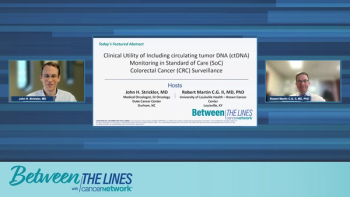
Experts discuss how the evolving landscape of patient access to medical information challenges clinicians to stay current and communicate effectively, while emphasizing the expanding role of circulating tumor DNA testing across multiple cancers—offering more precise, personalized treatment guidance and paving the way for earlier, targeted interventions that improve patient outcomes and quality of life.

Panelists discuss how the COCOON regimen's tolerability and effectiveness in reducing dose interruptions will improve patient experience and outcomes, requiring substantial nursing support and patient education for successful implementation in clinical practice.
Experts discuss that although financial concerns about ctDNA testing exist, they are generally manageable with patient education and transparent communication, and that incorporating ctDNA into formal clinical guidelines could reduce insurance barriers and alleviate patient anxiety, ultimately enabling broader access to this valuable personalized cancer monitoring tool.
Experts discuss how real-world data counter concerns that ctDNA testing increases patient anxiety, highlighting that most patients feel more reassured and confident in their care when receiving personalized ctDNA results, which supports its integration into routine surveillance to improve both clinical decision-making and patient quality of life.
Panelists discuss how the COCOON study demonstrated a significant reduction in grade 2 or higher dermatologic adverse events from 73% to 41%, with particularly notable improvements in face, body, and scalp rashes while maintaining comparable response rates.
David Rimm, MD, PhD, shared the rationale behind developing an AI-driven tool for quantifying tumor-infiltrating lymphocytes in melanoma.
Tarlatamab has demonstrated superiority to lurbinectedin as a treatment for patients with ES-SCLC who have progressed after frontline chemoimmunotherapy.
The clinical adoption of twice-daily accelerated radiotherapy has been limited in North America despite improved outcomes, according to Bin Gui, MD.

Panelists discuss how bispecifics are reversing the historical paradigm of diminishing returns in relapsed/refractory multiple myeloma, achieving 60% to 70% response rates lasting over a year in heavily pretreated patients.
Panelists discuss how patient preferences for treatment-free intervals are increasingly important in therapy selection, with bispecifics offering potential for response-adapted dosing and early discontinuation while maintaining remissions.

Panelists discuss how adjuvant durvalumab after chemoradiotherapy (PACIFIC trial) established the standard of care for locally advanced non–small cell lung cancer, while the DUART trial showed potential benefits even in frail patients treated with radiation alone, the COAST trial demonstrated improved outcomes by adding trebananib to durvalumab, and the ADRIATIC trial revealed significant survival benefits from adjuvant durvalumab in limited-stage small cell lung cancer.
The development of multimodal biomarkers may help predict response to immunotherapy among patients with melanoma and other malignancies.

Panelists discuss how successful talquetamab treatment requires coordinated care between inpatient and outpatient teams, comprehensive caregiver preparation including education materials and emergency contact information, and access to multidisciplinary health care providers as needed.
Experts discuss the transformative impact of T-cell –redirecting therapies in relapsed or refractory multiple myeloma, while highlighting ongoing challenges in optimizing treatment sequencing, managing toxicities, and expanding access—particularly in community settings—to ensure patients can safely and effectively benefit from these novel options.
In relapsed or refractory multiple myeloma, treatment becomes increasingly challenging as patients progress through multiple lines of therapy. With each relapse, response rates diminish and the duration of remission shortens. Although there are several approved drug classes available—including immunomodulatory agents, proteasome inhibitors, and monoclonal antibodies—treatment sequencing is complex and individualized. Many patients become have triple-class– exposed or even penta-refractory disease, limiting the effectiveness of standard options and highlighting the need for innovative therapies and optimized care strategies. The real-world use of these therapies is often complicated by cumulative toxicities and logistical barriers. For example, immune-based therapies such as bispecific antibodies and CAR -T cells offer promising efficacy but can require hospitalization, intensive monitoring, and specialized infrastructure. In addition, therapies like such as bispecific antibodies may necessitate step-up dosing protocols to mitigate risks such as cytokine release syndrome. These factors can impact affect access and adherence, especially in community settings where supportive care resources may be limited. As data from ongoing studies and real-world registries accumulate, it becomes increasingly important to close gaps in care for patients with advanced disease. Incorporating novel agents earlier in treatment, managing toxicities more effectively, and improving access to cellular therapies are key goals. Continued collaboration between academic and community providers will be essential to ensure that the growing arsenal of myeloma therapies translates into improved outcomes across all practice settings.
Panelists discuss how expectations for treatment outcomes can become more positive over time through experience with multiple therapies, staying informed about clinical trials and new treatments, and focusing on quality of life as a primary treatment goal alongside disease control.