
Erica L. Mayer, MD, MPH, explained why oncologists should switch to camizestrant at ESR1 mutation emergence rather than reserve oral SERDs for progression.
Erica L. Mayer, MD, MPH, explained why oncologists should switch to camizestrant at ESR1 mutation emergence rather than reserve oral SERDs for progression.
Josef Vymazal, MD, discussed a randomized study showing delayed double-dose gadopiclenol significantly improved detection of small brain metastases compared with standard imaging.
At SOHO 2026, Jasmine Zain, MD, discussed communicating the FDA’s boxed warning for secondary malignancies post–CAR T-cell therapy to patients.
Combination approvals for revumenib and ziftomenib in relapsed/refractory acute myeloid leukemia may arrive before frontline approvals, according to Eunice Wang, MD.
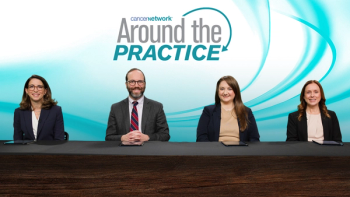
Clinicians weigh alpelisib’s hyperglycemia, rash, diarrhea and increasingly favor capivasertib for lower glucose risk with close monitoring.
Explore evolving options for biomarker-negative metastatic breast cancer, from CDK4/6 rechallenge to gadeptolizumab and PAM-pathway targeted therapy.
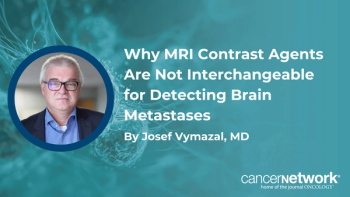
Josef Vymazal, MD, explained why high-relaxivity contrast agents are critical for detecting small brain metastases, despite weaker agents remaining suitable for other indications.
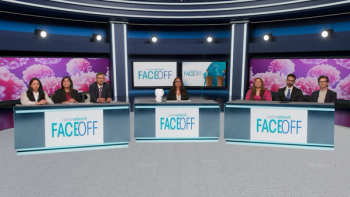
The faculty discuss treatment sequencing for a patient with relapsed/refractory multiple myeloma (R/R MM) who has experienced disease progression following prior BCMA-directed therapy.

In this segment, Elizabeth Bohannon shares practical strategies she used to manage treatment-related toxicities during her relapsed/refractory multiple myeloma journey, particularly dry mouth, oral health changes, nail changes, and skin toxicity associated with talquetamab.

Lisa Cassileth, MD, FACS, spoke about how mastectomy flap necrosis can delay systemic therapy and radiation, and what teams can do.
The faculty discuss treatment selection for a fit patient with relapsed/refractory multiple myeloma (R/R MM) who is eligible for both CAR-T cell therapy and BCMA bispecific antibodies and has access to a certified CAR-T treatment center.
In this segment, Elizabeth Bohannon discusses the treatment-related adverse effects that had the greatest impact on her daily life throughout her relapsed/refractory multiple myeloma journey.
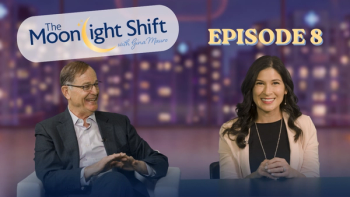
Herbert Lepor, MD, discussed NYU Langone's 1000th focal cryotherapy procedure, Andre Dé Shields' case, and why prostate cancer treatment is at a turning point.
Lisa Cassileth, MD, FACS, discussed how BMI and mastectomy flap quality drive MSFN risk more than implant-specimen size difference.

Lisa Cassileth, MD, FACS, explained her initial interpretation of lower mastectomy flap necrosis rates in an upsized implant group.
Sandra Turner, MBBS, PhD, shared ideas for radiation oncology teams to engage locally with World Radiotherapy Awareness Day.
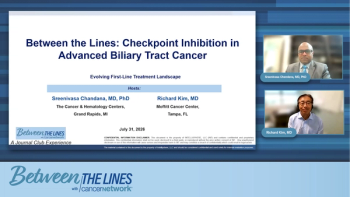
The discussion moves to real-world evidence and meta-analysis.
Lisa Cassileth, MD, FACS, discussed why she investigated whether upsizing breast implants increased mastectomy flap necrosis risk.
Partnering with subspecialities like ophthalmology and dermatology may be critical for nurse practitioners in lung cancer, according to Beth Sandy, CRNP.
Nevine Hanna, MD, MPH, FACRO, DABR, detailed how AI auto-contouring and adaptive planning improve efficiency and organ-at-risk sparing in radiation therapy.
Sandra Turner, MBBS, PhD, outlined the global radiotherapy access gap stretching from Australia to sub-Saharan Africa.
Ropeginterferon alfa may play an important role in future combination strategies in essential thrombocythemia, said Ruben Mesa, MD, FACP.

Beth Sandy, CRNP, said she would like to see more data on management strategies for blepharitis, eye toxicities, and mucositis in patients with lung cancer.
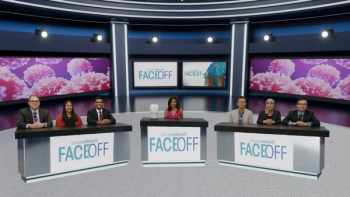
In the closing segment of this Cancer Network Face Off on advanced hepatocellular carcinoma (HCC), moderator and judge Rachna T. Shroff, MD, reflects on how dramatically the treatment landscape has expanded, recalling an era when sorafenib was the only systemic option.
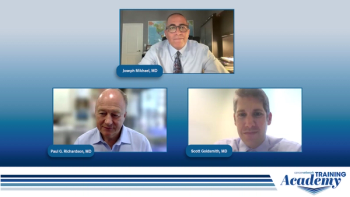
The discussion turns to the immunomodulatory effects of CELMoDs in multiple myeloma, with Dr. Goldsmith describing preclinical evidence suggesting that CELMoDs can enhance T-cell and NK-cell activity through effects on cytokine signaling and immune-mediated mechanisms.
In the second clinical scenario of this Cancer Network Face Off on advanced hepatocellular carcinoma (HCC), Team Chicago Hot Dog manages a 54-year-old man with NASH-related cirrhosis and BCLC stage C disease, excellent performance status, bulky bilobar disease with a 9.2-cm dominant lesion, Vp3 invasion, two lung metastases, Child-Pugh A5, ALBI grade 1, no varices on recent endoscopy, and a rapidly rising alpha-fetoprotein level.
Dr. Mikhael asks Dr. Goldsmith to further explain the clinical relevance of the differences in cereblon engagement between CELMoDs and established IMiDs for clinicians treating multiple myeloma.
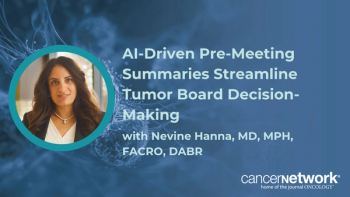
Nevine Hanna, MD, MPH, FACRO, DABR, explained how AI can aggregate patient data to enhance multidisciplinary tumor board collaboration.
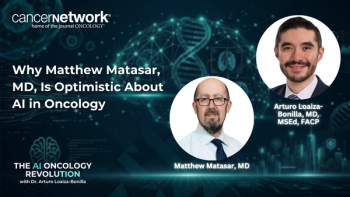
Matthew Matasar, MD, reflected on how quickly oncology has moved from skepticism to nimble adoption of AI, and what he expects from the field going forward.
Sandra Turner, MBBS, PhD, explained why September 7, radiotherapy’s first modern linac milestone, was chosen for World Radiotherapy Awareness Day.