



Genitourinary Cancers
Latest News

Advertisement
Latest Videos






Podcasts






































































Advertisement
More News

Ongoing studies in kidney cancer aim to explore determinants of immune-related adverse effects and strategies for mitigating them.
Machine learning–based approaches may play a role in further understanding of how somatic alterations influence responses or resistance to therapy.
Data from a first-in-disease trial assessing a personalized cancer vaccine in RCC require validation at a larger level, according to David Braun, MD, PhD.

A group of community and academic oncologists exchanged ideas on optimizing therapy across different prostate, kidney, and bladder cancer populations.

Experts discuss considerations for improving the care of patients with prostate, kidney, and bladder cancer in community-based practices at World GU 2025.

Experts highlight methods for optimally treating patients with genitourinary cancers harboring variant histologies at World GU 2025.
At World GU 2025, experts discussed forming treatment strategies for patients with variant histologies across prostate, bladder, and kidney cancer.

A manageable safety profile was observed across 2 expansion doses of the combination in urothelial cancer, consistent with known adverse effects of both drugs.
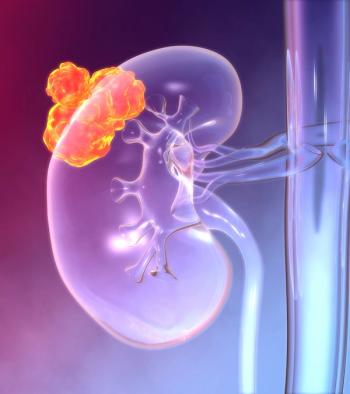
Changes in FKSI-15 scores from baseline indicated more favorable HRQOL outcomes with the benmelstobart combo vs sunitinib in advanced ccRCC.
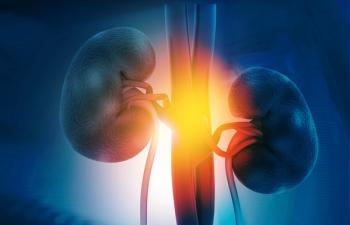
External validation will be assessed in cohort 2 of the AURORAX-0087A trial to improve recurrence detection for clear cell renal cell carcinoma.

Discover key takeaways on tumor markers, the BEP vs. EP debate, and the role of surgery in stage II testicular cancer.
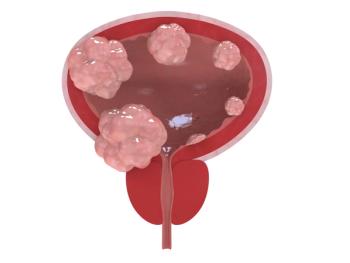
Patients with muscle-invasive bladder cancer with a positive Signatera test displayed a significant improvement in disease-free and overall survival.
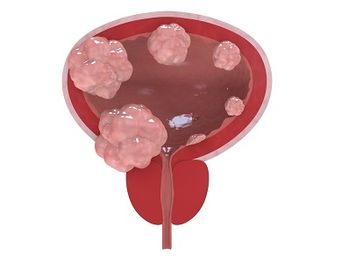
Adverse reactions in the phase 3 ENVISION trial were largely mild to moderate in severity, and serious reactions occurred in 12% of those with NMIBC.
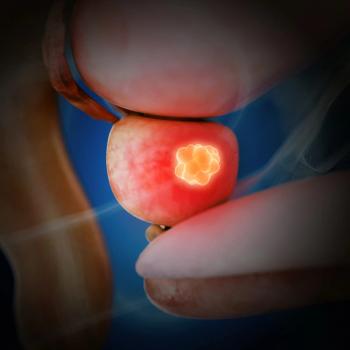
The FDA did not expand the indication to include patients with non–homologous recombination repair gene mutated castration-resistant prostate cancer.

Considering which non–muscle-invasive bladder cancer cases may be cured by surgery alone may help mitigate overtreatment in this patient group.
Event-free survival benefit was observed among BCG-naive patients with carcinoma in situ undergoing treatment with sasanlimab plus BCG.
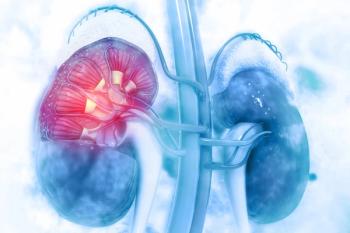
A machine learning-based approach found that evaluating multiple biomarker features may identify outcomes and treatment resistance in renal cell carcinoma.

The addition of CAN-2409 to a prodrug and radiation therapy in intermediate-to-high-risk prostate cancer significantly improved cancer-specific outcomes.
Efficacy and safety outcomes in the phase 3 CONTACT-03 study were consistent regardless of patients' prior immunotherapy or tyrosine kinase inhibitor use.

Eight votes were cast against the favorability of talazoparib and enzalutamide in the first-line setting for patients with metastatic castration-resistant prostate cancer.
Manojkumar Bupathi, MD, MS, and Benjamin Garmezy, MD, highlight exciting trials in the genitourinary cancer space expected to be presented at 2025 ASCO.

Data from the LITESPARK-015 trial supported the FDA’s decision to approve belzutifan monotherapy in patients with advanced, unresectable, or metastatic PPGL.
Data from the POTOMAC trial evaluating durvalumab in NMIBC will be presented at a future medical meeting and shared with global regulatory authorities.

No 90-day mortality was observed among patients who were treated with EVP followed by surgery for advanced urothelial cancer.
Advertisement
Advertisement
Trending on CancerNetwork
1
FDA Approves Tucatinib Combo as Maintenance in HER2+ Breast Cancer
2
Novel Cancer Vaccine Plus Temozolomide Miss Primary End Point in Glioblastoma
3
Personalized Vaccines May Have Utility Across All Lung Cancer Stages
4
Considering Talquetamab and Emerging Bispecifics in R/R Multiple Myeloma
5