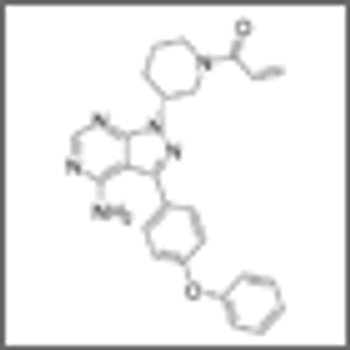

























































The FDA issued a safety alert and reports it is investigating a high rate of thrombosis and other cardiovascular events in patients taking ponatinib (Iclusig) for CML or Philadelphia chromosome-positive ALL.

Your AI-Trained Oncology Knowledge Connection!


The FDA issued a safety alert and reports it is investigating a high rate of thrombosis and other cardiovascular events in patients taking ponatinib (Iclusig) for CML or Philadelphia chromosome-positive ALL.

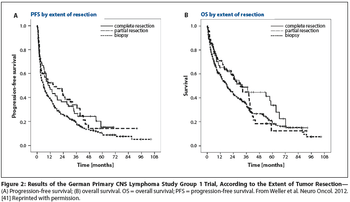
Patients with primary central nervous system lymphoma had high response rates and good long-term disease control with a chemotherapy regimen followed by consolidation reduced-dose whole-brain radiotherapy and cytarabine in a new phase II trial.

The role of transplant in MCL is in clinical evolution. Up-front high-dose therapy and autologous stem cell transplant remains an attractive option for those with chemosensitive disease regardless of the induction regimen chosen, whereas this approach in the relapsed or refractory setting has not yielded long-term disease-free intervals.

This review will cover innovative therapeutic approaches in relapsed or refractory MCL, many of which have the potential to alter treatment paradigms toward the development of strategies that do not involve conventional chemotherapy agents.

A mutation of the PAX5 gene has been found to play an important role in inherited cases of B-cell precursor acute lymphoblastic leukemia (B-ALL). The mutation was isolated in two unrelated families with high propensity for B-ALL.

Gilead Sciences has submitted an NDA to the FDA for its new drug idelalisib, for the use in patients with indolent non-Hodgkin lymphoma that is refractory to rituximab and chemotherapy.

Evidence continues to mount that discontinuing imatinib treatment for chronic myeloid leukemia (CML) in the chronic phase is safe. A new phase II Dutch and Belgian study showed only about two-thirds of patients relapsed after discontinuing treatment with imatinib and cytarabine, and all patients remained sensitive to imatinib after relapse.

The number of recently approved agents and those under investigation is promising. However, there are currently no recommendations regarding the optimal timing for use of these agents, a reflection of the lack of data in this area and the need for prospective studies.

This is an exciting time in the treatment of PTCL, but with this opportunity comes responsibility. The challenge of how to optimize a plethora of promising new therapies for a small number of patients will drive therapeutic decision making for the foreseeable future.

In this article we briefly review the labeled indications for new agents for cutaneous and peripheral T-cell lymphoma, focus on data from the last 1 to 2 years, and on data from ongoing clinical trials, with the hope that in doing so we can help elucidate difficult treatment decisions.

A phase I study of dasatinib in children and adolescents with chronic myeloid leukemia (CML) and other malignancies determined dosing for further studies and suggested the drug is well tolerated and effective in these patients.

How often do we choose the “second best” treatment as initial therapy for our patients with cancer? The management of chronic myeloid leukemia should be no different.

I am very comfortable in using imatinib as initial therapy in most patients who present in chronic phase, with the possible exception of patients with more advanced disease and higher Sokal scores.

The present guidelines review epidemiology, pathology, presentation, workup, staging, prognostic factors, and treatment options for patients with localized nodal indolent lymphoma, with an emphasis on radiation guidelines, including radiation dose, field design, and radiation techniques.

In this interview, we discuss the current state of therapies available in treating CML patients and the role of newer agents.

The phase II portion of the GAUGUIN study found promising activity with the anti-CD20 antibody obinutuzumab in patients with relapsed or refractory indolent NHL.

A phase I/II study found that radioimmunotherapy with 177Lu and the anti-CD20 antibody rituximab along with the chelator DOTA is safe and feasible for treatment of relapsed follicular, mantle cell, or other indolent lymphomas.

Palliation is a laudable concept and an important goal in the therapy of all patients with malignant disease. Unfortunately, in the current day and age, the adjective “palliative” is being used in a derogatory manner that suggests palliation of suffering somehow lessens the importance or impact that such a therapy has upon individuals with the disease.

By inhibiting inflammatory cytokines and controlling the signs and symptoms of myelofibrosis, the patient’s body condition improves as the disease is kept under good control. Ultimately, prolonged exposure of a patient with myelofibrosis to ruxolitinib at a clinically effective dose results in prolongation of the his or her life.

A new study validates a simple prognostic score, the EUTOS score, as a useful tool in predicting the therapeutic effects of TKIs for chronic myeloid leukemia.

ARIAD has received marketing authorization from the European Commission for ponatinib (Iclusig) in chronic myeloid leukemia and acute lymphoblastic leukemia.

In this interview we discuss acute myeloid leukemia therapy approaches and new molecular targets based on genetic analyses of the disease with a leukemia expert.

Monotherapy with the investigational oral Bruton's tyrosine kinase inhibitor ibrutinib was well tolerated and produced durable responses in a phase Ib/II, open-label, multicenter study of 85 patients with relapsed/refractory chronic lymphocytic leukemia or small lymphocytic lymphoma.

Use of the bisphosphonate pamidronate (Aredia) may be “more efficient” than standard regimens as palliative treatment for symptoms of acute symptomatic osteonecrosis in pediatric patients with acute lymphoblastic leukemia.

Phase II trial results of the targeted agent ibrutinib in relapsed or refractory mantle-cell lymphoma show that the drug led to promising and durable responses.