




Oncology
Latest News
Advertisement
Video Series
Latest Videos



Shorts

1:08
Can Robotic Systems Limit Ergonomic Injury for Interventional Radiologists?
18 days ago
by
Zachary L. Bercu, MD, RPVI, FSIR
1:07
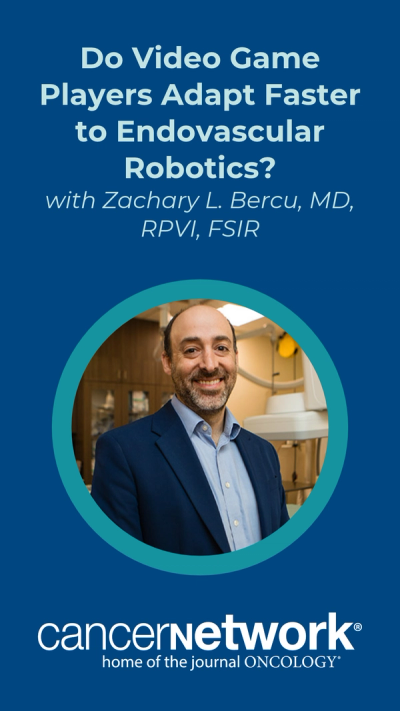
Do Video Game Players Adapt Faster to Endovascular Robotics?
19 days ago
by
Zachary L. Bercu, MD, RPVI, FSIR
1:21
How Does the PEDRA Portable Endovascular Robot Work?
20 days ago
by
Zachary L. Bercu, MD, RPVI, FSIR

1:19
How Can Health Systems Foster Psychedelic Literacy in Oncology?
a month ago
by
Jason Konner, MD
1:26
How Can Solving Data Fragmentation Help Unlock AI's Potential in Oncology?
2 months ago
by
Nevine Hanna, MD, MPH, FACRO, DABR
0:49
How Can AI Preserve the Human Connection in Cancer Care?
2 months ago
by
Nevine Hanna, MD, MPH, FACRO, DABR
1:14
How Can Health Networks Bring Clinical Trials Directly to Patients?
2 months ago
by
Edward S. Kim, MD, MBA
0:47
How is City of Hope Expanding Access to Cancer Trials in Oncology?
2 months ago
by
Edward S. Kim, MD, MBA
1:39
Could a Pill One Day Prevent KRAS-Driven Cancers Before They Start?
3 months ago
by
Frank McCormick, PhD, FRS, DSc (Hon)
1:50
Why was KRAS Considered “Undruggable” for so Long?
3 months ago
by
Frank McCormick, PhD, FRS, DSc (Hon)
Podcasts
























































Advertisement
More News

Zachary L. Bercu, MD, RPVI, FSIR, explains how the Liberty endovascular robotic system works from the operator’s perspective and what went into becoming its first adopting site.
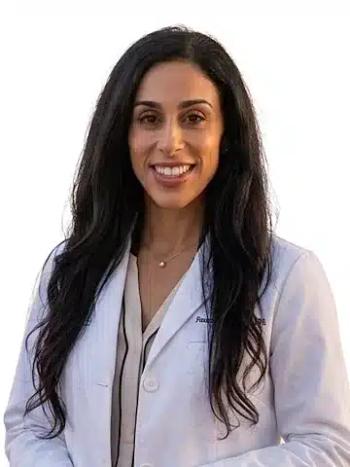
Melody Rasouli, MD, MBA, FACOG, discusses oncofertility gaps at NCI-designated cancer centers and ways to speed fertility referrals for patients.
![“We want to make sure we are not producing a financial burden for patients in exchange for that convenience [with subcutaneous therapies],” said Thaddeus Beck, MD, FACP.](https://cdn.sanity.io/images/0vv8moc6/cancernetwork/cbb0bc385f194a5dd84702ed02a21020e3a6977b-1200x1800.jpg?w=350&fit=crop&auto=format)
“We want to make sure we are not producing a financial burden for patients in exchange for that convenience [with subcutaneous therapies],” said J. Thaddeus Beck, MD, FACP.

Elizabeth Thompson, MD, discusses pediatric cancer, proton therapy, and her work as a peer reviewer for CURiE.

The panel discussed the risk-benefit profile of the Galleri multicancer early detection test, which was evaluated in the NHS-Galleri and PATHFINDER 2 studies.
Data from the phase 3 MK-3475A-D77 trial support the Japanese approval of subcutaneous pembrolizumab and berahyaluronidase alfa.

The FDA granted platform technology designation to the immunotherapeutic platform for use in HPV-positive cancers such as head and neck, cervical, and anal.

The Community Oncology Alliance is urging CMS and Congress to address Medicare Part B drug negotiation policies that threaten independent cancer practices and patient access.

Although shortages periodically capture national attention when widely used agents such as cisplatin or carboplatin become scarce, the problem extends well beyond any single drug.

Global Burden of Disease data showed alcohol-attributable cancer deaths in the US doubled from 1990 to 2023, with liver cancer showing the steepest rise.
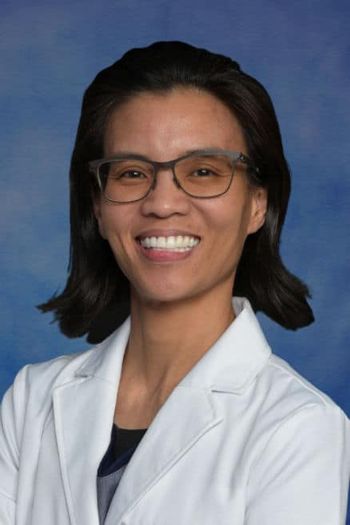
“Far and away, a unified electronic health record is the single use case that could benefit both patients and physicians most, and AI has the potential to help us achieve that,” said Margarita Racsa, MD, MPH.

How do we implement AI in a way that serves patients? Expert radiation oncologists discuss the crucial question.
According to Margarita Racsa, MD, MPH, patients coming in with AI-informed insights can be a double-edged sword for clinicians.

ASCO has issued a critical drug supply warning as some practices report just weeks of ifosfamide inventory remaining, with no direct substitute available.

Oncology experts discussed the wide-ranging benefits of exercise in oncology care, including enhanced treatment efficacy, minimal AEs, and minimal expenses.

Patients in US counties with the highest medical debt burden had higher odds of stage IV cancer diagnosis and worse survival than those in the lowest-burden counties.
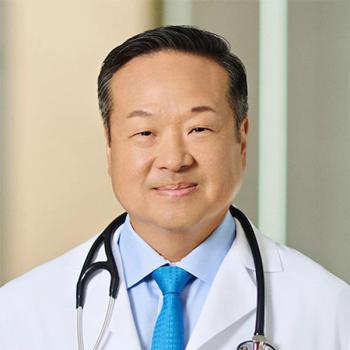
City of Hope’s national clinical trials model can activate a study across a network of 40 sites in 4 states within 90 days, according to Edward Kim, MD, MBA.

ASCO 2026 spotlights metabolic health in cancer care, as GLP-1 obesity drugs show links to lower metastasis and survival gains, needing trials.

In a study, Black and Hispanic parents were largely willing to enroll children in oncology trials, while clinicians cited hardship and gatekeeping as barriers.
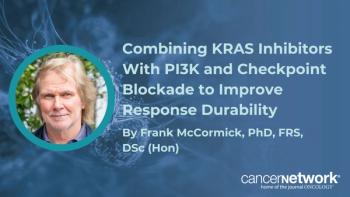
Frank McCormick, PhD, FRS, DSc (Hon), outlined the rationale for combining KRAS inhibitors with PI3K and checkpoint inhibitors to improve durability of response.

Stay tuned for an in-depth discussion on navigating operational workflows and mitigating barriers to access for CAR T-cell therapy in multiple myeloma.
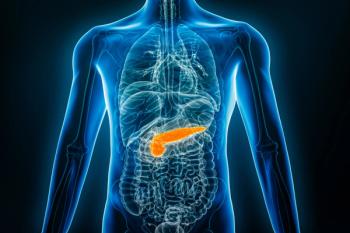
Frank McCormick, PhD, FRS, DSc (Hon), discussed his vision for preemptively treating KRAS-driven precancerous lesions, differences between KRAS allele subtypes, and where the field is headed over the next decade.

In part 1 of a 2-part interview, Frank McCormick, PhD, discusses the technical hurdles that made KRAS resistant to drug development, the NCI's RAS Initiative, and the RASolute 302 data.
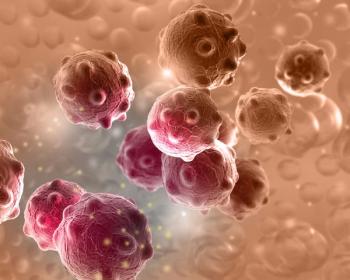
No adverse effects or injuries associated with the presence of particulate matter in 3 lots of injectable cyclophosphamide have been reported to date.
Efficacy findings from the phase 1/2 LIBRETTO-001 and LIBRETTO-021 trials supported the regulatory approval of selpercatinib in RET gene fusion-positive solid tumors.
Advertisement
Advertisement
Trending on CancerNetwork
1
Ivonescimab Combo Improves Survival in Advanced Biliary Tract Cancer
2
Osimertinib/Savolitinib Improves Survival in MET-Altered EGFR-Mutant NSCLC
3
FDA Approves Talazoparib/Enzalutamide for HRR Gene-Altered Metastatic Prostate Cancer
4
How Can Functional Modeling, AI Accelerate Translational Breast Cancer Research?
5